
UN Opens 25th Permanent Forum on Indigenous Issues, Focuses on Health and Rights
UN opens 25th Permanent Forum on Indigenous Issues in New York on April 19, 2026, centering on indigenous health, rights, biodiversity and global funding.
The United Nations opened the 25th session of the Permanent Forum on Indigenous Issues at UN Headquarters in New York on April 19, 2026. The forum convened more than 1,000 representatives from member states, UN agencies and Indigenous communities to discuss health, rights and sustainable stewardship. The meeting begins under a declared theme placing Indigenous health — including in conflict contexts — at the centre of deliberations.
Opening session at UN Headquarters
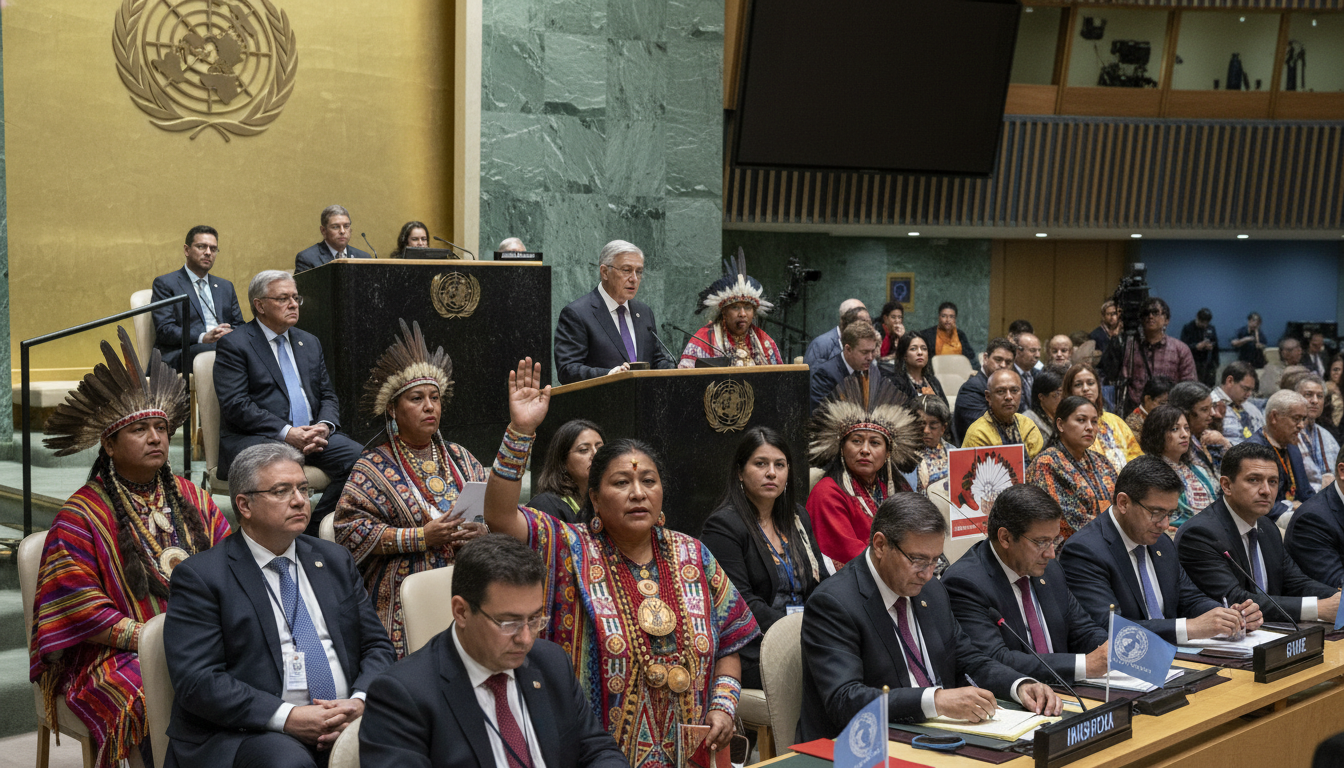
The opening plenary took place in the General Assembly Hall with delegates and Indigenous representatives from around the world in attendance. Secretary‑General António Guterres addressed the assembly and underscored the vital role Indigenous peoples play in biodiversity protection and climate action. He framed Indigenous communities as essential custodians of traditional knowledge and called for stronger international support to protect their lands and cultures.
The Secretary‑General also highlighted persistent injustices facing Indigenous peoples, citing discrimination, violence and loss of territory as ongoing threats. He urged member states to remove structural barriers that limit Indigenous access to health care, education and development services. His remarks set a rights‑focused tone for the two‑week session and signalled a push for concrete policy outcomes.
Traditional Tadodaho welcome and cultural opening
The forum opened with a traditional welcome from the Tadodaho, Sid Hill, representing the Onondaga Nation, who received participants in the General Assembly chamber. In his remarks, he emphasised gratitude, harmony and a deep spiritual relationship with the land, describing the earth as a mother that sustains life. The ceremony highlighted the forum’s commitment to centring Indigenous ceremony and voice within UN processes.
Delegates said the cultural welcome served as a reminder that policy debates are rooted in lived Indigenous experience and centuries of stewardship. Observers noted the symbolic importance of holding the welcome in the General Assembly hall, signalling recognition from the highest levels of the UN. Cultural interventions are scheduled throughout the session alongside formal negotiations.
Aluki Kotierk re‑elected as chair of the session
Aluki Kotierk of Canada was re‑elected by acclamation to chair the 25th session of the Permanent Forum on Indigenous Issues. The chair’s reappointment was confirmed during the opening meeting and is expected to guide procedural work and high‑level dialogues over the two weeks. Delegates expressed expectations that the leadership will balance advocacy for Indigenous rights with pragmatic steps toward financing and implementation.
The chair and bureau will oversee a programme that includes country statements, expert panels and thematic sessions. Forum leadership is also charged with consolidating recommendations that will be forwarded to the UN Economic and Social Council. Observers said clear procedural management will be key to producing actionable outputs before the session closes.
Agenda priorities: health, rights and financing
The official theme — ensuring Indigenous peoples’ health, including in contexts of conflict — will frame high‑level dialogues and panel discussions. Delegates will examine how conflict and displacement exacerbate health inequities among Indigenous communities and explore pathways to trauma‑informed care and access to services. Sessions will also address language preservation, cultural continuity and the intersections of health with environmental degradation.
Financing for Indigenous priorities is a central concern on the agenda, with debates scheduled on resource allocation, donor engagement and national budgeting. Several sessions aim to identify mechanisms that ensure Indigenous communities can access funds directly and participate in project design. Rights‑based approaches to development, including land tenure and self‑determination, will run through thematic discussions.
Forum mandate, remit and historical context
The Permanent Forum on Indigenous Issues was established in July 2000 as a high‑level advisory body to the UN Economic and Social Council. Its mandate covers economic and social development, culture, the environment, education, health and human rights for Indigenous peoples globally. Over its 25 sessions the forum has issued recommendations, facilitated dialogue and helped shape international standards on Indigenous issues.
Participants at this session are expected to revisit longstanding concerns while pressing for implementation of past recommendations. The forum’s advisory role means its outputs rely on member states, UN agencies and funders to convert words into policy and programmes. Civil society representatives will press for measurable commitments and transparent follow‑through.
The forum will sit for two weeks and aims to conclude with a set of recommendations and a report to the Economic and Social Council. Delegates said they will prioritise producing language that can be taken up by states and agencies to improve health services, secure land rights and expand funding channels. Observers will be watching for concrete pledges and timelines as indicators of progress.
