
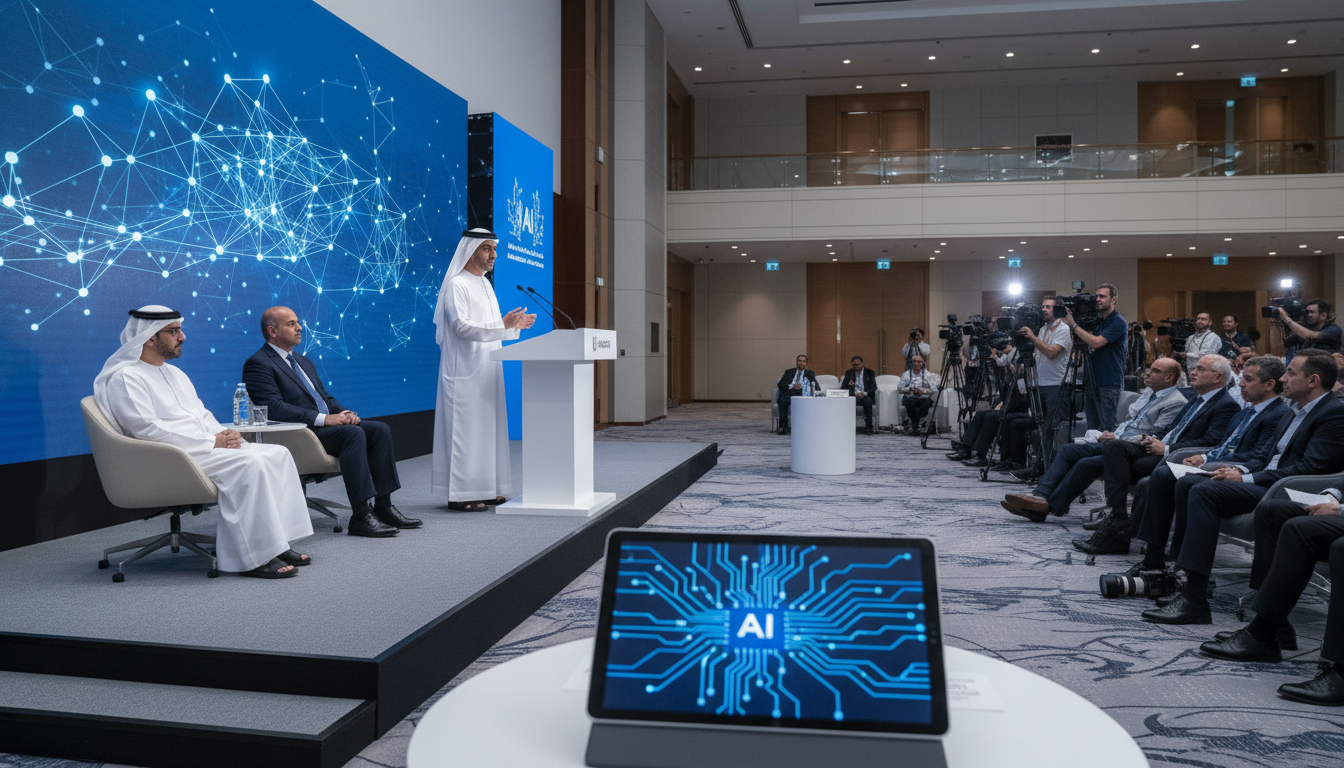
DIFC AI: Dubai International Financial Centre to Become World’s First AI‑Native Financial Hub
DIFC AI plan embeds artificial intelligence across legal, operational and urban systems, targeting $3.5bn economic boost and 25,000 new jobs regionally by 2030.
DIFC announces AI‑native transformation
The Dubai International Financial Centre (DIFC) announced a strategic programme to integrate artificial intelligence across its legal frameworks, operations, talent systems and urban infrastructure. The DIFC AI initiative aims to establish the centre as the world’s first financial district built from the ground up around AI capabilities.
Rather than running isolated pilot projects, DIFC will embed AI into everyday regulatory and commercial functions, positioning the district to scale services and provide unified AI tools for financial firms. The move signals a major push by Dubai to set global standards for responsible AI in finance.
Legal and data governance groundwork laid in 2023
DIFC says the initiative builds on a foundation set in 2023, when it launched a five‑year AI strategy and adopted formal data governance policies. AI was also incorporated into Schedule 10 of the centre’s Data Protection Law to provide a statutory framework for use and oversight.
The regulatory approach includes ethical rules for human actors as well as AI agents and robots, reflecting DIFC’s intent to govern both software models and embodied AI. Officials emphasize the need for clear legal architecture to support trust, transparency and accountability as AI is scaled across financial services.
Projected economic impact and job creation
DIFC estimates the AI transformation will generate roughly $3.5 billion (about AED 12.9 billion) in economic value and support the creation of some 25,000 new jobs. The centre expects these gains to come from productivity improvements, new services and expanded commercial activity across finance and adjacent sectors.
DIFC leaders say the district’s regulatory flexibility and capacity to operate at scale will enable faster implementation than many traditional financial hubs. They view the programme as a competitive leap aimed at attracting startups, venture capital and global firms to Dubai.
New AI services for financial firms and export ambitions
A key pillar of the plan is a shared AI offering for financial services firms — described as large language models and related services provided as a common capability. DIFC intends to host and supply these models as a managed platform for banks, asset managers and fintechs operating within the jurisdiction.
Beyond hosting, DIFC plans to export AI governance software and trained personnel to markets in the Global South. Officials say this will allow the centre to package regulatory, technical and human capital solutions that other jurisdictions can adopt.
Talent development and certification pipeline
To support wide adoption, DIFC will roll out education and training programmes designed to upskill professionals in AI system operation and oversight. Initiatives include executive education, technical certification and hands‑on training for staff working alongside AI and robotic agents.
The centre also aims to include Emirati talent within these programmes and to certify practitioners who will manage AI governance, compliance and customer experience functions. DIFC expects a certified workforce to be a differentiator for firms seeking compliant, production‑ready AI deployments.
Smart infrastructure and urban AI by 2030
On the physical side, DIFC plans to integrate robots, autonomous mobility solutions and digital twins into its built environment, targeting a significant share of smart buildings and sensor networks by 2030. The first phase will see thousands of sensors deployed to create an urban operating system for the district.
Officials say AI‑driven systems will optimize energy use, automate routine maintenance and support robotic security and service tasks. The aim is to create a contiguous urban area where digital and physical systems operate together under a single governance model.
DIFC further intends to combine regulation, training and compute infrastructure into an integrated AI campus that links governance, certification, cloud services and on‑the‑ground robotics. The centre expects this approach to make it a global reference point for comprehensive, responsible AI adoption in finance.
A major public moment for the initiative will be the Dubai AI Festival, which DIFC says will bring more than 20,000 participants from over 100 countries to the Dubai World Trade Centre on October 26–27, 2026. The event is presented as part of DIFC’s effort to convene industry, regulators and innovators around practical AI adoption in financial services.
The move to become an AI‑native financial hub reflects Dubai’s broader ambition to lead on advanced technology and to convert regulatory experiments into exportable frameworks and marketable services. By aligning legal rules, talent development and smart infrastructure, DIFC aims to set a global benchmark for how cities and financial centres deploy AI at scale.
