
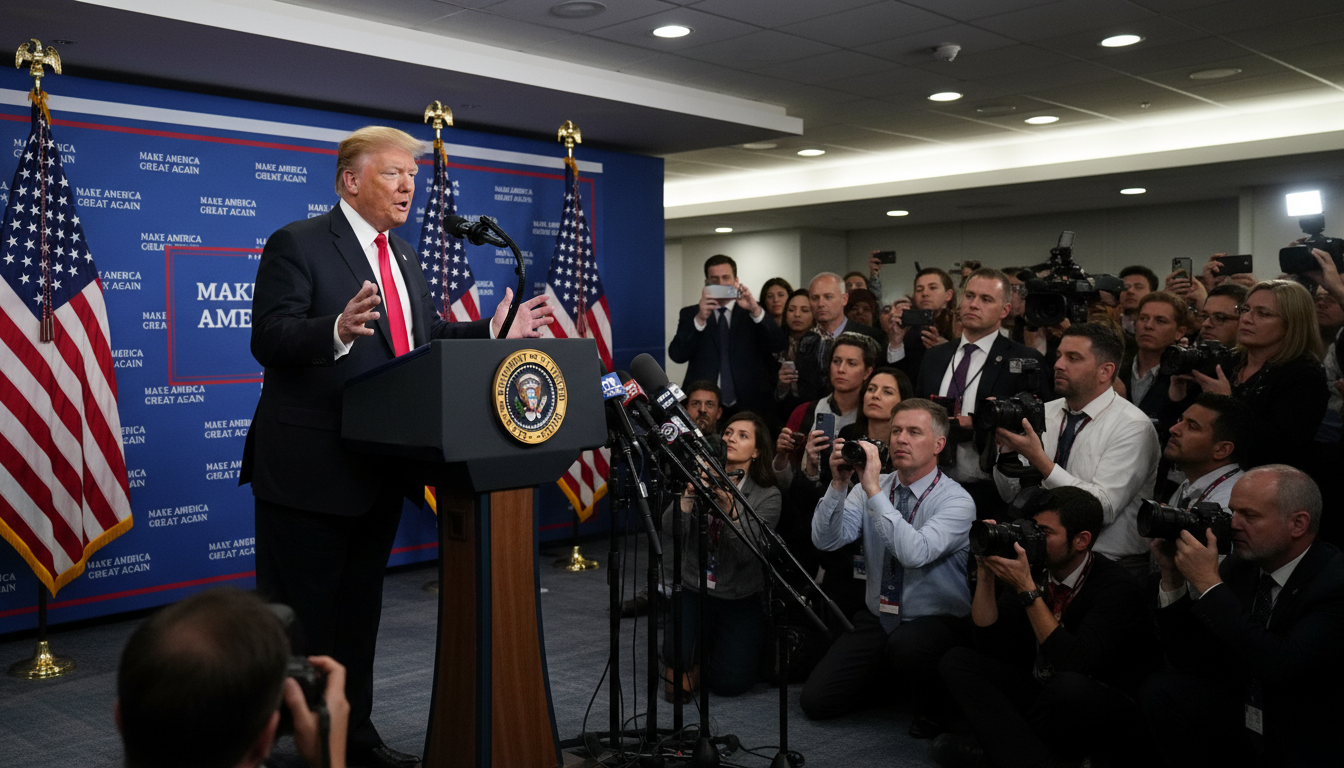
Trump Cancels Envoys’ Islamabad Visit, Says Move Does Not Mean War Will Resume
Trump cancels envoys’ Islamabad visit, saying the decision to halt a planned U.S. delegation to Pakistan for talks with Iranian officials does not automatically signal a resumption of war in the Middle East.
Opening remarks from the U.S. president
President Donald Trump told Axios on Saturday that the cancellation of a planned trip by U.S. envoys to Islamabad should not be read as an offer of imminent military action.
He said the decision “does not mean” hostilities will resume and that Washington had not been contemplating a return to war at this stage.
Details of the cancelled Islamabad delegation
The visit had been described as a diplomatic mission to open a new round of negotiations with Iranian representatives via Pakistan as a potential intermediary.
Officials outlined that the delegation was intended to explore options for de-escalation and communication, but the trip was called off before it began.
How the president framed the decision
In short remarks to the media outlet, the president emphasized restraint and cautioned against drawing direct links between the cancelled trip and military escalation.
He framed the pause as part of a broader assessment of strategic options rather than a step toward conflict.
Diplomatic implications for Washington and Islamabad
The cancellation alters immediate diplomatic dynamics between Washington and Islamabad, which has often played a bridging role in regional discussions.
Analysts say such a change can complicate back-channel diplomacy and delay efforts to establish stable lines of communication with Tehran.
Potential impact on regional tensions
While the president sought to downplay the move’s link to combat, experts warn that pauses in diplomatic engagement can increase uncertainty among regional actors.
Uncertainty, in turn, raises the risk of miscalculation by states and non-state groups that monitor lines of communication and interpret shifts as signals of intent.
Next steps for U.S. policy and negotiations
U.S. policymakers are likely to weigh alternative diplomatic channels, including multilateral forums and third-party mediators, to maintain communication with Iran.
Officials may also reassess timing and composition of any future missions to ensure clearer objectives and better-managed expectations.
Background on prior U.S.-Iran engagement through intermediaries
The United States has previously used third-party locations and partners to convey messages to Tehran when direct contact was limited.
These indirect channels have at times helped lower the temperature during crises, though they also carry limitations in building trust and securing firm commitments.
The president’s remarks sought to reassure observers that cancelling the envoys’ Islamabad visit was a tactical decision, not a strategic pivot to renewed warfare, and that diplomatic options remain on the table.
