
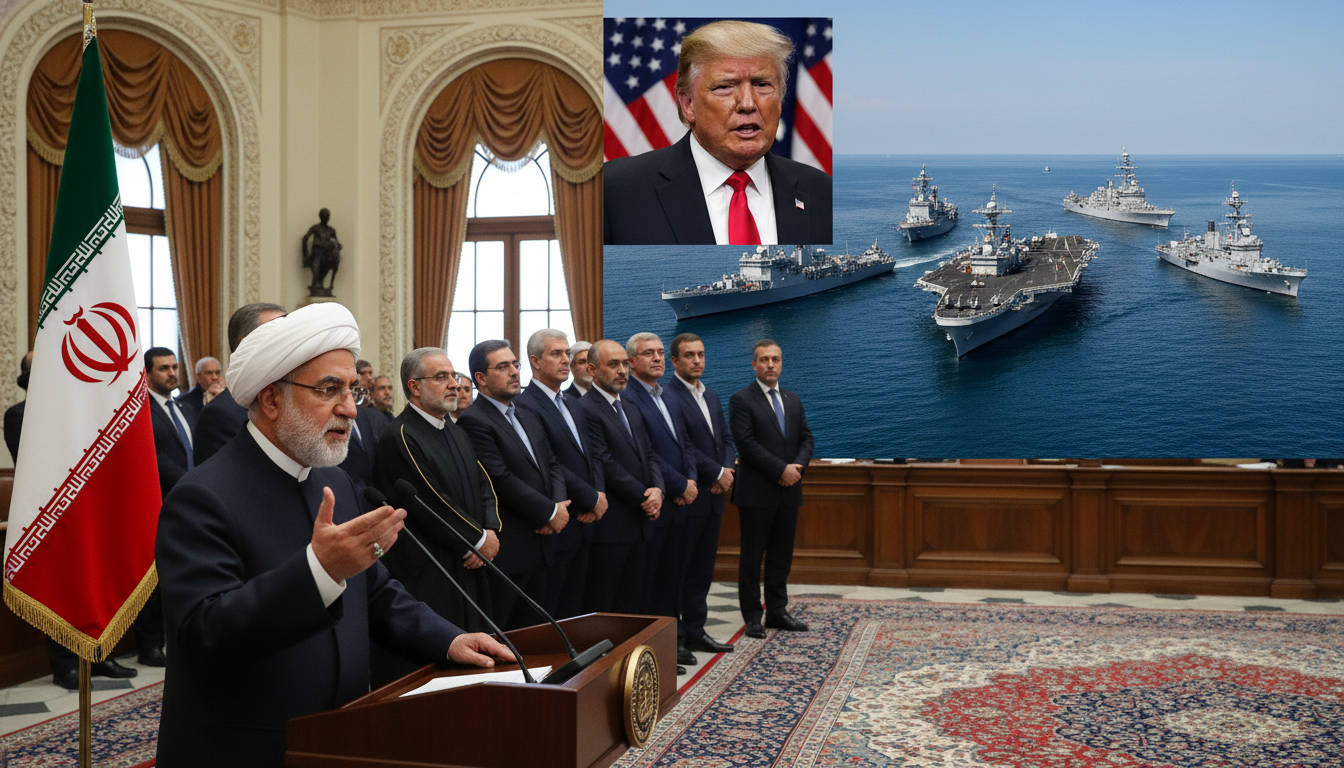
Iran Condemns US Naval Siege of Iranian Ports as Trump Says War May Resume
Iran calls the US naval siege of Iranian ports “intolerable” as Trump warns war may resume; tensions soar, oil spikes and UAE urges citizens to leave home.
Iran’s president condemned the US naval siege of Iranian ports as an extension of military operations that Tehran can no longer tolerate, while US President Donald Trump said Washington “might need” to restart the war. The comments came amid renewed exchanges of warnings between Tehran, Washington and Tel Aviv and reports of air defences activated over the Iranian capital. Regional leaders and markets reacted quickly, with the United Arab Emirates advising citizens to avoid or leave neighbouring countries and oil prices jumping to multi-year highs.
Iran denounces US naval siege as ‘intolerable’
Iranian President Masoud Pezeshkian described the maritime blockade as an unacceptable escalation and framed it as part of an ongoing campaign of pressure on the Islamic Republic. Tehran’s remarks underline a hardening posture that follows months of tit-for-tat strikes and increasing US naval activity in the Gulf. Iranian officials say the move is tantamount to an extension of military operations, raising the prospect of further retaliatory measures if the blockade continues.
Air defences activated over Tehran
State-linked Tasnim and Fars news agencies reported that air defences were activated over Tehran to counter small aircraft and drones, a development that underscored the immediate security concerns inside Iran. Military and security officials appeared to be on heightened alert, and local witnesses said anti-aircraft systems were audible across parts of the capital. Analysts note Iran has taken steps to mitigate the impact of sanctions and blockades, including oil stockpiling and bolstering domestic supplies, which may blunt but not eliminate the pressure.
Trump signals conflict could resume while discussing troop relocations
President Trump told aides and the public he has not ruled out restarting military operations, asserting Iranian leaders want to negotiate but warning that options remain on the table. He also floated plans to reduce US troop levels in several European countries that he said opposed the campaign, naming Germany and suggesting reductions in Italy and Spain. The president’s remarks came as US Defence Secretary Pete Hegseth assured lawmakers the Pentagon is equipped to limit civilian harm and that human oversight remains in place when AI tools are used in targeting decisions.
Casualties and ceasefire developments
Human rights monitors and regional agencies continue to record civilian casualties amid the conflict, with some reports placing the death toll in the thousands and hundreds of children among the victims. A senior US official said, for War Powers Resolution purposes, US hostilities that began in February have “terminated,” noting a two-week ceasefire that began on April 7 has been extended. Despite the pause in direct exchanges between US and Iranian forces, officials warn that a durable cessation of violence remains fragile and conditional.
Gulf responses and UAE travel advisory
The United Arab Emirates moved swiftly to limit exposure to the escalating confrontation by banning citizens from travelling to Iran, Lebanon and Iraq and urging those currently in those countries to return home immediately. The advisory reflects concern among Gulf governments over spillover risks, cross-border attacks and the disruption of commercial routes. Gulf states have also stepped up diplomatic engagement with international partners to seek de-escalation while preparing contingency measures for trade and energy security.
Israeli warnings and strikes in Lebanon
Israel’s defence minister warned that Tel Aviv may need to act again to prevent Iran from rebuilding a direct threat, signalling a willingness to resume offensive measures if perceived strategic red lines are crossed. Meanwhile, strikes in southern Lebanon killed civilians, including children and women, and an explosive drone wounded two Israeli soldiers, illustrating the conflict’s continued toll on non-combatants. Washington has urged meetings between Lebanese and Israeli leaders even as both sides accuse each other of breaches, highlighting the complex diplomatic frontlines.
Oil surge and market consequences
Markets reacted immediately to the heightened tensions, with Brent crude for June delivery spiking sharply and US benchmarks rising before later trimming gains. Traders cited supply risks stemming from the naval blockade and concerns about transit through the Strait of Hormuz, where a significant share of global oil passes. Higher energy prices add pressure to regional economies and could prompt emergency measures from governments seeking to stabilise domestic markets and reassure consumers.
The current stand-off shows signs of a strategic impasse: Iran appears prepared to withstand intensified economic measures, while the United States and its allies weigh the political and military costs of deeper engagement. Retired US officials warn that coercive pressure alone may not force a swift resolution, and international calls for diplomacy are growing even as leaders publicly posture. With civilians continuing to bear the brunt of hostilities and oil markets sensitive to further disruption, the coming days are likely to test whether deterrence holds or whether a renewed cycle of confrontation unfolds.
