
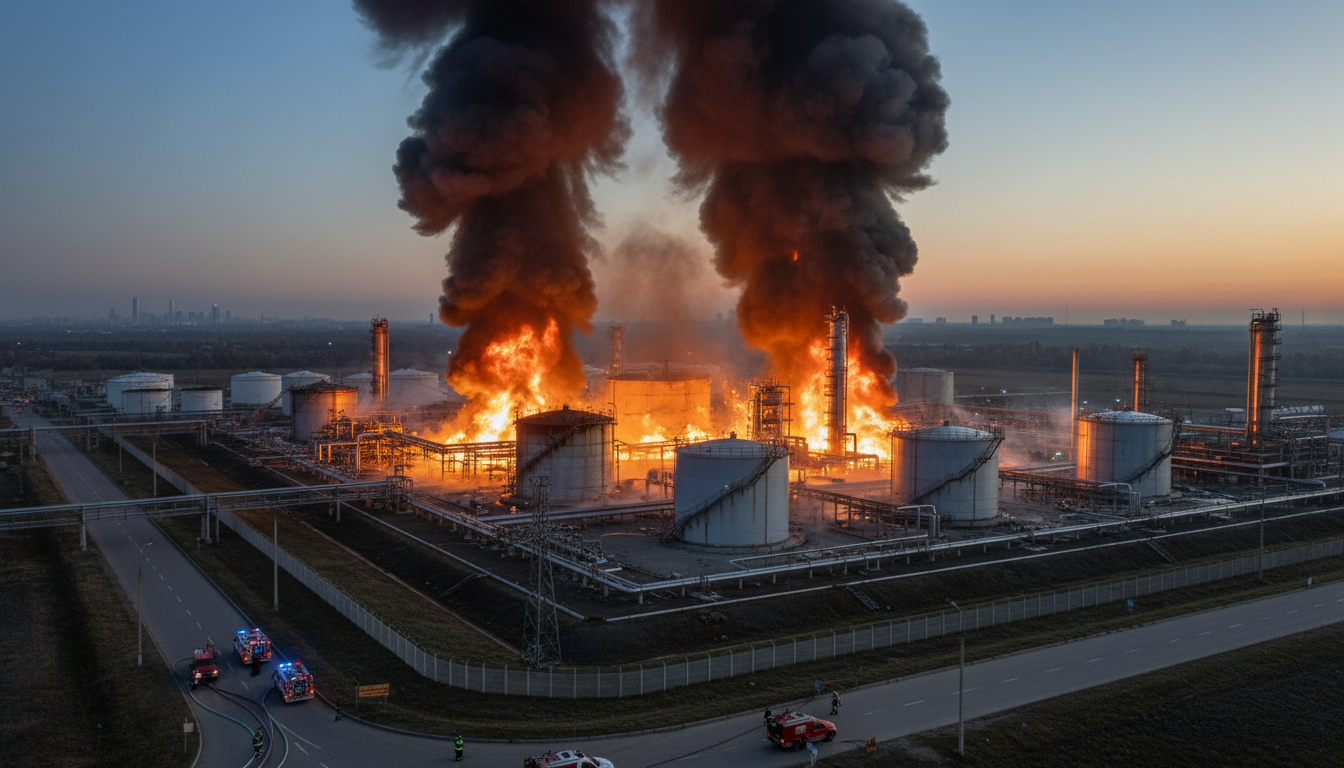
Ukraine strikes Russian oil infrastructure as long-range drones reach the Urals
Ukraine strikes Russian oil infrastructure, hitting storage, ports and refineries as long-range drone and remote-control capabilities extend strikes as far as the Urals. The campaign aims to curb Moscow’s wartime oil revenue and has prompted strong responses from Russian officials. Kyiv’s Security Service confirmed a strike on a major Transneft hub in Perm, while Western analysts and Ukrainian authorities report substantial damage to export capacity.
Strike Reaches Perm Transneft Hub
The Security Service of Ukraine (SBU) confirmed an attack on Transneft’s pumping and distribution facility in Perm, a key node that feeds a refinery and pipelines running in four directions. Ukrainian officials said multiple storage tanks caught fire and that the facility’s disruption has significant implications for internal transit and export flows. Russian defence authorities acknowledged the incident and reported widespread air-defence activity across several regions.
Wider Targeting of Refineries and Ports
Over the past week Kyiv struck refineries and storage sites including facilities at Tuapse, Yaroslavl and other Black Sea and Baltic-linked terminals. Ukrainian statements and independent analysts say damage has mounted at major ports such as Primorsk, Ust-Luga and Novorossiysk, reducing their handling capacity by substantial margins. The Institute for the Study of War and other observers estimate dozens of discrete attacks on oil infrastructure during April, signaling a sustained campaign rather than isolated incidents.
Moscow Condemns Attacks and Adjusts Security Measures
The Kremlin labelled the attacks on oil facilities “terrorist” actions, and senior spokespeople urged heightened vigilance as strikes move deeper into Russian territory. Russia’s defence ministry reported shooting down a large number of unmanned aerial vehicles and announced precautionary changes to military parades and cadet participation. Moscow has also deployed emergency response teams to affected sites and dispatched senior ministers to oversee recovery and civil-defence measures.
Impact on Russia’s Oil Exports and Revenues
Ukrainian officials say internal documents point to sizeable losses in offloading and export capacity, with preliminary estimates of reduced throughput at key terminals. Kyiv’s leadership has attributed hundreds of millions to billions of dollars in lost revenue to the disruption, while third-party estimates place overall export capacity losses in the region of around 40 percent since the onset of the campaign. Market analysts warn that sustained damage to terminals and pipelines could keep export volumes depressed and contribute to volatility in global oil flows.
Advances in Long-range Drones and Remote Piloting
Ukraine’s defence ministry has underscored investments in technological development, saying roughly 20 percent of defence resources are devoted to new systems that extend strike range. Domestic manufacturers and military statements describe successful remote-piloting trials that allow operators to control drones from several hundred to over a thousand kilometres away. Kyiv has also targeted production lines for drone systems used against Ukrainian cities, claiming strikes on factories that assemble offensive UAVs and related components.
Gulf Visits and Export of Ukrainian Security Expertise
President Volodymyr Zelenskyy’s recent diplomacy in the Gulf has included discussions on exporting Ukrainian air-defence know-how and security technologies to partners in Saudi Arabia, Qatar and the United Arab Emirates. Kyiv argues that battlefield innovations have commercial and defensive value for Gulf states that face threats in the region. Officials also noted sensitivity from Moscow and, in some cases, unease among traditional Western partners about the expanded commercial and military ties in the Middle East.
The widening campaign marks a tactical shift by Kyiv toward targeting the industrial and logistical assets that sustain Moscow’s war economy, while showcasing new strike methods and reach. As attacks move farther east, regional security calculations and energy markets will be closely watched by governments and businesses across Europe, the Gulf and beyond.
