
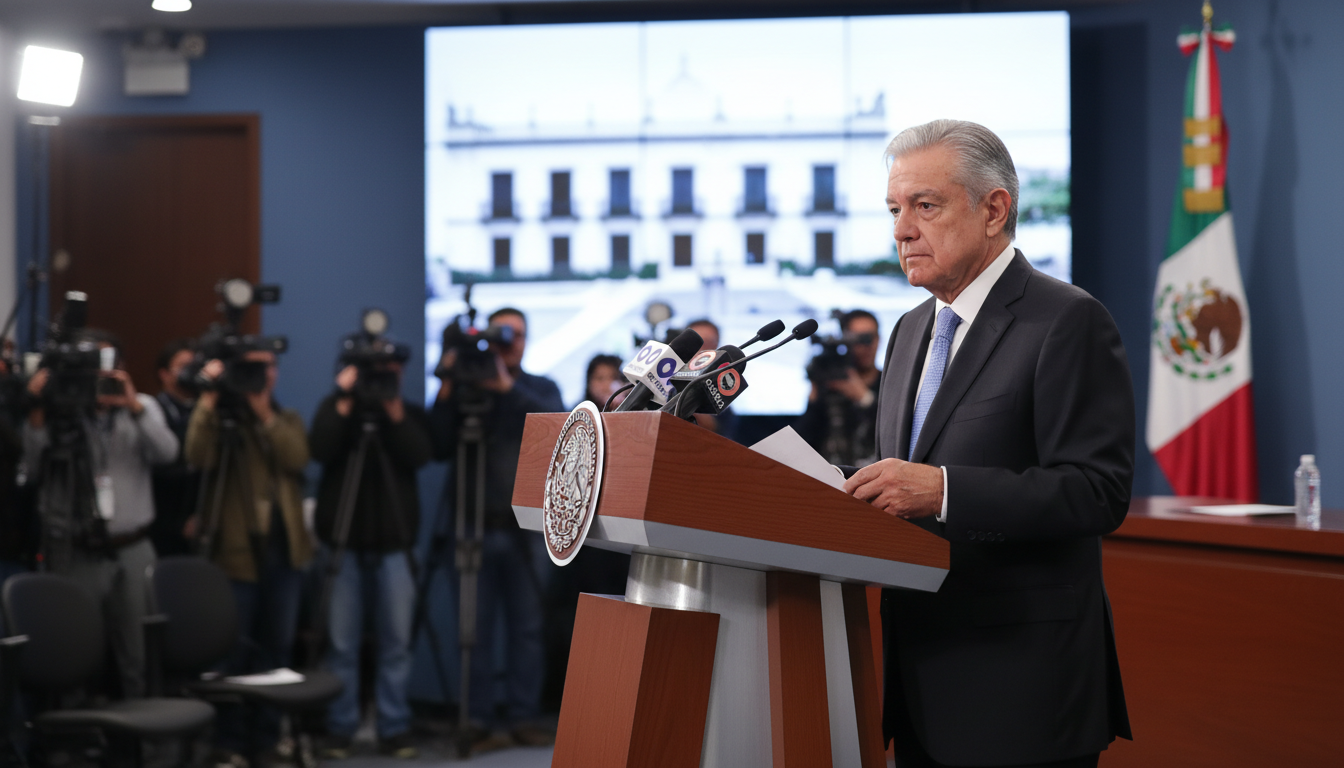
Rubén Rocha Moya Takes Temporary Leave After U.S. Indictment Alleging Sinaloa Cartel Ties
Sinaloa governor Rubén Rocha Moya has taken a temporary leave after a U.S. indictment accused him of aiding the Sinaloa Cartel, while Mexican authorities open a domestic investigation.
Rubén Rocha Moya, the governor of Sinaloa, announced a temporary leave of absence late Friday after Manhattan prosecutors unsealed an indictment accusing him of participating in a yearslong scheme to protect the Sinaloa Cartel.
In a brief recorded statement he said he is innocent and will focus on defending himself against the charges, while insisting he has not betrayed the people of Sinaloa.
The move immediately broadened a national political debate about cartel influence, legal immunity and federal response in Mexico.
Governor Announces Temporary Leave
Rocha, 76, said his leave was intended to allow him to concentrate on the legal defense prompted by the U.S. accusations.
He framed the decision as temporary and emphasized his intent to cooperate with Mexico’s justice institutions when required.
The statement avoided conceding any culpability and stressed his commitment to return once the matter is addressed.
Details of the U.S. Indictment
Manhattan prosecutors unsealed an indictment that names Rocha and nine current or former Mexican officials in an alleged conspiracy to shield the Sinaloa Cartel in exchange for bribes and political support.
Prosecutors portrayed that protection as sustained and central to the cartel’s ability to operate with impunity in key areas of Sinaloa state.
The indictment represents an uncommon public accusation by U.S. authorities against a sitting Mexican governor and focuses on long-running relationships between public officials and organized crime networks.
Federal Response and Mexico’s Investigation
President Claudia Sheinbaum has declined a U.S. request to order Rocha’s arrest, stating that the evidence presented by American prosecutors was insufficient to justify such action.
Instead, the president said Mexico’s attorney general will undertake an investigation into the allegations domestically.
That decision signaled a preference for handling the case within Mexico’s legal framework while asserting national sovereignty over criminal prosecutions of public officials.
Political Fallout for Morena and National Leaders
The indictment and Rocha’s leave have intensified political pressure on Morena, the ruling party to which Rocha belongs, and placed President Sheinbaum in a delicate position.
Rocha is a prominent Morena figure whose political standing complicates the party’s response, and the episode has amplified criticism from opposition parties and civil society.
Observers say the case could shape public perceptions of the government’s ability to confront organized crime and corruption ahead of future political cycles.
Legal Strategy, Immunity, and Parliamentary Role
By taking a leave rather than resigning, Rocha retains the legal protections associated with being an elected official, because removal from office and criminal prosecution would require Congress to strip his immunity.
Legal experts note that a leave of absence permits a temporary withdrawal from executive duties without triggering the congressional procedures necessary to pursue criminal charges.
That procedural dynamic will likely shape how quickly Mexican authorities can move from investigation to any formal charges at the national level.
Sinaloa’s Local Context and Cartel Influence
Sinaloa, a Pacific coast state of roughly three million people, has long been the epicentre of the cartel that shares its name, with deep social and economic repercussions across the region.
The indictment underscores the persistent concern that cartel influence can extend into political institutions, affecting public safety, governance and development priorities.
Local officials and residents have reacted with a mix of anxiety and skepticism as legal and political actors navigate competing demands for security and due process.
Next Steps for Investigations and Diplomatic Relations
Mexican authorities now face a parallel set of actions: an internal probe by the attorney general’s office and continued scrutiny from U.S. prosecutors who have already made their accusations public.
How Mexico conducts its investigation, the pace of any congressional deliberations over immunity, and possible requests for extradition or cooperation will shape bilateral relations in the weeks ahead.
Legal timelines and political negotiations will determine whether Rocha faces charges domestically, remains shielded by office-related protections, or becomes the subject of cross-border enforcement efforts.
The development marks a rare and consequential clash between U.S. criminal prosecutors and a sitting Mexican governor, and it will test institutional mechanisms for accountability in both countries.
As investigations proceed, the outcome will carry implications for governance in Sinaloa, Mexico’s handling of alleged high-level collusion with criminal groups, and broader regional efforts to curb cartel power.
