
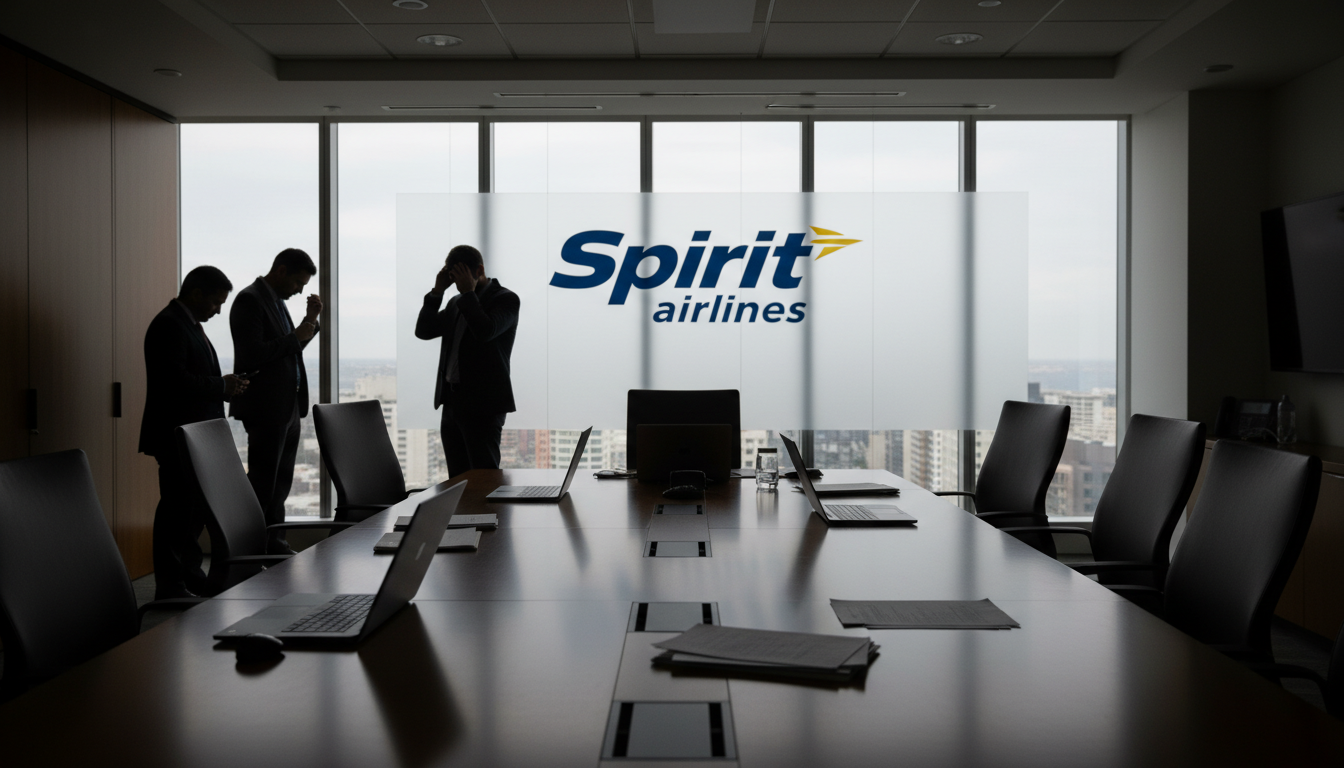
Spirit Airlines bankruptcy halts operations as board fails to agree on rescue
Spirit Airlines bankruptcy halts operations on May 2, 2026, putting thousands of jobs at risk as carriers and authorities mobilize to assist stranded passengers.
Spirit Airlines filed for bankruptcy and moved to suspend flight operations on Saturday, May 2, 2026, after its board failed to reach an agreement on a rescue package, two people with direct knowledge told Reuters. The decision marks a sudden collapse for the ultra‑low‑cost carrier that at one point accounted for about 5% of U.S. domestic flights and raises immediate concerns for employees and customers. Government officials and rival airlines announced contingency plans to help affected passengers, even as the broader implications for the U.S. aviation market began to take shape.
Board meeting ends without deal on May 1
The company’s board met late on Friday, May 1, 2026, but left without a viable plan to keep the airline solvent, according to two people familiar with the discussions. Sources said proposed rescue measures, including a last‑minute infusion of capital, failed to win the support needed on the board. With no buyer or backer emerging, the board moved to wind down operations the following morning.
Thousands of jobs placed in jeopardy
Analysts and airline insiders warn the shutdown could cost thousands of employees their jobs, affecting cabin crew, pilots, ground staff and corporate personnel. Spirit at its peak operated a significant share of lower‑cost domestic routes, and the abrupt halt will ripple through airport operations and regional economies that rely on its services. Union representatives and labor officials said they were seeking immediate clarity on severance, benefits and next steps for affected workers.
Fuel costs and regional tension cited as drivers
Company executives and industry observers flagged a sharp rise in jet fuel prices amid the ongoing conflict involving Iran as a principal factor straining Spirit’s finances. The airline’s low‑margin business model left it particularly exposed when fuel expenses surged, sources said, and management could not find a commercially feasible path to absorb the increased operating costs. Industry analysts noted that airlines with higher fares and diversified revenue streams were better positioned to withstand the shock.
Federal response and failed acquisition talks
U.S. Department of Transportation officials, including Transportation Secretary Sean Duffy, said they explored options to stave off collapse but found no party willing to acquire the carrier. Secretary Duffy told reporters he approached other airlines about potential purchases but received no offers that made commercial sense, asking rhetorically what asset would be left for buyers to acquire. The situation also posed a political dilemma for the administration after a proposal surfaced to allocate $500 million in emergency aid, a plan that reportedly faced resistance within the president’s political circle and among many congressional Republicans.
Rival carriers step in to assist passengers
Several major U.S. carriers — including United, American, Frontier and JetBlue — announced plans to support stranded Spirit customers by offering limited rebooking options and assistance at congested airports. Airports and consumer protection agencies said they would coordinate to prioritize stranded travelers, particularly those with connecting flights or urgent travel needs. Airline spokespeople emphasized the temporary nature of the support and urged passengers to contact carriers directly for rebooking and refund information.
Market and regulatory implications for U.S. aviation
Industry watchers said Spirit’s failure to secure financing marks the most significant U.S. airline liquidation in roughly two decades and could prompt regulatory and competitive reviews. Lawmakers and regulators will likely examine whether market conditions, fuel price volatility and gaps in bankruptcy protections for carriers contributed to the collapse. Some competitors may look to fill vacated routes, but analysts cautioned that route reallocation will take time and could lead to higher fares on certain leisure and regional corridors.
Industry groups are also expected to press for measures that would bolster airline resilience to sudden cost shocks, ranging from fuel hedging norms to contingency lending facilities.
The immediate focus for regulators and airport authorities will be ensuring passenger welfare and mitigating operational disruptions while bankruptcy administrators begin formal proceedings. Airlines stepping in to assist have cautioned that capacity is limited and urged travelers to expect delays as rebooking and airport processing are handled.
Passengers affected by Spirit’s suspension should check their booking status and contact their credit card companies about refunds where applicable. Local airport customer service counters and the U.S. Department of Transportation’s consumer hotline will be primary points of contact for those seeking information about onward travel and compensation.
For employees, unions and company representatives plan to seek rapid meetings with bankruptcy trustees and federal agencies to clarify rights and timelines. The coming days are likely to be dominated by legal filings, creditor negotiations and efforts to stabilize operations where possible.
