
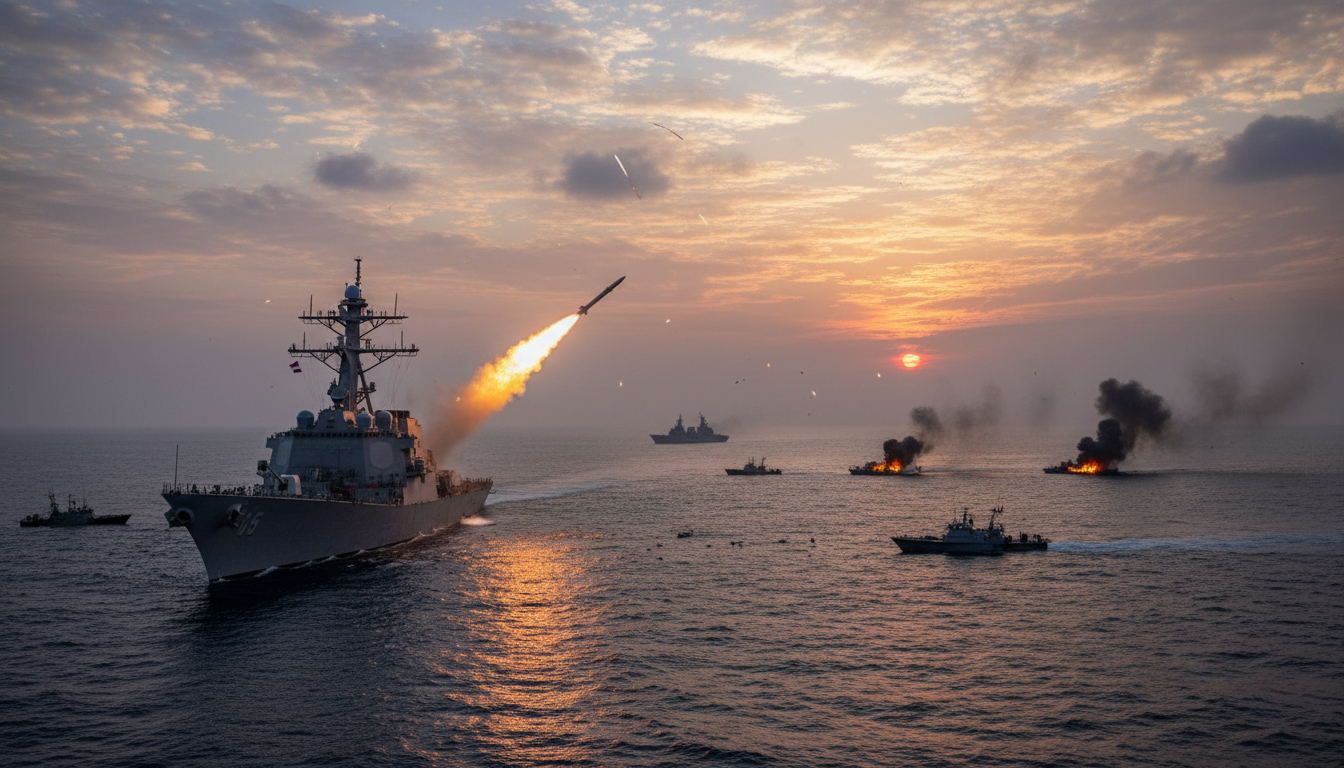
US sinks six Iranian boats in Strait of Hormuz operation, CENTCOM says
US sinks six Iranian boats near the Strait of Hormuz, CENTCOM says, after intercepting cruise missiles and drones; operation aims to secure freedom of navigation.
US Military Statement and Operation
On Monday, May 4, 2026, US Central Command announced that US forces sank six Iranian small boats in an operation aimed at protecting commercial shipping in the Strait of Hormuz. The action, CENTCOM said, followed hostile moves by Iranian forces that targeted civilian vessels in the waterway. CENTCOM commander Admiral Brad Cooper made the announcement and described the strikes as part of a broader campaign to ensure freedom of navigation.
Intercepted Missiles and Drone Threats
Admiral Cooper said US forces also intercepted cruise missiles and unmanned aerial vehicles launched by Iran during the same series of engagements. The commander characterized the intercepted weapons as direct threats to merchant shipping and to US naval assets operating in the area. US officials said air and sea defenses were employed to neutralize these threats while minimizing risk to non-combatant vessels.
Operations Focused on Strait of Hormuz Transit
CENTCOM described the operation as specifically designed to protect passage through the Strait of Hormuz, the narrow chokepoint through which a significant share of the region’s oil and trade transits. Naval commanders emphasized that maintaining open and secure sea lanes for commercial traffic was the stated objective of the strikes. Shipping companies and maritime insurers were expected to monitor the situation closely as escorts and navigational advisories were updated.
Maritime Restrictions and Port Access Measures
Admiral Cooper told reporters that restrictions imposed by US forces — described by him as measures preventing ships from entering or departing Iranian ports — remained in effect and had produced results that exceeded expectations. He framed the measures as necessary to deter further attacks on civilian shipping and to enforce maritime security in the area. The commander also said that the US blockade-like steps would be maintained as long as they were judged necessary for operational objectives.
Warnings to Iranian Forces and Rules of Engagement
CENTCOM issued a clear warning to Iranian personnel, with Admiral Cooper saying US forces “strongly advise” Iranian units to avoid locations where US military assets are operating. The statement included a call for de-escalation but made plain that US forces would take defensive and preemptive actions if civilian or military ships and aircraft were threatened. Officials did not disclose detailed rules of engagement but underscored that protecting lives at sea and ensuring uninterrupted commerce were paramount.
Regional and International Implications
The strikes and subsequent interceptions are likely to prompt responses from regional governments and may shape diplomatic activity in capitals across the Gulf and beyond. Analysts said the incident could accelerate calls for coordinated naval escorts or expanded international patrols to protect commercial traffic. Several countries that rely on Gulf shipping routes are expected to review their maritime insurance and routing guidance in the days ahead.
The operation represents a significant escalation in direct US-Iran maritime confrontations, and CENTCOM’s public account frames it as a defensive campaign to safeguard international shipping. Naval commanders signaled readiness to sustain the posture while urging ships to follow official navigational warnings and advisories issued through maritime authorities.
