
Russia labour shortage deepens despite record-low unemployment
Russia labour shortage deepens as demographics, migration and military mobilisation shrink the workforce; Moscow unveils ‘Time to Live’ foreign recruitment plan.
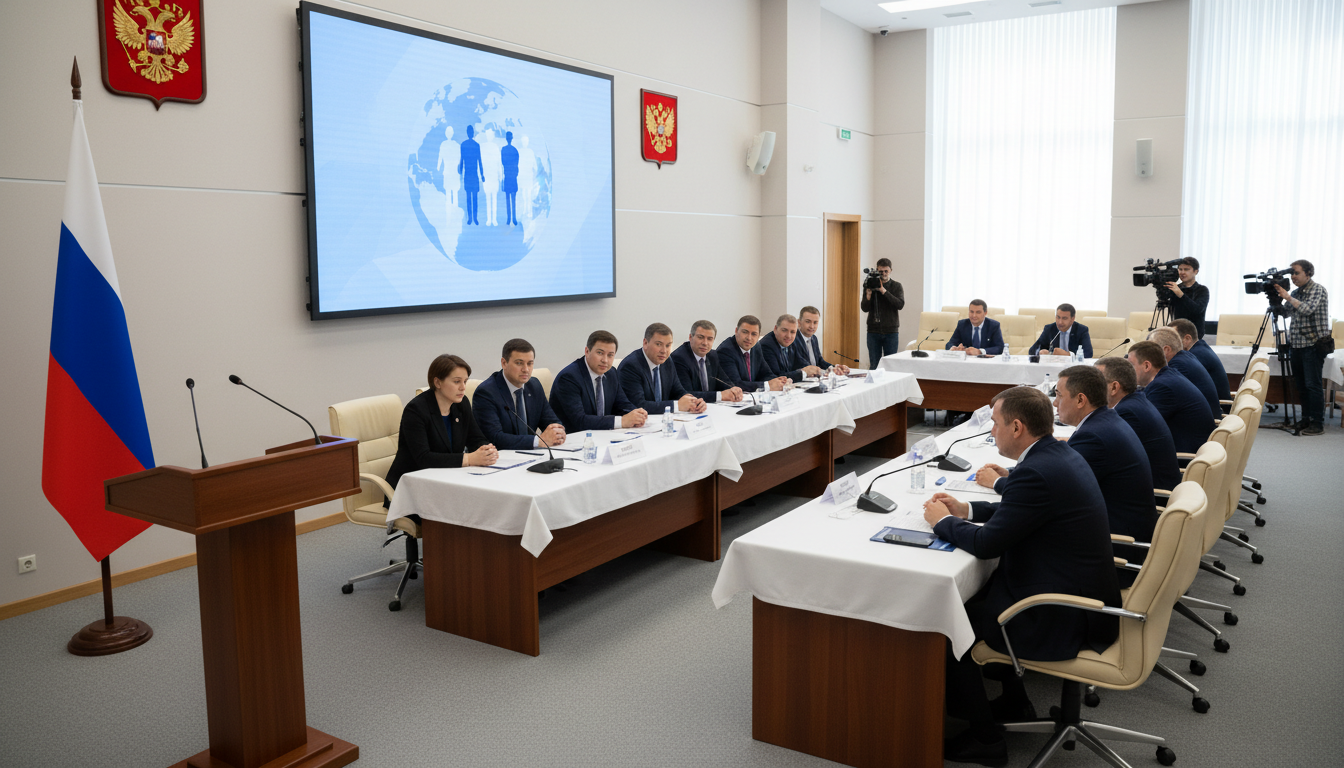
Russia’s labour shortage has sharpened into a structural problem even as President Vladimir Putin touted a record-low unemployment rate of 2.1% at a government meeting on 15 April 2026. The apparent labour-market strength masks a contraction in the civilian workforce driven by demographic decline, dwindling migrant inflows and large-scale military mobilisation. In response, the Foreign Ministry in April 2026 launched a digital programme to attract foreign specialists to fill gaps in industry and services.
Record-low unemployment masks shrinking workforce
The Kremlin’s emphasis on a 2.1% unemployment rate has been presented as evidence the economy remains broadly resilient despite sanctions and international pressure. Observers warn, however, that the figure reflects an unusually tight labour supply rather than robust demand-led growth. With fewer people available to work, wages have risen in some sectors without matching productivity gains, pushing consumer prices higher.
Demographic decline and cohorts entering the labour force
Demographers point to a birth-rate collapse in the 1990s as a principal driver of the current shortage, with cohorts born between 1992 and 2002 reaching working age in large numbers but in far smaller size than earlier generations. Official and academic estimates have long warned that Russia’s economically active population would contract by several million by 2030 and more sharply thereafter. In 2022 alone, the number of workers aged 25–29 fell by over 720,000, accelerating a multi-decade trend that is now squeezing employers nationwide.
Falling migrant inflows reduce buffer stock of workers
Historically, migration from Central Asia and other regions offset natural population decline, with roughly 12.3 million migrants filling much of the shortfall since 1992. That inflow has weakened since the pandemic and the 2022 escalation of hostilities in Ukraine, leaving Russia with an estimated three to 3.5 million legal migrant workers today, down from about 4.5 million pre-pandemic. Analysts say many migrants now favour destinations such as Turkey and Gulf states that offer higher pay and better living conditions, further tightening the domestic labour pool.
Mobilisation and defence sector pull on labour
The mobilisation for military operations and the expansion of the defence industry have removed large numbers of working-age men from civilian employment, compounding the shortage. Over the past three years, tens of thousands of contract soldiers joined the armed forces each month, and analysts estimate that roughly one million men — around 1.5% of the working-age population — are currently in uniform. Simultaneously, state-supported defence production has grown, drawing skilled workers away from civilian factories and services.
Monetary policy, wages and inflationary pressures
The labour shortage has fed through to rising wages without proportional productivity gains, placing upward pressure on prices and complicating the Central Bank’s task. With inflation near 6%, the bank has kept its policy rate at 14.5% to restrain price growth, a level more than double the inflation rate that signals financial strain rather than healthy expansion. Economists warn that persistently high borrowing costs and labour constraints could dampen investment and output over the medium term.
Moscow’s recruitment push and programme details
In April 2026 the Russian Foreign Ministry unveiled a digital scheme called “Time to Live in Russia” aimed at attracting foreigners with in-demand skills and a stated respect for traditional Russian values. The online portal invites applicants such as scientists, entrepreneurs, athletes, creative professionals, promising students and investors to submit a résumé and supporting documents, undergo an online interview and wait for a decision that may take up to 125 days. Successful candidates will be assigned a personal supervisor to assist with visas, border procedures and residency formalities, officials said.
Analysts caution that recruitment alone may not resolve the structural imbalance if underlying demographic and migration drivers remain unaddressed. They also note that easing pathways for skilled Russians to emigrate could accelerate a brain drain that already affects technical sectors, while restrictive measures on remittance channels might reduce migrant flows from Central Asia.
Russia’s labour shortage presents a complex policy challenge that touches fiscal, monetary and social planning, and it is likely to shape economic outcomes for years. The interplay between demographic decline, reduced migration, military demands and a state-led drive to reallocate labour underscores why low unemployment no longer guarantees broad-based prosperity.
The government’s new recruitment initiative signals recognition of the crisis, but most experts say a comprehensive response will require measures to boost worker retention, improve productivity, and rebuild incentives for legal migration alongside longer-term investments in family policy and education.
