
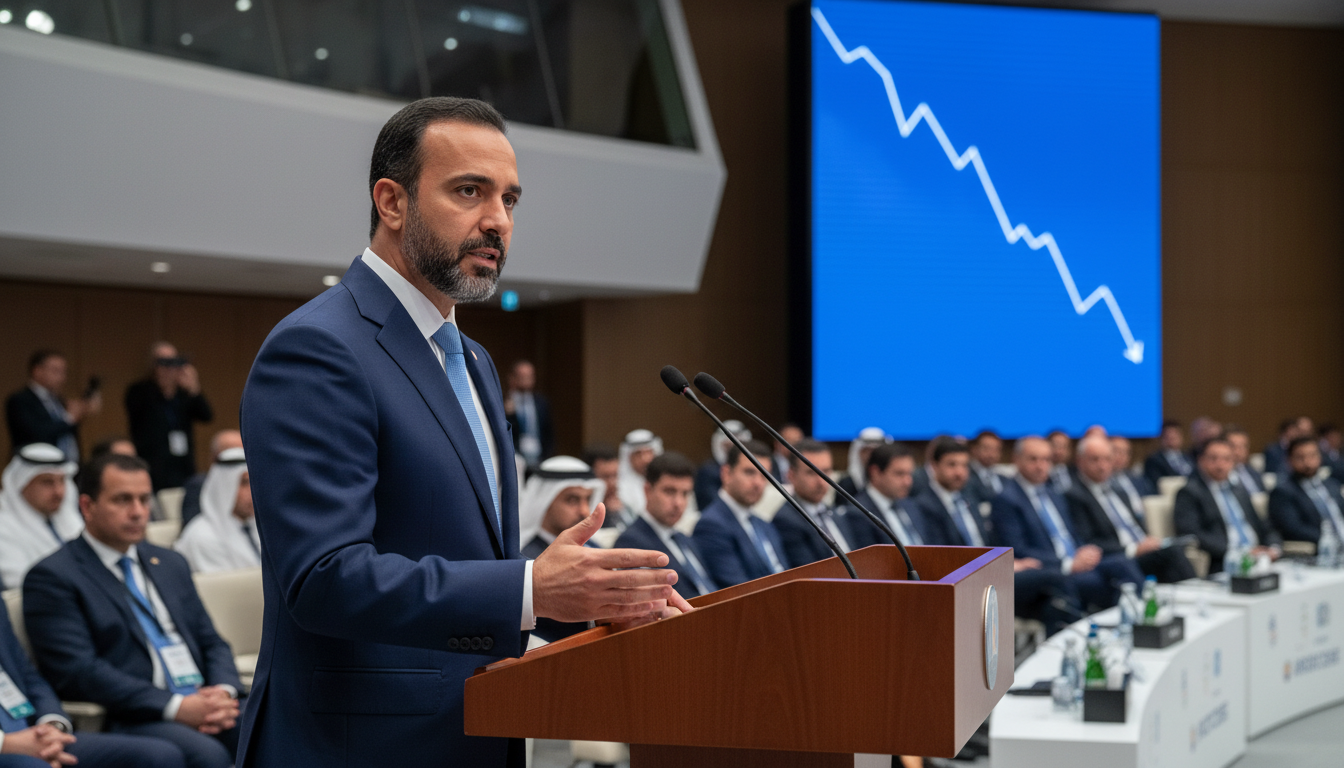
Global oil investment nears decade low at $400bn, ADNOC chief warns of future supply crisis
ADNOC chief Sultan Al Jaber warns global oil investment is near $400bn, risking a future supply crisis unless new upstream spending raises capacity. As of 2026.
Dr. Sultan bin Ahmed Al Jaber, UAE Minister of Industry and Advanced Technology and ADNOC’s managing director and group CEO, warned that global oil investment is approaching a decade low of roughly $400 billion. He made the commentary in a post on X on Friday, May 8, 2026, flagging the gap between shrinking investment and falling global inventories. He cautioned that without major new spending, current disruptions could evolve into a severe supply crisis in coming years.
ADNOC chief issues public warning
Dr. Al Jaber used his platform to underscore a strategic concern for global energy markets.
He noted that investment in exploration, development and production has dwindled to levels not seen in a decade.
The statement linked dwindling capital flows to the risk that short-term market tightness could become long-term supply shortfall.
Investment at roughly $400 billion — a 10-year trough
Industry spending on upstream oil activity has fallen toward $400 billion, according to the figure highlighted by the ADNOC chief.
That level, he said, represents one of the lowest points in the past ten years for capital allocated to finding and bringing new barrels to market.
Lower investment hampers the ability of producers to replace maturing fields and to respond to unexpected demand shocks.
Global stocks are tightening despite reduced spending
Al Jaber pointed to continued declines in global inventories even as upstream capital has weakened.
Tightening stock levels amplify the vulnerability of markets to supply interruptions or geopolitical shocks.
The combination of lower spare capacity and fewer new projects raises the prospect of heightened price volatility.
Supply risk grows because projects take time
New oil production typically requires years of investment, permitting and construction before it reaches marketable volumes.
Industry executives and analysts say that delays or cancellations now will not be quickly reversed, creating a multi-year gap between need and capacity.
Dr. Al Jaber warned that the lag between investment decisions and output increases makes prompt action important to avoid a future crunch.
Why global oil investment is subdued
Several structural factors have restrained spending in recent years, including capital discipline by major oil companies and investor focus on returns.
The transition to cleaner energy and shifting policy frameworks have also contributed to more cautious investment profiles.
Financing and permitting hurdles, plus heightened scrutiny of long-term project economics, have further reduced willingness to commit to large upstream programs.
Implications for markets, policy and industry coordination
If the investment gap widens, consumers and economies could face sharper price swings and tighter supply conditions.
Policymakers, producers and investors will likely need to weigh the trade-offs between energy transition goals and near-term security of supply.
The ADNOC chief’s warning serves as a prompt for greater industry coordination and potentially renewed capital commitment to critical upstream projects.
UAE energy authorities and national oil companies have options to help bridge the gap through accelerated investments, partnerships and targeted incentives.
ADNOC itself has pursued strategic growth projects and partnerships in recent years to expand capacity and resilience.
Industry observers say a balanced approach that sustains necessary upstream investment while advancing decarbonisation objectives will be vital for stable markets.
The warning from Dr. Al Jaber places renewed emphasis on the strategic importance of upstream spending for market stability.
With global oil investment near $400 billion and inventories falling, the coming months will test whether governments and companies move to shore up future supply.
Absent a material increase in upstream capital, the risk that current disruptions become a prolonged crisis will remain elevated.
