
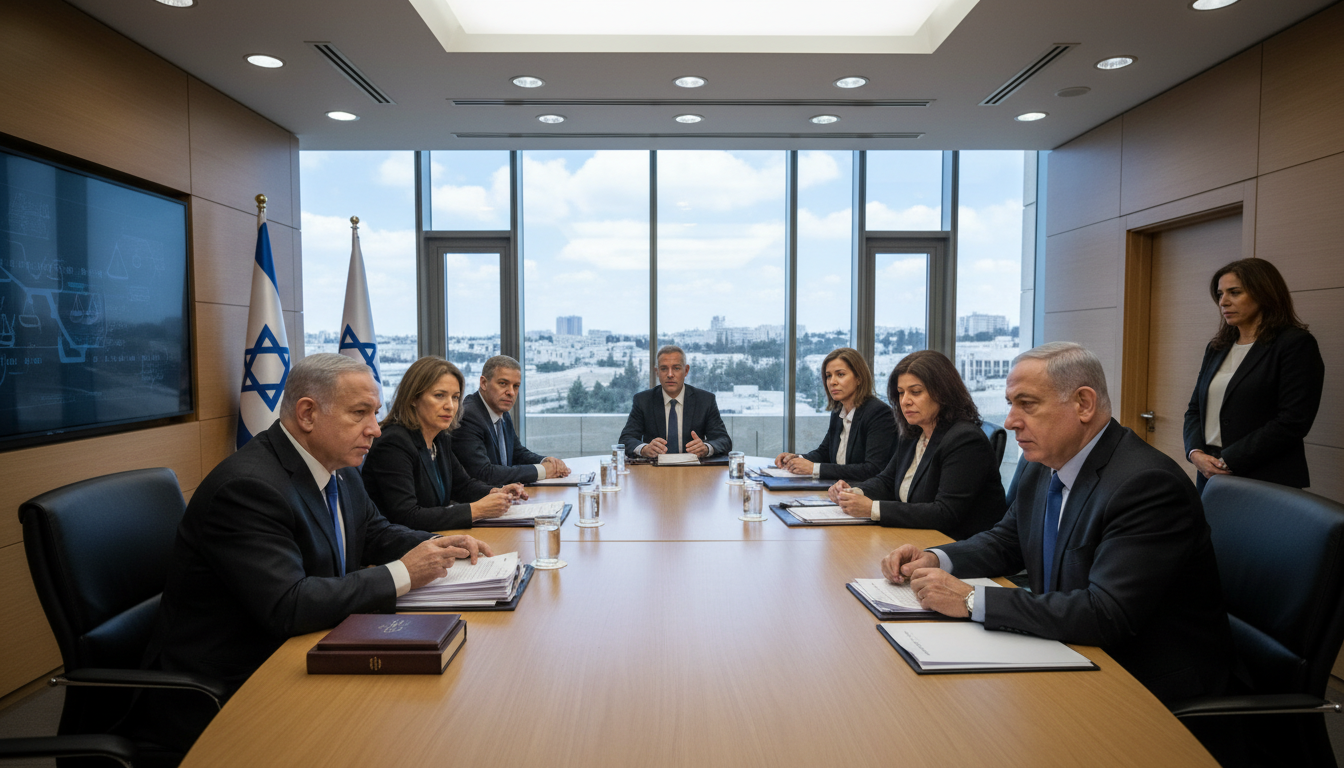
Israel Approves Special Tribunal to Impose Death Penalty on Palestinians over October 7 Attacks
Knesset votes to create a special tribunal empowered to impose the death penalty on Palestinians tied to October 7 attacks, prompting sharp criticism from rights groups.
The Knesset has approved a bill to establish a special tribunal with authority to sentence Palestinians to death for alleged roles in the October 7, 2023 attacks, a measure that rights organisations say lowers legal safeguards and risks show trials. The legislation passed 93-0 in the 120-seat parliament, with 27 members absent or abstaining, and sets a separate judicial track for suspects linked to the Hamas-led assault. Supporters argue the move responds to extraordinary crimes, while opponents warn it abandons established protections that underpin fair process.
Parliament Vote and Legislative Details
The bill cleared the Knesset late on Monday by unanimous votes cast, creating a dedicated body to hear cases tied to the October 7 violence. Lawmakers approved provisions that expand judicial discretion on evidence and create a procedure distinct from ordinary criminal courts.
Among the changes are rules that allow wider admission of testimony and material that would otherwise be excluded, and a requirement that key stages of the proceedings be filmed and published online. Proponents maintain these measures increase transparency; critics counter they fundamentally alter courtroom norms and may prejudice defendants.
Fair Trial and Rights Groups’ Concerns
Israeli and Palestinian legal organisations quickly condemned the bill, saying it erodes the presumption of innocence and weakens examination of evidence. Lawyers from groups including Adalah, Hamoked and the Public Committee Against Torture in Israel have argued that special rules will facilitate mass convictions without the safeguards customary in criminal trials.
Adalah legal counsel Muna Haddad told media the law lowers standards for admissible evidence and permits broad judicial latitude to accept statements obtained under coercive conditions. Rights advocates say those changes contravene international fair-trial guarantees and could lead to convictions based on tainted or unreliable evidence.
Public Broadcasting and ‘Show Trial’ Fears
A striking feature of the law is its mandate to broadcast certain hearings and verdicts on a dedicated website, a marked departure from Israel’s usual ban on courtroom cameras. The requirement covers opening hearings, verdict announcements and sentencing, and is intended by backers to keep the public informed of proceedings.
Opponents say the measure turns serious criminal processes into staged events and risks converting indictment into de facto guilt in the court of public opinion. They warn that broadcasting sensitive legal moments can undermine the dignity of accused persons and pressure judges and juries in high-profile cases.
October 7 Attacks and Gaza Conflict Context
The legislation is rooted in the scale and brutality of the October 7 assault that targeted Israeli communities near Gaza, which resulted in large numbers of civilian deaths and hundreds taken captive. Al Jazeera’s tally, based on official Israeli statistics, put Israeli fatalities at at least 1,139 and said roughly 240 people were seized during the initial assault.
The attack precipitated an extended Israeli military campaign in Gaza that has caused vast destruction and a heavy Palestinian death toll. United Nations experts and other observers have raised concerns about the conduct of the war and warned that aspects of the campaign risk violating international law.
International Legal Fallout and Political Reactions
The move to create a special tribunal comes amid separate international legal scrutiny of the Gaza conflict. The International Criminal Court has issued arrest warrants relating to the conduct of the war, including warrants naming Israel’s prime minister and a former defence minister, and proceedings at the International Court of Justice are ongoing over allegations concerning the conflict. Israel rejects claims of unlawful conduct.
Hamas officials denounced the new law, with a spokesperson describing it as a justification for Israel’s actions in Gaza. Meanwhile, Israeli rights groups cautioned that while accountability for the October 7 crimes is legitimate and necessary, it must be pursued through procedures that preserve the basic tenets of justice.
The bill is distinct from a separate law approved in March that permits the death penalty for Palestinians convicted of murdering Israelis; that earlier statute was not applied retroactively and therefore does not affect suspects tied to the October 2023 attacks. Legal analysts say the creation of a special tribunal and the accompanying procedural changes are likely to prompt immediate legal challenges and further international scrutiny.
Human rights organisations and legal experts warn the new framework will test the balance between demands for retribution and commitments to due process. As the first cases move toward the new tribunal, the international community and domestic courts will be watching whether the measures uphold or undermine long-standing rules meant to ensure fair trials.
The legislation marks a significant shift in Israel’s handling of wartime accountability and is set to deepen legal and political debates at home and abroad in the months ahead.
