
Kevin Warsh Moves Closer to Fed Chair After Narrow Senate Vote
Kevin Warsh confirmed as Fed board nominee by Senate, paving way for final chair vote; faces complex inflation and market pressures as leadership transition nears.
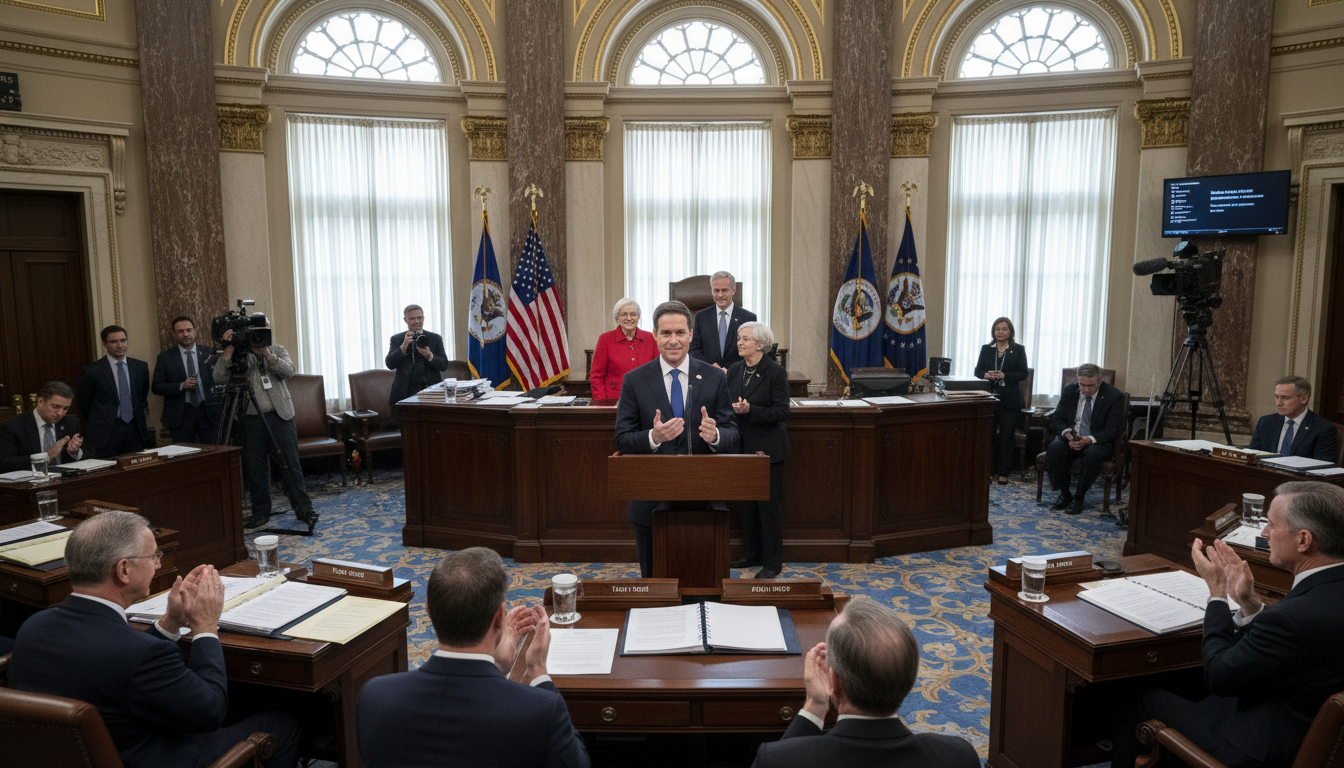
Kevin Warsh edged closer to leading the Federal Reserve after the U.S. Senate voted 51-45 on Tuesday, May 12, 2026, to approve his nomination to the Federal Reserve Board of Governors. The Senate roll call, largely along party lines, included a notable crossover from Democratic Senator John Fetterman in favor of Warsh. The approval clears a critical hurdle ahead of a final vote planned for Wednesday, May 13, 2026, to determine whether Warsh will succeed Jerome Powell as Fed chair.
Senate approves Warsh for Fed board
The Senate confirmation on May 12, 2026, seats Warsh as a governor, a necessary step before any formal appointment as chair. The 51-45 tally reflected party-line divisions, with only one Democratic senator breaking ranks to support the nominee. Senate leaders have scheduled a final procedural vote on May 13, 2026, which Republican backers say will install Warsh as the next chair of the Fed.
Final chair vote set for Wednesday
If the expected Wednesday vote confirms him, Warsh — 56 years old — would replace Jerome Powell, whose term as chair is set to expire on Friday, May 15, 2026, although Powell will remain a member of the board until 2028 unless he resigns. Republican supporters portrayed the vote as a change in direction for U.S. monetary policy, while Democrats raised concerns about the nominee’s priorities and potential shifts at the central bank. The administration of President Donald Trump has pushed for Warsh’s elevation, framing it as timely leadership for a turbulent economic outlook.
Short-lived appointee leaves board, Warsh returns to Fed circles
The confirmation also ends the brief tenure of Steven Miran, a Trump pick who occupied the seat vacated after Adriana Kugler resigned in August 2025. Warsh is not new to Federal Reserve governance; he previously served on the Board of Governors from 2006 to 2011, giving him institutional experience that Republican backers have highlighted. His return marks a notable re-entry to a policy institution that has evolved amid fresh economic and geopolitical pressures.
Economic backdrop: inflation pressures and labor dynamics
Warsh steps toward leadership at a moment of complicated economic signals. The fallout from conflict in Iran and tariff measures introduced by the Trump administration last year have added upward pressure to price indices, pushing some core inflation readings to levels not seen in three years. At the same time, labor market indicators show a cautious rebalancing: job growth has moderated and layoffs have risen in some sectors, yet unemployment remains contained for now.
Policy outlook: Warsh advocates lower rates, markets less convinced
In public statements, Warsh has argued for what he called a “substantial change” in Fed policy, including backing lower benchmark interest rates. That stance contrasts with market expectations, where traders have largely priced in a continuation of current rates and have even assigned probability to potential rate increases later this year. Investors and economists are watching whether Warsh’s stated preferences will translate into immediate policy moves or a more gradual reorientation once he holds the chair.
Markets and the calendar: eyes on June’s FOMC meeting
Financial markets are now focused on the Federal Open Market Committee meeting scheduled for June 16–17, 2026, which could offer the first concrete indication of monetary policy under Warsh if he is confirmed as chair. Analysts say the June meeting will be closely parsed for changes in the Fed’s economic projections, interest-rate guidance, and any shift in the committee’s approach to inflation and employment. Short-term market volatility may rise as traders absorb political developments and fresh economic data ahead of that session.
The confirmation vote and looming chair decision underscore how institutional leadership at the Fed can hinge on slim margins in Washington and how quickly monetary policy expectations can be reshaped by nominations. As Warsh moves toward a potential chairmanship, stakeholders from financial markets to business groups and foreign observers will be assessing whether his leadership heralds faster rate cuts, a steady hand on tightening risks, or a different approach altogether to balancing inflation and growth.
