
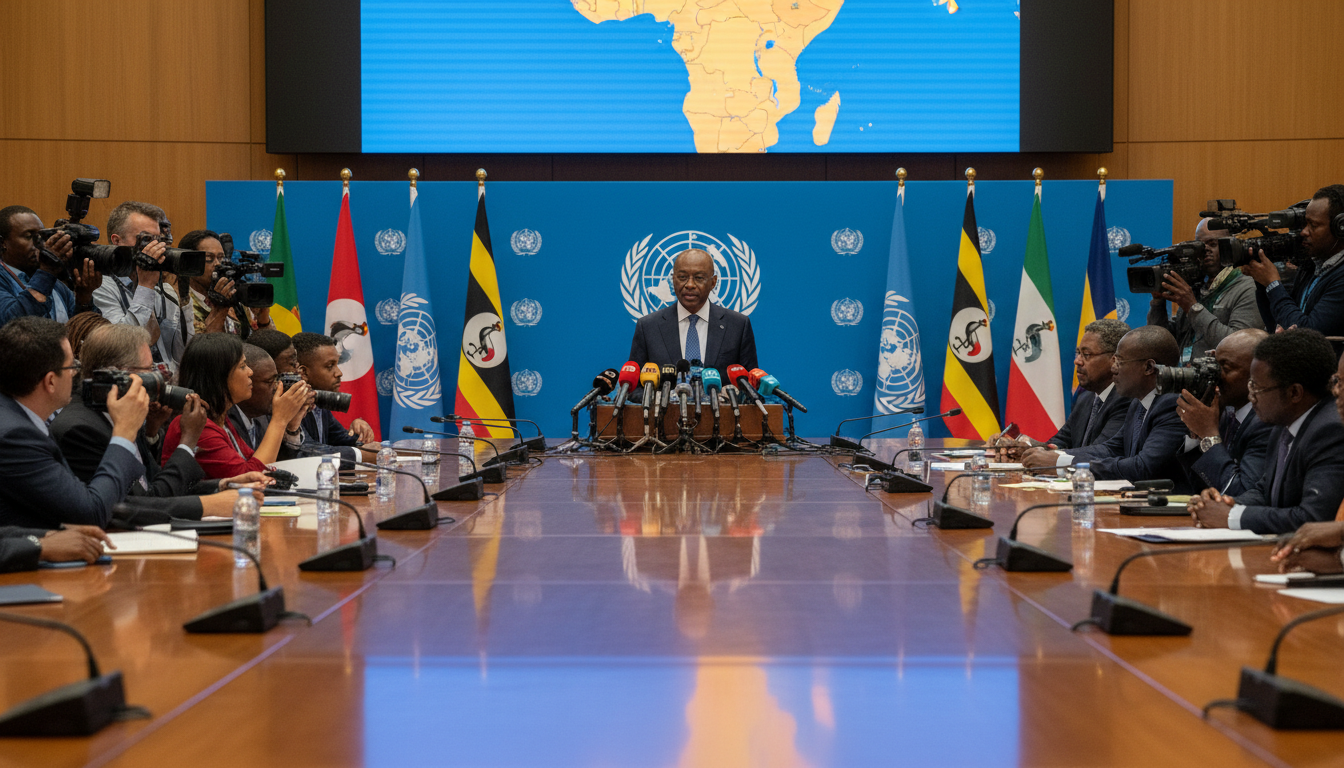
WHO declares Bundibugyo Ebola outbreak a public health emergency of international concern
WHO declares Bundibugyo Ebola outbreak a PHEIC after cross-border cases in the Democratic Republic of Congo and Uganda, prompting urgent regional coordination.
The World Health Organization on May 17, 2026 determined that the outbreak of Bundibugyo Ebola in the Democratic Republic of Congo and Uganda constitutes a public health emergency of international concern, while noting it does not meet the threshold for a global pandemic. The declaration followed reports of confirmed cross-border transmission and remaining uncertainty about the full size and location of cases. (who.int)
Confirmed infections and deaths in DRC and Uganda
Health authorities and regional public health bodies have reported hundreds of suspected infections concentrated in Ituri province, DRC, alongside laboratory-confirmed cases and fatalities, and at least one imported death in Uganda. The Africa Centres for Disease Control and Prevention and WHO referenced dozens of suspected deaths and multiple confirmed cases across several health zones including Bunia, Rwampara and Mongbwalu. (africacdc.org)
Cross-border transmission raises concern for neighbours
Officials highlighted that movement between the border regions has already resulted in exported cases, elevating the risk for neighbouring states and complicating containment efforts. WHO flagged unexplained clusters of deaths and international spread as factors in its emergency determination, prompting calls for enhanced surveillance at land crossings and major transit hubs. (bloomberg.com)
Characteristics of the Bundibugyo strain
Bundibugyo ebolavirus is a less common species of Ebola that has caused previous localized outbreaks but is not the same as the more frequently encountered Zaire ebolavirus. Public-health experts note that while Bundibugyo has historically produced lower case-fatality rates than the Zaire strain, it still causes severe viral haemorrhagic fever and requires high-level infection prevention measures. (apnews.com)
Treatment and vaccine gaps complicate the response
Unlike the Zaire strain for which licensed vaccines and some therapeutics exist, there are currently no approved, strain-specific vaccines or targeted treatments for Bundibugyo, creating a gap in available countermeasures. Health agencies and investigators have said this shortfall makes rapid case detection, isolation, and strict infection-control procedures the immediate priorities while research and manufacturing discussions continue. (statnews.com)
WHO temporary recommendations and travel guidance
In issuing the PHEIC, WHO empowered the Director-General to issue temporary recommendations aimed at reducing international spread, including measures on case finding, testing, contact tracing and advice on movement of cases and contacts. The agency emphasized that contacts or confirmed cases should not travel internationally except for medically supervised evacuations and urged states to bolster screening and laboratory capacity. (who.int)
National and regional response steps under way
Affected countries and regional bodies have mobilised emergency operations, expanded screening in urban centres, and stepped up community engagement to counter misinformation and risky burial practices. The Africa CDC has called for urgent regional coordination while national ministries of health in the DRC and Uganda have activated higher levels of preparedness and investigation teams to trace contacts and secure treatment centres. (africacdc.org)
WHO has urged all states to scale up surveillance, laboratory confirmation and cross-border cooperation to limit spread and protect health workers, while researchers pursue targeted countermeasures and vaccines. Continued reporting from national authorities and international agencies will be critical to track the outbreak’s trajectory and guide public-health steps in the coming weeks. (who.int)
