
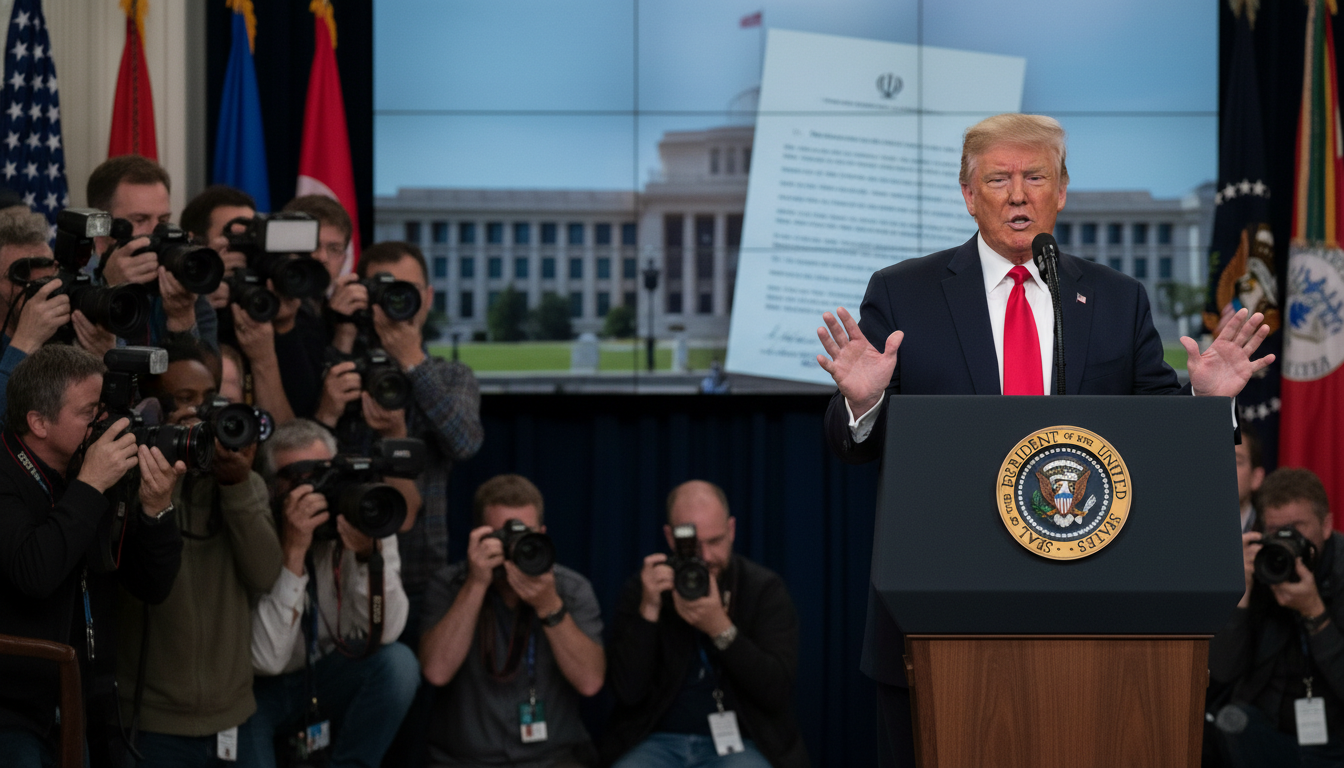
Trump says Iran “eager to sign” Iran ceasefire agreement, warns on inconsistent paperwork
Trump tells Fortune magazine Iran is “very eager” to sign an Iran ceasefire agreement, but cautions that written follow-ups have not matched verbal commitments.
Opening summary of Trump’s comments
President Donald Trump told Fortune magazine that Iran is “eager to sign” an Iran ceasefire agreement with the United States, saying Tehran had verbally agreed but later sent documents that did not reflect the terms discussed.
Trump’s remarks, published in the interview released today, framed the negotiations as tentative but potentially close to yielding a temporary halt to hostilities.
The president reiterated skepticism about how agreements are translated into written form and signaled continued caution even as he described progress in talks.
What Trump said to Fortune
In the interview, Trump described a pattern in which Iranian interlocutors would signal agreement during talks but later deliver papers that “have nothing to do” with previously negotiated terms.
He used that discrepancy to underline the difficulty of converting verbal understandings into enforceable documents, and to justify a careful, step-by-step diplomatic approach.
Trump’s comments appeared aimed at both reassuring domestic audiences that talks were advancing and warning that written texts would be scrutinised before any commitments were accepted.
Context for the ceasefire discussions
The reported ceasefire talks follow a period of heightened tension in the region and diplomatic efforts to prevent wider escalation.
U.S. officials have in recent weeks engaged intermediaries and regional partners to test whether Tehran’s negotiators possess the authority to deliver and implement a binding deal.
The administration has framed a temporary ceasefire as a way to pause hostilities while more durable political and security arrangements are explored.
Diplomatic hurdles and documentation issues
White House concerns about “paper” that does not reflect negotiated terms highlight a common diplomatic challenge: ensuring that signed texts match the intent of negotiators.
Experts say differences can arise from translation, legal drafting, or deliberate ambiguity, and that resolving those gaps typically requires additional rounds of negotiation.
Trump’s public insistence on matching text to prior understandings signals that the United States will push for precise language and implementation guarantees before endorsing any agreement.
Iran’s response and regional reactions
There was no immediate, confirmed public response from Iranian officials to Trump’s characterization of the talks at the time the interview was published.
Regional governments and international stakeholders have been monitoring the discussions closely, given the potential impact on security and energy markets across the Gulf and beyond.
Analysts caution that even if Tehran expresses readiness to sign, domestic political constraints and competing factions within Iran could complicate rapid finalisation and implementation.
Implications for U.S. policy and the region
If a credible Iran ceasefire agreement is achieved and its text reflects mutually agreed terms, it could create a window for de-escalation and follow-up diplomacy.
However, the durability of any pause in hostilities will depend on monitoring arrangements, verification mechanisms, and the willingness of both sides to abide by written commitments.
Trump’s public remarks underscore a U.S. posture that seeks to balance diplomatic openings with demands for enforceable guarantees.
Next steps and potential outcomes
U.S. and regional officials are likely to continue low-profile diplomacy to iron out textual differences and clarify the authority of negotiating counterparts.
Observers say the process could produce a short-term ceasefire or an agreement-in-principle that will require further technical work, or it could stall if the parties cannot bridge the paper-to-practice gap.
For now, administration statements and interviews like the Fortune piece serve to set expectations at home and abroad about the fragile nature of the negotiating process.
The president’s comments to Fortune place emphasis on both the possibility of a break in hostilities and the hard work required to turn verbal agreements into legally and politically binding texts, leaving the immediate trajectory of talks uncertain.
