
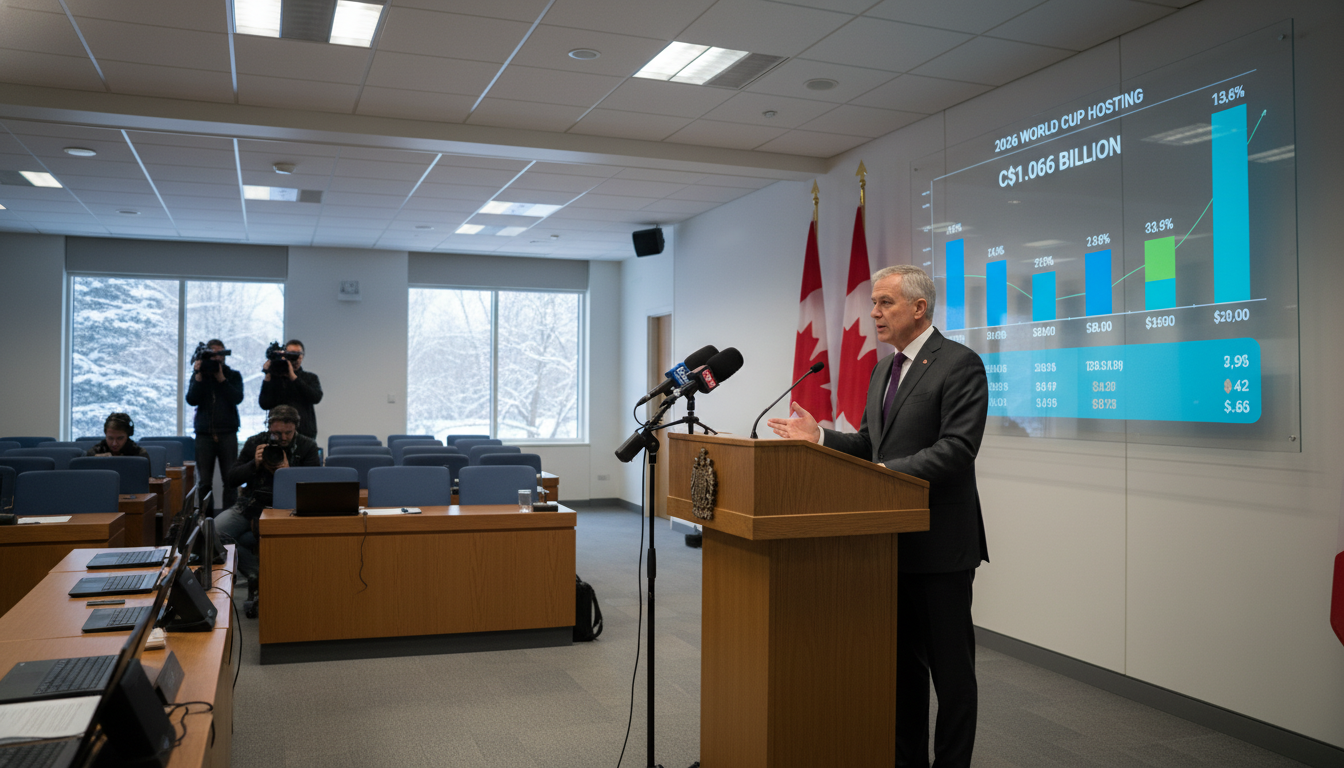
Canada World Cup 2026 cost pegged at CAD 1.066 billion, PBO says
Canada World Cup 2026 cost estimated at CAD 1.066 billion by the Parliamentary Budget Officer; federal share CAD 473M and security funding up to CAD 145M.
Strong fiscal estimate from Parliamentary Budget Officer
In a report published Wednesday, the Parliamentary Budget Officer estimated the Canada World Cup 2026 cost at roughly CAD 1.066 billion, confirming the scale of public spending for the tournament. The report places the average cost at about CAD 82 million per match, a figure the office said aligns with historical government outlays for major World Cup events. This assessment frames expectations for federal, provincial and municipal budgets as Canada prepares to co-host the World Cup with the United States and Mexico.
Federal and other government shares disclosed
The report specifies that of the CAD 1.066 billion total, the federal government will cover CAD 473 million while other levels of government—including provincial and municipal bodies—are to provide the remaining CAD 593 million. Those allocations reflect negotiated responsibilities between Ottawa and local hosts, with the federal contribution covering targeted national-level expenses. The division underscores the multilevel public financing model used for international sporting events on Canadian soil.
City and provincial plans for Toronto and Vancouver
Local plans show Toronto and Vancouver will host a combined 13 matches during the tournament, with Toronto set to stage six fixtures and Vancouver seven. As of April, Toronto projected spending of CAD 380 million, including grants, to prepare for and host its matches; British Columbia outlined planned expenditures of CAD 578 million for Vancouver’s seven games. Those municipal and provincial figures account for venue operations, local infrastructure enhancements and event delivery costs specific to each host city.
Security allocation and operational readiness
The federal government in April signalled it would allocate up to CAD 145 million for tournament security, a line item the PBO highlighted as a significant component of overall spending. Security funding is intended for both frontline operational costs and coordination among federal, provincial and local law enforcement agencies. Organizers and governments have previously emphasised the complexity of securing a multi-city, multinational tournament and the need for coordinated funding and planning.
Match schedule and opening fixtures in Canada
Canada will host 13 matches between June 11 and July 19, 2026, as part of the broader tournament schedule shared with the United States and Mexico. The Canadian national team’s first match in the competition is scheduled in Toronto on June 12 against Bosnia and Herzegovina, marking the start of the host nation’s World Cup campaign. Those fixtures place additional demands on local transport, hospitality and security systems in the host cities during a concentrated summer period.
Cost per match and historical context
At roughly CAD 82 million per match, the PBO’s estimate is consistent with prior analyses of public spending for FIFA World Cups and similar global sporting events. The office noted that the per-match figure reflects an aggregation of diverse cost categories, including venue operations, public safety, transportation support and municipal services. While high-profile international tournaments often drive public visibility and tourism, they also require careful fiscal oversight to ensure long-term value for public investments.
Implications for provincial and municipal budgets
The combined CAD 593 million from provincial and municipal sources highlights the substantial local financial stakes in hosting World Cup matches. Cities and provinces must balance event-related spending against other infrastructure and service priorities, and officials are likely to monitor ticketing, sponsorship and legacy benefits closely. Local authorities also face operational deadlines to secure workforce, transport capacity and venue readiness as the tournament approaches.
Canada faces both opportunity and scrutiny as it prepares to co-host the 2026 FIFA World Cup, with the Parliamentary Budget Officer’s CAD 1.066 billion estimate providing a definitive public accounting benchmark. Governments at all levels will be watched for how they manage the balance between immediate event costs and promised long-term returns to communities hosting matches.
