
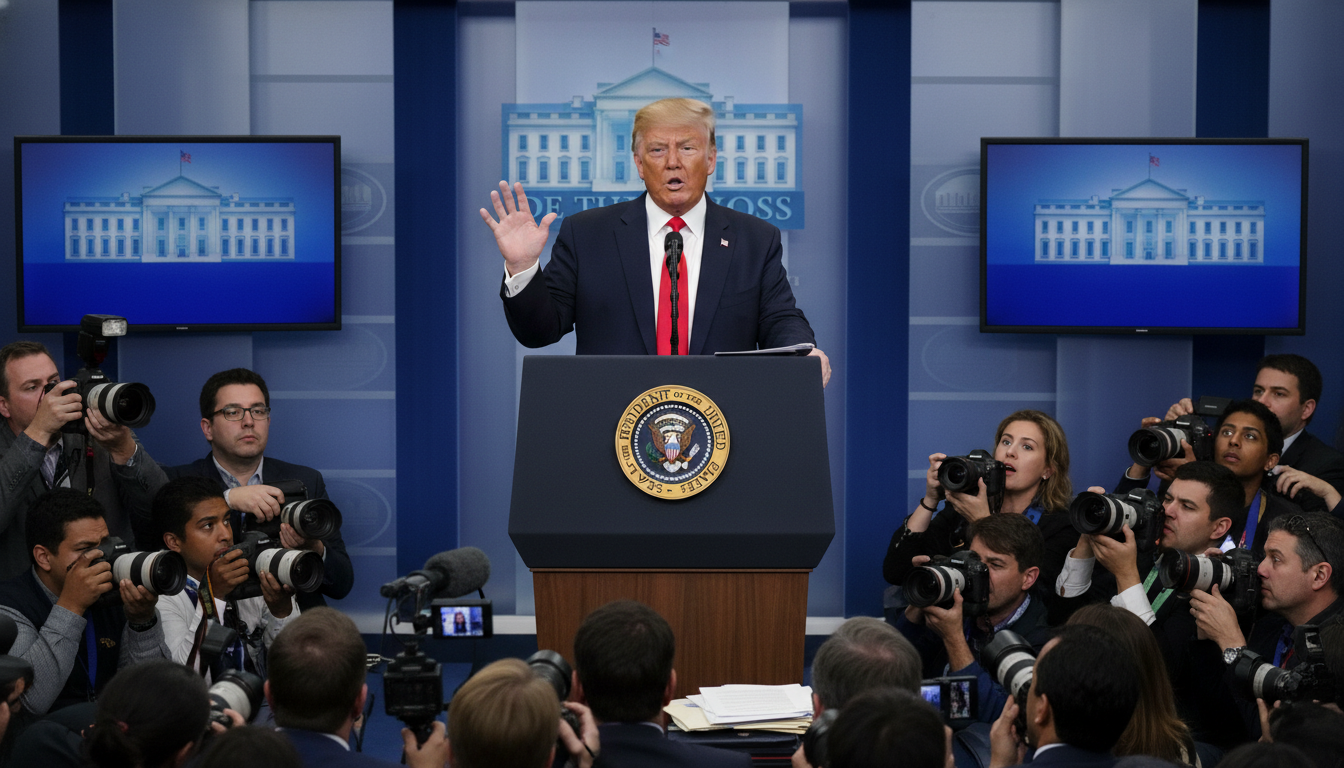
Trump: U.S.-Iran negotiations underway as Washington vows to seize and destroy Iran’s highly enriched uranium
Trump says U.S.-Iran negotiations are underway and that Washington will seize and destroy Iran’s highly enriched uranium, citing control of Hormuz Strait.
President Donald Trump said U.S.-Iran negotiations are taking place and that Washington is monitoring where talks will lead while insisting the United States will secure its objectives. He asserted that Washington will obtain Iran’s stockpile of highly enriched uranium and would likely destroy it rather than allow it to remain in Iranian custody. Mr. Trump also claimed U.S. naval forces are exerting control over the Strait of Hormuz through a blockade that restricts maritime movement to and from Iranian ports. He added that the United States has degraded Iran’s missile capabilities and seeks an open, fee-free transit through the waterway.
Trump’s announcement on negotiations with Iran
Mr. Trump told audiences that formal talks with Iran were underway, though he provided no public timetable or detailed framework for the discussions. He framed negotiations as one element of a broader strategy that includes military pressure and economic measures to limit Tehran’s strategic reach. The remarks cast the diplomatic process alongside military posturing, signaling a combined approach meant to extract concessions from Iran. Officials in Washington have not released a comprehensive checklist of demands tied to the talks.
Claims about seizing and destroying enriched uranium
The former president said U.S. forces will acquire Iran’s highly enriched uranium and would destroy it on U.S. terms, arguing that such material cannot be permitted to remain under Iranian control. Highly enriched uranium is widely regarded by experts as a sensitive material because of its potential use in weapons programs, and any credible claim of seizure would raise legal and logistical questions. The White House statement presented the action as a security imperative rather than a negotiated transfer, and did not specify the mechanisms or legal basis for such an operation. Independent verification and details from international monitors would be required to confirm any transfer or destruction.
Control of the Strait of Hormuz and economic effects
In his remarks, Mr. Trump said U.S. naval operations have effectively controlled the Strait of Hormuz through a maritime blockade that limits the movement of vessels to and from Iranian ports. He asserted this interdiction has imposed daily economic losses on Tehran, which he quantified as roughly $500 million per day. The Strait of Hormuz is a vital conduit for global energy shipments and any sustained disruption can have broad market and regional repercussions. Shipping insurance rates, rerouting costs, and wider economic fallout are among the potential consequences of prolonged maritime restrictions in the area.
Assessment of Iran’s missile capabilities
Mr. Trump stated that roughly 75 percent of Iran’s missile capabilities have been destroyed as part of U.S. operations, a figure he presented to underscore the pressure applied on Tehran’s conventional and strategic capacities. Such an assessment, if accurate, would represent significant degradation of Iran’s long-range strike options and air defense posture. However, concrete corroboration of the extent of damage to missile inventories and launch infrastructure typically requires independent military assessments and satellite or on-the-ground verification. Tehran has historically reported rapid repair and redevelopment cycles for military systems when under pressure.
Regional and diplomatic implications
The combination of declared negotiations and simultaneous military assertions raises immediate diplomatic questions for Gulf states and other regional actors watching the U.S.-Iran dynamic. Gulf capitals, major shipping companies, and international partners will be assessing whether rhetoric translates into policy changes that could affect security, commerce, and energy flows. International bodies and allies may call for transparency from both Washington and Tehran to prevent miscalculation and to protect commercial shipping lanes. The mixed message of diplomatic engagement accompanied by reported interdiction complicates conventional pathways for de-escalation.
What to watch next in the U.S.-Iran talks
Observers will be looking for concrete signals of progress or stall in the U.S.-Iran negotiations, including any joint statements, agreed timelines, or involvement of third-party mediators. Monitoring agencies and foreign ministries may seek clarification on claims about uranium transfer and missile damage to determine whether these are assertions of intent, operational facts, or negotiating leverage. Commercial shipping registries and insurance markets will also be important barometers of perceived risk in the Strait of Hormuz. How regional partners and international institutions respond could shape the immediate trajectory of both diplomacy and force posture.
The coming days are likely to bring further statements from Washington and responses from Tehran as officials clarify positions and opponents and allies evaluate implications for regional stability and international law.
