
UAE economic resilience spotlighted as non‑oil sector drives record trade and growth
Minister Abdullah bin Touq says UAE economic resilience is underpinned by diversification, 6.2% non‑oil growth, AED 3.8tr non‑oil trade and $1tr+ foreign assets.
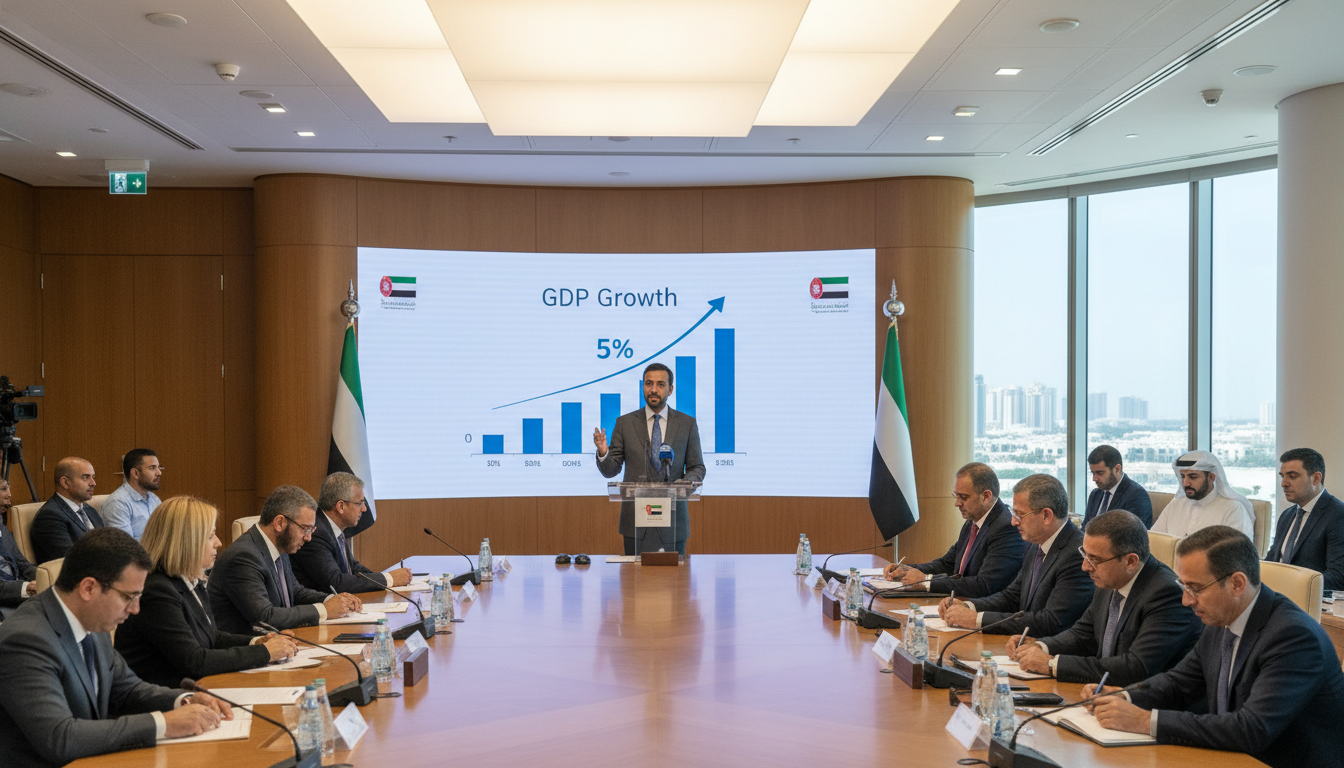
The UAE reaffirmed its model of open, adaptable growth at the Economy Middle East summit in Abu Dhabi, where Minister of Economy and Tourism Abdullah bin Touq Al Marri said UAE economic resilience has been proven amid regional volatility. He told delegates the country designed its economy to perform under varying conditions, stressing that openness and predictability remain central to sustained competitiveness. The minister highlighted recent macroeconomic and trade figures to show diversification is moving from ambition to reality.
Minister outlines tests of security, continuity and trust
Minister Al Marri told attendees that the region is facing one of the most serious conflicts in decades, which places new tests on states and markets. He said the first test is security, the second is continuity of economic activity, and the third is the preservation of trust among partners and investors. In this environment, he argued, the advantage falls to economies that are open, reliable and able to maintain operations efficiently.
Non‑oil sector posts strong growth and record trade
Between 2021 and 2025 the UAE recorded an average annual GDP growth of about 5%, with non‑oil growth running at approximately 6.2%, the minister said. Non‑oil activities now account for more than 77% of GDP, indicating a substantial structural shift in the national economy. In 2025 the UAE’s non‑oil foreign trade exceeded AED 3.8 trillion, while non‑oil exports reached a record AED 813 billion, marking significant trade milestones.
Diversification evident across the economic structure
Al Marri said these indicators demonstrate that diversification is no longer merely aspirational but is embedded in the UAE’s economic structure. He pointed to the rising share of non‑oil sectors in output and trade as evidence that policy measures to broaden the economic base are yielding measurable results. The minister framed diversification as both an outcome of past reforms and a continuing policy priority for future growth.
Policies to safeguard business continuity and supply chains
The government’s resilience strategy, he added, focused first on protecting business continuity and keeping trade and essential services flowing with minimal disruption. That strategy goes beyond maintaining strategic stockpiles to include diversifying trade routes, accelerating customs procedures and expanding port and airport capacity. Building multiple, trusted supplier networks and strengthening institutional and digital coordination were also listed as core elements of the approach.
Financial strength underpins resilience and investor confidence
Al Marri also emphasised the role of financial resources in supporting stability and future investment. He noted the UAE’s foreign assets exceed $1 trillion, while sovereign wealth vehicles manage more than $2 trillion in assets, figures he used to underline fiscal and financial resilience. Those pools of capital, he said, provide the state with the ability to respond to shocks and to invest in the next phase of economic expansion.
Next phase will target higher growth, talent and supply‑chain depth
Looking ahead, the minister outlined priorities for the coming period: accelerating growth engines, attracting and retaining global talent, and deepening supply‑chain integration. He said policymakers will push for faster development of strategic sectors and for reforms that make the UAE an even more predictable and efficient place to do business. Strengthening human capital, he added, is essential to sustain innovation and competitiveness.
The message delivered in Abu Dhabi was clear: the UAE’s economic resilience rests on deliberate policy choices that have diversified output, strengthened trade links and built significant financial buffers. As regional uncertainty persists, the government plans to keep reinforcing the structures that allow the economy to operate reliably and to expand opportunities for investment and talent.
