
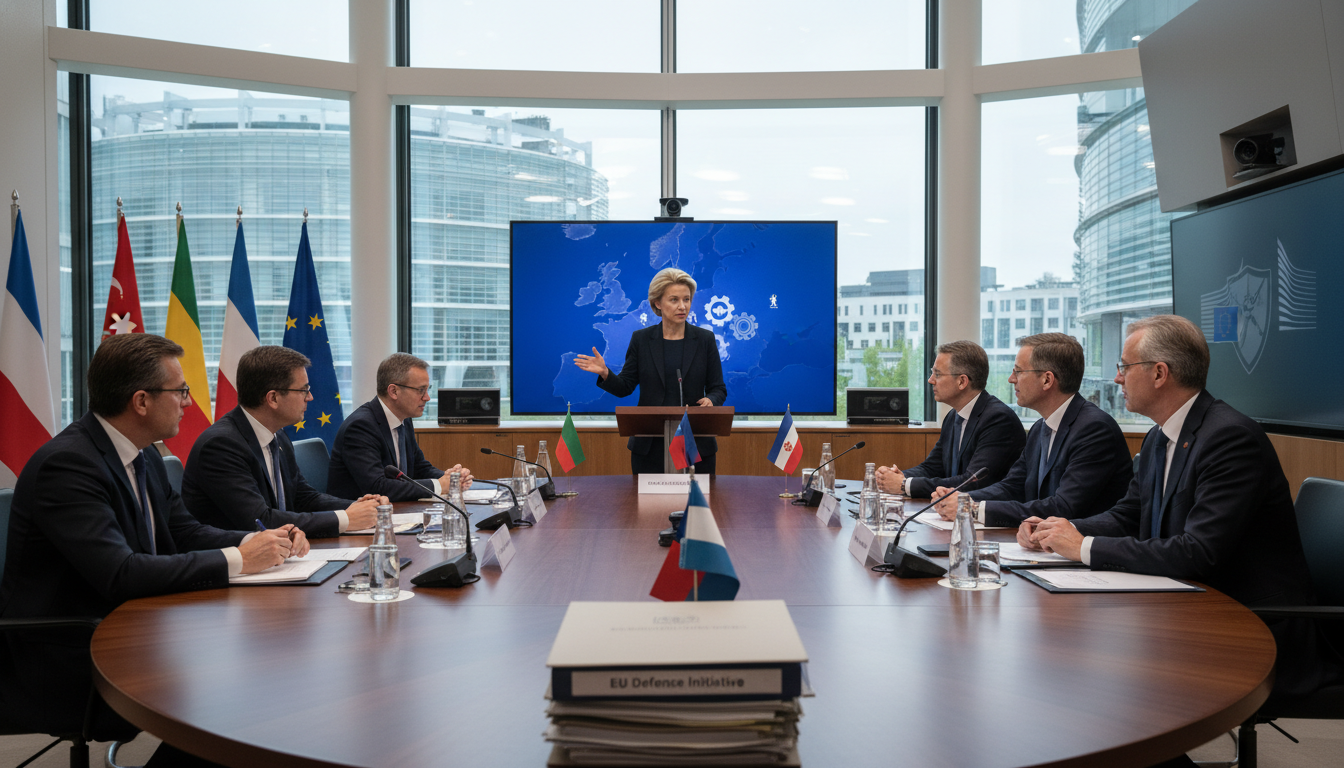
NATO reliability questioned as US troop shifts force a European rethink
UAE readers: Growing doubts over NATO reliability follow erratic US military announcements and prompt calls for a stronger European defence posture ahead of a July summit.
The sudden reversal of US troop plans in Europe has intensified debate about NATO reliability and the alliance’s future role in continental defence. In a matter of weeks, conflicting announcements from Washington about deployments and withdrawals have left European capitals scrambling to reassess contingency plans. The wavering US posture has turned what was long seen as a predictable security backbone into a source of strategic uncertainty for NATO members.
U.S. troop announcements deepen strategic uncertainty
The sequence of statements from Washington — cancelling, proposing reductions, then re-announcing troop movements — has unsettled military planners across Europe. Commanders and defence ministers say such oscillations complicate logistics, basing arrangements and long-term rotational planning. For allies, the issue is less the scale of forces than the unpredictability of commitments that underpin collective defence.
European officials describe a new operating environment where NATO reliability can no longer be taken for granted. Intelligence sharing, pre-positioned equipment and interoperability arrangements rely on consistent political backing. When public messaging from a key ally fluctuates, it forces partners to build redundancies and hedge against the possibility of sudden policy shifts.
European capitals reassess defence posture ahead of NATO summit
With a NATO summit scheduled for July 7–8, many European governments are prioritising discussions on burden-sharing and contingency operations. Defence planners are now examining scenarios that assume varying levels of US engagement and testing how quickly European units could fill gaps. The summit is expected to sharpen debates on whether the alliance should remain the primary framework for European security or function alongside new regional initiatives.
Diplomatic sources say leaders will seek reassurances while also signalling intent to deepen European cooperation. Public statements aside, officials are keenly aware that political manoeuvring in Washington can reset expectations overnight. As a result, European ministers are preparing both joint declarations within NATO and parallel measures that can be implemented without immediate US endorsement.
Operational gaps: planning, interoperability and command
NATO’s defence architecture has long rested on three pillars: long-range planning, interoperable forces, and a unified command system. Experts warn that inconsistent American policy erodes each of these pillars by disrupting joint exercises, procurement timelines and command rotations. The consequence is a fragmented readiness picture that could reduce response speed in a crisis.
European militaries still depend on US capabilities in areas such as satellite communications, strategic airlift and missile defence. Closing those capability gaps will take years and sustained investment, but analysts stress that improving joint planning and command protocols can deliver near-term resilience. Strengthening NATO’s operational framework would also limit the strategic leverage created by unilateral shifts in allied policy.
Rapid Response Force gains traction as a practical alternative
Regional initiatives such as a joint rapid reaction force are gaining attention as practical supplements to NATO’s traditional model. Launched in various forms after 2014, these units aim to provide fast, scalable responses to incursions or crises in Europe’s near abroad. Proponents argue that a well-funded, regularly exercised rapid force could deter limited aggression and buy time for broader alliance mobilization.
Transforming these frameworks into robust deterrent options requires systematic training, pooled procurement and predictable financing. Tying such forces to European defence funding mechanisms would increase political buy-in and operational readiness. If implemented effectively, a rapid response capability could become the primary tool for immediate security needs while NATO remains the ultimate collective defence guarantee.
Financial and political limits to a 10% defence target
Calls from some quarters to raise European defence spending to levels as high as 10% of GDP reflect the scale of ambition required for full autonomy. However, most European economies face competing social and economic priorities that make such targets politically toxic. Defence ministers acknowledge that while higher spending is desirable, realistic paths will involve targeted investment in key capabilities rather than across-the-board hikes.
Smaller and medium-sized states face particular trade-offs between social services and military outlays, making a uniform 10% benchmark impractical. Instead, officials are discussing concentrated spending on strategic enablers — logistics, airlift, anti-access systems and interoperability — that multiply the effectiveness of existing forces. Pragmatic allocation can reduce dependence on external capabilities without imposing unsustainable fiscal burdens.
Tactical diplomacy: managing relations with Washington
For the time being, European leaders appear to be treating relations with the United States as a tactical effort rather than a strategic certainty. Diplomacy aims to avoid direct confrontation while securing practical commitments that sustain deterrence. This approach reflects a preference for stabilising ties in the short term while simultaneously building longer-term European options.
Officials emphasise that Europe need not choose between partnership and autonomy; both can coexist if framed properly. Maintaining transatlantic cooperation on intelligence, sanctions and technological defence remains a priority even as Europeans accelerate independent initiatives. The near-term challenge is to balance constructive engagement with Washington against credible pathways to greater strategic self-reliance.
The evolving debate over NATO reliability and the form European defence should take is likely to dominate discussions in capitals through the summer. Whatever emerges from the upcoming summit, the signal is clear: European security planners are preparing for an era where transatlantic guarantees may be less stable and where regional capabilities must be more responsive and better coordinated.
