
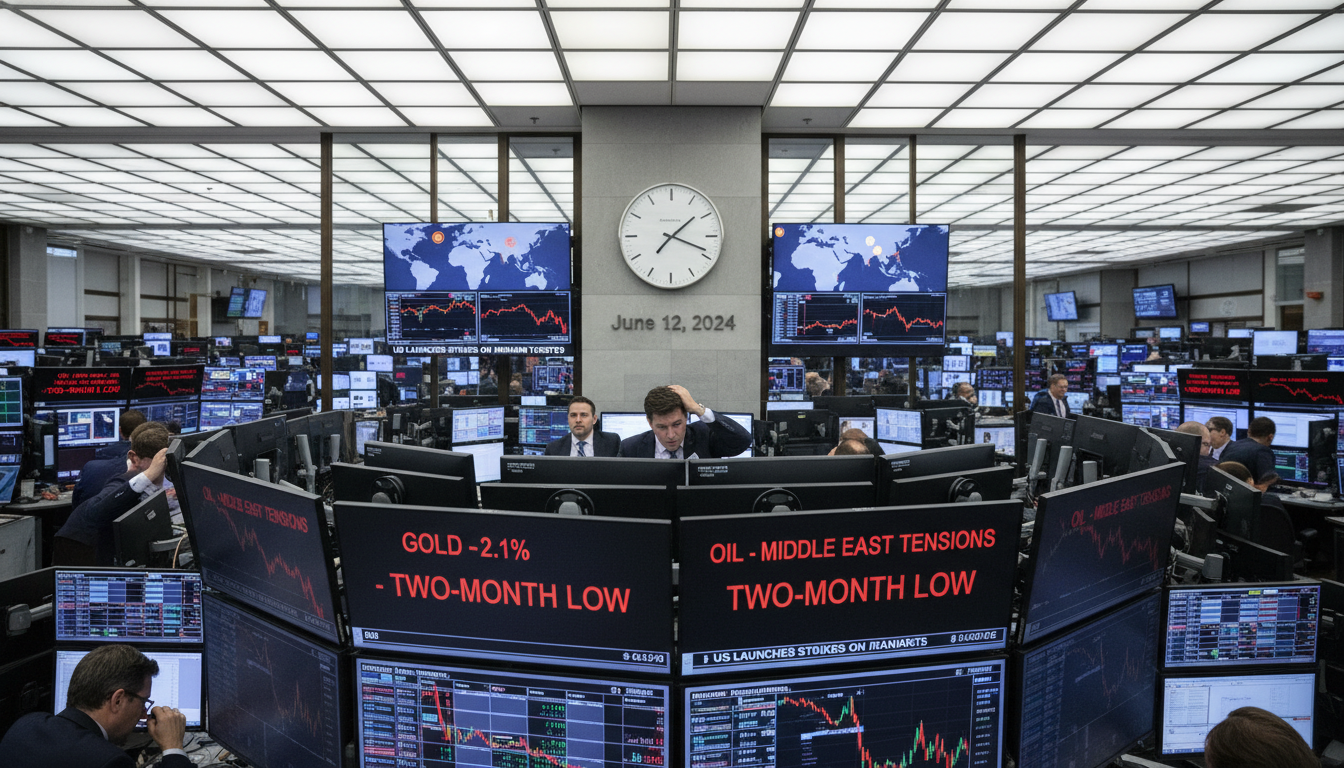
Gold prices tumble to two-month low as oil spikes after US strikes on Iran
Gold prices fell to a two-month low after US strikes on Iran sent oil higher, stoking inflation fears and lifting the dollar, pressuring bullion and other precious metals.
Gold prices dropped sharply on Thursday, sliding to their lowest level in about two months as geopolitical tensions pushed oil higher and the dollar strengthened. Market data showed spot gold fell around 1.7 percent to $4,380.62 an ounce, touching its weakest level since March 26 before trimming losses. Futures for June delivery in the United States also declined roughly 1.6 percent to near $4,377 an ounce, reflecting broad selling across bullion markets.
Market moves and price details
Market trading reflected a rapid reassessment of safe-haven demand after the latest round of US strikes on Iran triggered a risk-on reaction in some asset classes. Spot gold’s decline of 1.7 percent was the sharpest move in early trading, according to exchange data, and came as investors factored in the potential economic impact of higher energy costs. Traders cited heavier selling from speculative positions and stop-losses being triggered as prices slid through key technical levels.
Volume and volatility rose as bullion reacted to both geopolitical headlines and shifting expectations for monetary policy. Dealer reports indicated that some long positions were pared back while short-covering in other asset classes supported a firmer dollar. The net effect was a sustained downward pressure on gold prices through the session.
Dollar strength increases pressure on bullion
The US dollar advanced to its strongest level in about a week, making dollar-priced commodities costlier for holders of other currencies. A firmer greenback typically dulls demand for bullion since foreign buyers face higher local-currency costs to purchase gold. Market participants noted that currency moves compounded the sell-off that began after the oil market spike.
Higher Treasury yields accompanied the dollar’s rise, amplifying headwinds for an asset that offers no yield. Investors weighing opportunities across fixed income and commodities reassessed the opportunity cost of holding gold amid a rising rate environment.
Oil surge after US strikes on Iran raises inflation concerns
Oil prices jumped following reports of US military action against Iranian targets, heightening worries that energy costs could feed into broader inflation. Analysts warned that a renewed upward trend in crude would increase input costs across multiple sectors, placing upward pressure on headline inflation readings. Such a backdrop can alter central bank calculations and lead to expectations of tighter policy.
Those inflation dynamics present a paradox for gold: while bullion is often seen as an inflation hedge, the prospect of more aggressive interest-rate hikes to tame inflation tends to weigh on non-yielding assets. Traders factored both forces into their positioning, and short-term concerns about rates appear to have outweighed the classic safe-haven impulse.
Declines extended to other precious metals
The retreat in bullion was mirrored across other precious metals markets as investors exited long positions in response to the broader move. Spot silver fell about three percent to $72.37 an ounce, according to trade figures, marking near one-month lows as industrial and investment demand were repriced. Platinum slid roughly 1.4 percent to $1,890.81 an ounce, also touching levels not seen in several weeks.
Palladium saw a steeper percentage decline of roughly 1.9 percent to $1,364.26 an ounce, with traders noting that automotive demand concerns and shifting sentiment toward risk assets contributed to the drop. Together, the moves signalled a widespread cooling in the precious metals complex rather than an isolated correction in gold prices.
Investor implications and interest-rate outlook
For investors, the episode underscores the sensitivity of gold prices to the interaction between geopolitical events, energy markets, currency moves, and central bank expectations. Rising oil and a firmer dollar can be a double challenge for bullion: they raise inflationary risks that could eventually support gold, yet they also increase the likelihood of higher interest rates that pressure non-yielding assets. Portfolio managers said they were reassessing allocations and hedges in light of the renewed volatility.
Fixed-income markets and central bank commentary will likely be central to near-term price direction. Market participants highlighted that any clear shift in the trajectory of US Treasury yields or an unexpected policy response from major central banks could quickly swing sentiment back toward gold or deepen the sell-off.
Key indicators and events to watch next
Traders said they will closely monitor oil benchmarks, US inflation indicators, and upcoming central bank remarks for clues about the path of rates and the potential for sustained inflation. Holiday-thinned liquidity can magnify moves, so attention will also focus on volumes and open interest in futures markets. Market-watch lists included industrial demand indicators for silver and supply dynamics in platinum-group metals as secondary drivers of precious metals performance.
Short-term technical levels around $4,300 to $4,400 per ounce for spot gold were cited as important support and resistance markers that could guide trading strategies. Analysts recommended that investors expect elevated volatility while geopolitical tensions and energy-price swings remain active.
Gold’s short-term outlook remains uncertain as competing forces play out across markets. Observers say that until there is clearer direction on oil prices and central bank policy, gold prices are likely to trade with heightened sensitivity to headline risk and shifts in investor risk appetite.
