
Myanmar explosion in Shan State kills dozens at mining-explosives warehouse
Dozens killed after a warehouse storing mining explosives detonated in Kaung Tup, Shan State on May 31, 2026, raising cross-border safety and humanitarian concerns.
Blast Kills Dozens in Rebel-Held Shan State
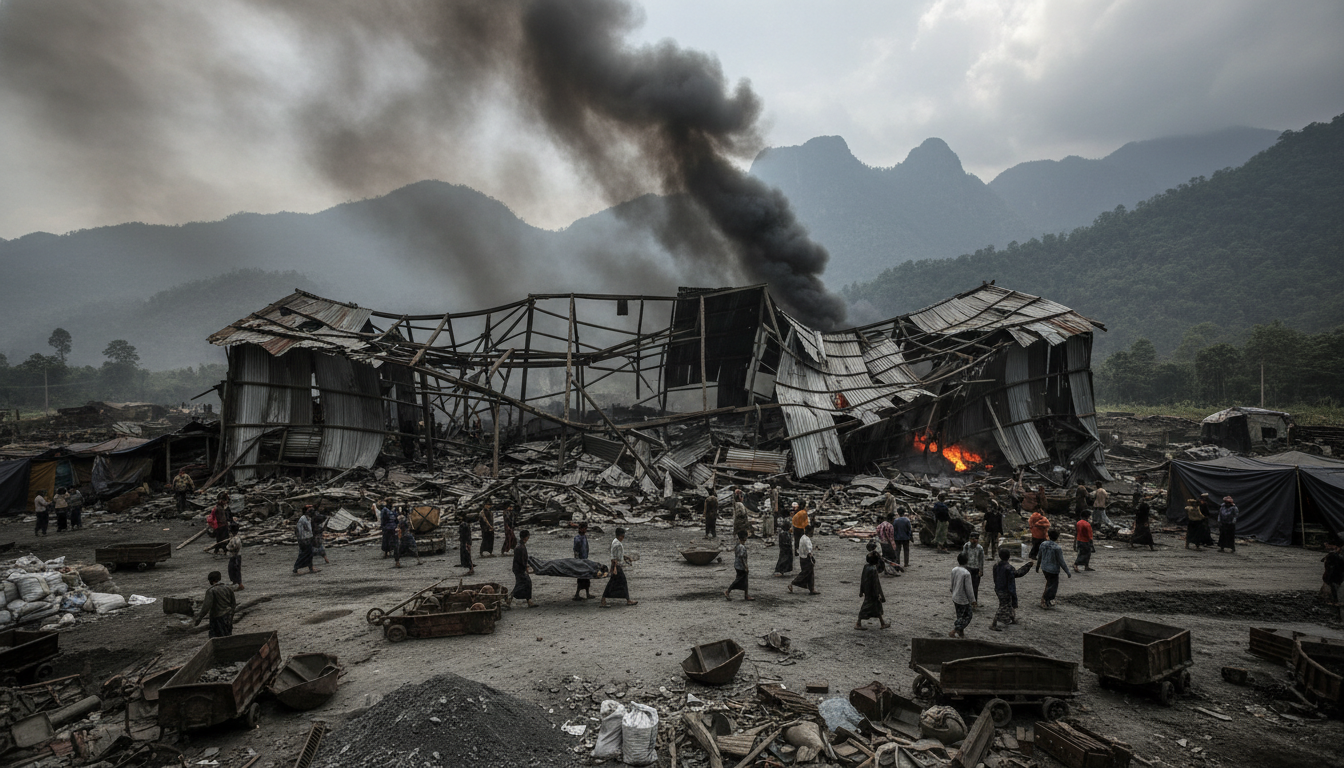
The Myanmar explosion on Sunday, May 31, 2026, tore through a warehouse in the village of Kaung Tup, killing dozens and injuring many more, local officials said. The site, located in territory held by ethnic armed groups near the Chinese border, suffered extensive structural damage and scattering debris across adjacent homes.
Rescue teams and residents described scenes of chaos as survivors pulled victims from rubble and transported the wounded to makeshift treatment points. The blast occurred around midday, compounding the number of civilians exposed to the shockwave and secondary fires.
Explosion at Warehouse Storing Mining Explosives
Local authorities reported that the building stored explosives used for mining, and that the detonation appeared to originate within the warehouse compound. Officials said the stored materials likely intensified the blast, though exact triggers remain under investigation.
Witnesses recounted that the structure had been used for storage linked to nearby small-scale mining operations. The combination of volatile materials and a populated village setting increased the human toll when the blast occurred.
Casualties, Rescue and Damage
Hospitals and improvised clinics in and around Kaung Tup received a surge of patients with burns, shrapnel wounds and traumatic injuries. Medical teams, many operating with limited supplies, focused first on stabilizing those with life-threatening injuries.
Community leaders said initial counts pointed to dozens killed and a larger number injured, but cautioned that figures could change as rescue efforts continue. Homes and nearby buildings were badly damaged, leaving residents without shelter and basic necessities.
Local Officials and Witness Accounts
Local officials who spoke to reporters described the area as under the control of rebel groups who have administered services and security in recent years. These officials attributed information on the warehouse’s contents to local residents and miners.
Witnesses said they felt a massive shock and saw a rising smoke column after the blast, with some family members still unaccounted for. Access for journalists and international investigators is restricted in parts of the region, complicating independent verification of early reports.
Border Proximity Raises Regional Concerns
Kaung Tup lies close to the border with China, and the proximity has prompted concerns about cross-border safety and the potential for secondary effects. Authorities on both sides of the frontier monitor the flow of displaced people and the movement of hazardous materials, which can present transnational risks.
China’s consular services and border prefectures typically coordinate on emergency responses in adjacent areas, and residents said some nearby towns were bracing for an influx of people seeking treatment or refuge. The incident underscores how conflict zones near international borders can create humanitarian and environmental hazards beyond national boundaries.
Investigation, Responsibility and Humanitarian Response
An inquiry into the cause of the blast is expected, but investigators face logistical hurdles because the site sits within an area not under central government control. Both local authorities in the region and humanitarian groups have called for safe access to the site to permit search-and-rescue and to document casualties.
Humanitarian agencies and local relief networks mobilized to provide food, emergency shelter and medical supplies to affected families. Organizers are coordinating donations and temporary shelters, while warning that demining and explosive ordnance disposal teams will be required to secure the area before recovery operations can proceed safely.
The Myanmar explosion in Kaung Tup adds to a pattern of civilian harm tied to the country’s long-running internal conflicts and the informal economies they have produced. Until investigators and independent observers can reach the scene, many questions will remain about how explosive materials came to be stored so close to populated homes and who bears responsibility for safety and oversight.
