
EU LNG imports fall as Germany, Italy and Belgium boost purchases amid energy shock
EU LNG imports slip since late February 2026 conflict, as Germany, Italy and Belgium increase purchases; renewables cut costs but electrification investment lags.
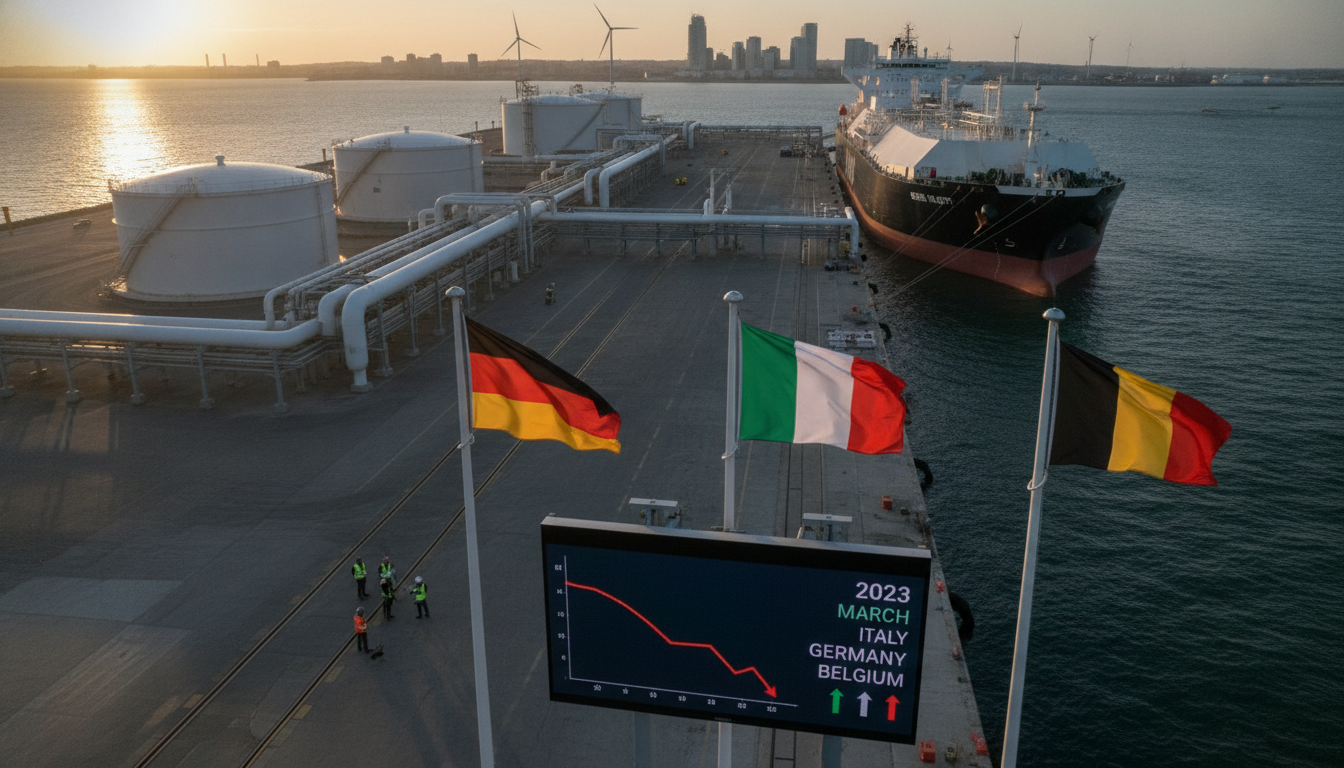
The European Union has recorded an overall decline in EU LNG imports since the regional conflict began in late February 2026, according to a new analysis by the Institute for Energy Economics and Financial Analysis. The report finds a modest fall in liquefied natural gas deliveries to the bloc even as a handful of member states sharply increased purchases to shore up supplies. Analysts warn the mixed patterns underscore tensions between short-term energy security needs and longer-term decarbonisation commitments.
IEEFA analysis shows modest bloc‑wide LNG decline
The institute’s analysis indicates LNG imports to the EU fell by about 1.2% since March 2026, while the United Kingdom posted a steeper 20% drop over the same period. Taken together, the combined decline across the EU and UK equated to roughly a 3% reduction in LNG inflows in the early weeks of the crisis. The report highlights that the bloc’s earlier strategy to expand LNG capacity since 2022 is proving less resilient under acute supply constraints.
Germany, Italy and Belgium buck the downward trend
Despite the broader contraction, Germany, Italy and Belgium increased their reliance on imported LNG, reversing the overall direction. Germany led the surge, with LNG purchases up around 72% year‑on‑year between March and May 2026, while notable increases were also recorded in Italy and Belgium. Officials and market observers say those rises reflect efforts to refill storage, keep industrial activity running and offset intermittent pipeline flows.
Several analysts caution that the sudden step‑up in fossil fuel use carries policy risks, particularly for countries with near‑term climate targets. Italy, the analysis notes, faces a heightened risk of missing its 2030 emissions reduction commitments if the higher LNG consumption persists. Governments are balancing immediate energy security against legally binding decarbonisation pathways.
United States and Russia remain principal suppliers during the crisis
The flow of LNG to the EU during the initial phase of the conflict continued to be dominated by established exporters, with the United States accounting for roughly 60% of EU LNG imports in that window. Russia also remained an active supplier in the months examined, underscoring the persistence of traditional trading relationships even amid market upheaval. The concentration of supply sources has implications for pricing and for how policymakers design contingency measures.
Market participants say the prominence of a small number of suppliers has amplified price volatility and prompted some governments to seek short‑term bilateral deals. Those dynamics have reinforced calls within Brussels for a more diversified supply mix and faster deployment of domestic clean generation to reduce external exposure.
Renewables cushioned the financial impact but electrification investment is limited
Expansion of clean energy resources significantly reduced the fiscal and economic hit from the energy shock, the IEEFA analysis shows. Solar power alone delivered around €12.8 billion in avoided fossil fuel costs through early June 2026, while broader clean energy deployment is estimated to have saved the EU some €51 billion over 2025. The study also highlighted stronger consumer adoption of electric technologies, with heat pump sales rising about 25% in France, Germany and Poland.
However, the report raises concern over the allocation of emergency spending. Although EU member states implemented more than 210 emergency measures to stabilise markets and shield households, the total estimated cost of the crisis stood at about €60 billion. Crucially, less than 5% of those emergency funds have been channelled into electrification and long‑term clean infrastructure, a shortfall that could slow the transition away from imported fossil fuels.
Policy trade‑offs put emissions goals under strain
Policy makers in Brussels and national capitals now face hard choices between securing supplies for the coming seasons and keeping emissions targets on track. The renewed reliance on LNG in parts of the bloc complicates progress toward 2030 climate commitments and could lock in higher fossil fuel dependence if not paired with rapid electrification. Energy analysts urge a coordinated approach that pairs short‑term supply measures with accelerated renewable permitting and targeted investments in grids and storage.
The IEEFA recommends that EU energy strategy be adjusted to reflect both immediate contingency needs and the long‑term requirement to reduce gas demand through efficiency and electrification. Without a clearer investment pivot, the institute warns, member states may find themselves repeatedly exposed to price spikes and geopolitical disruptions.
Looking ahead, the coming months will test whether European governments can reconcile emergency supply management with the imperative to invest in clean power and electrified heating and transport. As winter approaches, officials will need to decide how much of the remaining emergency budgets to allocate to durable infrastructure rather than temporary relief. The choices made now will shape the bloc’s energy resilience and emissions trajectory for years to come.
