
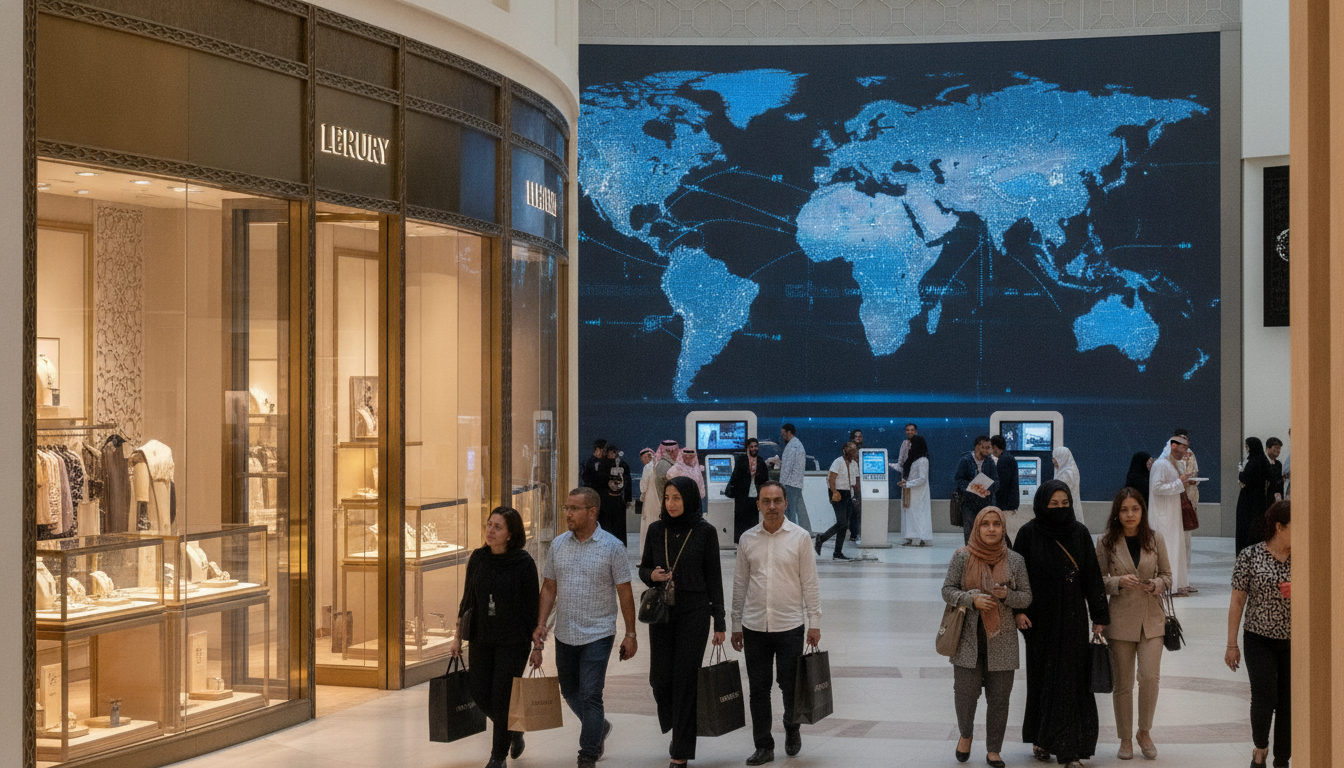
UAE retail market accelerates as Dubai luxury ranks and omnichannel shifts attract global brands
UAE retail market grows strongly as Dubai’s luxury sector, mall expansions and omnichannel retail attract global brands, tourists and sustained investor interest.
The UAE retail market is recording robust expansion driven by mall developments, luxury leasing momentum and the blending of online and offline channels. Industry reports and executives say Dubai entered 2026 with significant depth and momentum in retail, reinforcing the country’s status as a global shopping hub. Projections for luxury goods and overall retail value underline sustained investor confidence and rising consumer demand across segments.
Dubai’s luxury retail footprint and rental rankings
Dubai’s position in global luxury retail is strengthening, supported by high-profile destinations and premium rents. Cushman & Wakefield cited that Fashion Avenue at Dubai Mall ranks among the top global locations for retail rents, reflecting international demand for prime retail space. This concentration of luxury stores reinforces Dubai’s appeal as a regional focal point for affluent shoppers and global brand launches.
Leasing activity and planned expansions across major shopping centres are further increasing the city’s retail density. Landlords and mall operators are capitalising on tourist flows and high-spending visitors to secure flagship stores and exclusive brand experiences. The result is a competitive market for premium leases and curated retail offerings.
Luxury goods market size and growth outlook
The luxury segment in the UAE has shown measurable growth, with market research estimating substantial increases in value over the coming years. Analysts reported the UAE luxury goods market at roughly $8.5 billion in 2025, with forecasts pointing to nearly $11.9 billion by 2031 at a mid-single-digit compound annual growth rate. Those projections reflect steady consumption among residents and tourists, and the continued arrival of international luxury labels.
Growth in this segment is being sustained by expanding product ranges and enhanced in-store experiences that complement digital engagement. Luxury retailers are investing in bespoke services, limited-edition launches and omnichannel fulfilment to capture a broad base of high-value customers.
Aggregate retail market projections and sector scale
Beyond luxury, multiple studies outline a broad and expanding UAE retail economy with multibillion-dollar forecasts. One analysis estimated the overall retail market could reach over $227 billion by 2033, while other research placed the 2025 market size at approximately $152.7 billion with expectations to surpass $237 billion by 2034. These varying estimates point to a large and growing market shaped by differing methodologies but a consistent upward trajectory.
The scale and diversity of the UAE retail market make it attractive to global brands and regional investors, with opportunities spanning luxury, mass-market, food and beverage, and digital marketplaces. Public- and private-sector investments in infrastructure and tourism underpin these projections, supporting long-term expansion.
Key drivers: tourism, purchasing power and strategic location
Executives and industry specialists attribute the market’s resilience to several core drivers that combine to create a favourable retail environment. High purchasing power among residents, a diverse expatriate population, and strong tourist arrivals together generate widespread consumer demand across categories. Strategic geography and pro-business policies also position the UAE as a gateway for brands seeking regional expansion.
Industry leaders highlight that the interplay of domestic consumption and inbound tourism is central to sustained retail activity. These conditions create attractive conditions for retailers testing new concepts and for brands seeking regional headquarters or flagship stores.
Digital transformation and omnichannel retailing
The UAE’s retail ecosystem is evolving rapidly toward integrated omnichannel strategies that place the customer experience at the centre. Retailers and technology firms report growing investment in digital platforms, fast-delivery services and unified customer journeys that link physical stores with online touchpoints. This integration is changing how brands engage shoppers and fulfil orders across channels.
Retail technology and logistics investments are enabling faster fulfilment and smoother returns, while data-driven marketing helps tailor offers to diverse consumer segments. The convergence of e-commerce and traditional retail is thus creating fresh revenue streams and operational efficiencies for incumbents and newcomers alike.
Opportunities for brands and investors
Market participants see a broad set of openings for both established and emerging players to expand in the UAE. The combination of high tourist footfall, premium mall space and a receptive digital audience presents opportunities for concept stores, pop-ups and regional launches. Investors are increasingly drawn to mixed-use retail formats and logistic solutions that support rapid delivery and cross-border trade.
Retailers that align store experience with seamless digital services are best positioned to capture market share. Meanwhile, policymakers and developers continue to prioritise infrastructure and retail-led projects that sustain long-term growth.
The UAE retail market’s combination of strong consumption indicators, strategic positioning and accelerating digital adoption suggests sustained momentum through the decade. Continued investment in flagship retail destinations, e-commerce capabilities and customer experience will determine which brands and formats succeed in this competitive landscape.
