
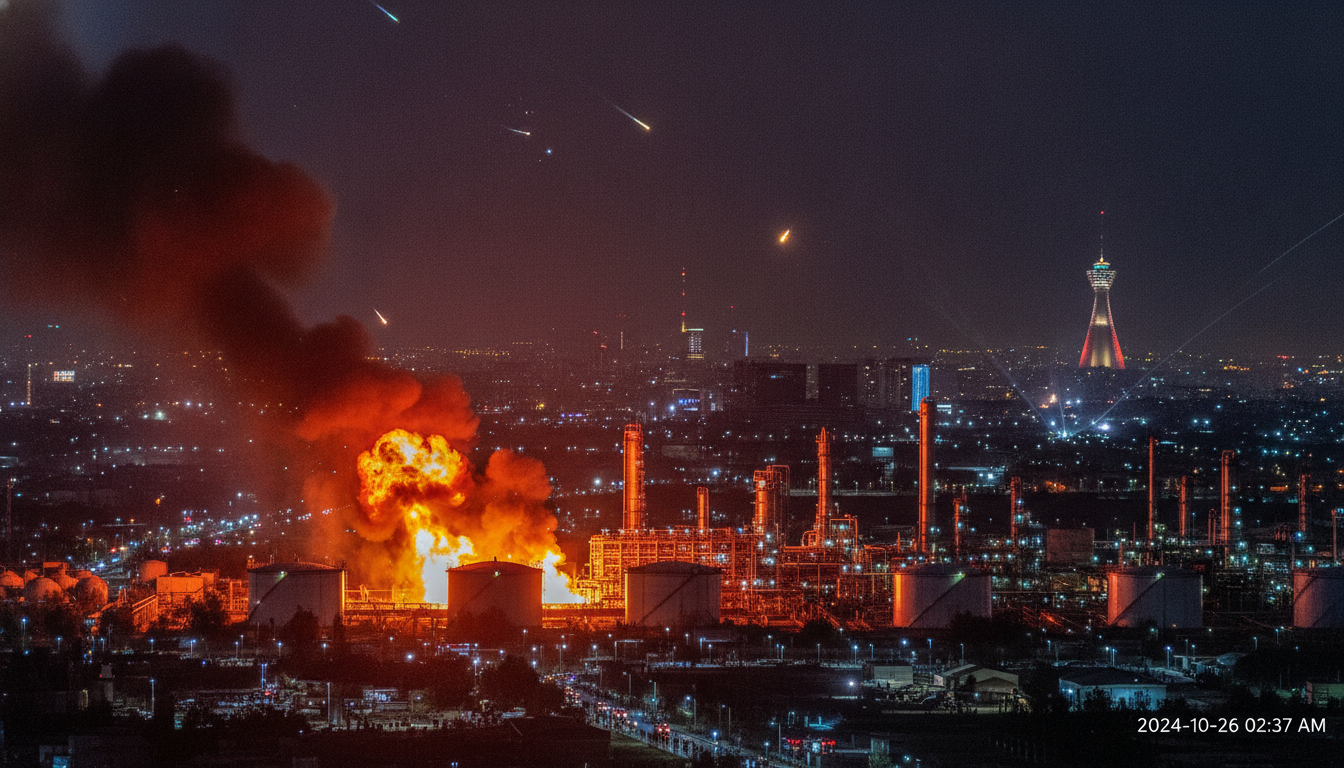
Iran-Israel fighting resumes as Israeli strikes rattle Tehran and hit petrochemical facilities
Iran-Israel fighting resumes as Israeli strikes struck Tehran and multiple sites across Iran, damaging a major petrochemical plant and forcing mass evacuations and alerts.
Tehran woke to the roar of explosions early on Monday as renewed Iran-Israel fighting broke a fragile lull in the region. Residents reported plumes of smoke and fires across the capital as alarms and emergency crews mobilised. Authorities said several nonresidential sites in western Tehran were hit, while other strikes reached cities from the northwest to the Persian Gulf coast.
Early-morning strikes rock Tehran
A series of explosions jolted Tehran before dawn, waking families and sending people to seek news and safety. Social media feeds filled rapidly with images and voice messages as residents checked on relatives and tried to confirm official bulletins. Fire services in the capital reported damage at multiple nonresidential locations and worked through the morning to assess casualties and control blazes.
Many Tehranis described a return to anxious routines after a period of diminished public alarms, saying the overnight strikes shattered tentative attempts to resume normal life. Several witnesses said they had mistaken thunder for detonations the previous night, underscoring how little time people had to prepare. Emergency hotlines and municipal channels urged calm while investigators and first responders moved to secure impacted areas.
Widespread damage reported, including southern petrochemical complex
Officials in Khuzestan province said one of Iran’s largest petrochemical facilities near Mahshahr was struck, with provincial authorities reporting damage to the Karun complex. Local officials said tens of thousands of workers were being evacuated from the site as safety teams evaluated the extent of structural and environmental harm. The plant lies near the Persian Gulf and is a strategic industrial asset for Iran’s petrochemical exports.
Separately, provincial authorities reported impacts in Najafabad near Isfahan and at a military facility in Tabriz, in East Azerbaijan province, with initial statements indicating no immediate casualties. Iranian state outlets described a pattern of attacks spanning central, western and southern provinces, while municipal and emergency officials coordinated evacuations and damage assessments. Infrastructure experts cautioned that damage to industrial facilities could have knock-on effects on local economies and supply chains.
Official statements and state media response
State television and national news agencies framed the strikes as a coordinated action involving Israel and, according to some commentators, support from the United States. Iranian broadcasters gave airtime to conservative analysts who portrayed the government’s earlier actions as a necessary deterrent and urged unity in the face of external pressure. Government communications sought to balance public reassurance with stern rhetoric toward the attackers.
The Israeli military issued statements saying it had targeted Iranian military sites and a major petrochemical factory, presenting the strikes as precision operations against strategic infrastructure. Both sides have offered brief, direct accounts without releasing extensive operational details, leaving investigators and independent monitors to corroborate claims. International reactions were cautious, with regional partners monitoring for signs of escalation.
Civilians prepare, evacuate and seek information
Across Tehran, residents recounted hurried preparations: packing emergency bags, filling petrol tanks and updating contact lists. Many described a grim acceptance that conflict could flare unpredictably, and households took steps to secure relatives and documents. Authorities in affected provinces urged workers and residents to follow evacuation orders and to avoid areas near damaged industrial complexes.
Local hospitals and emergency centres reported increased patient intake for minor injuries, smoke inhalation and panic-related conditions, while no large-scale casualty figures were immediately confirmed. Community volunteers and civil defence teams mobilised to assist with evacuations and provide temporary shelter for displaced workers and families. The scale of the petrochemical evacuation in Mahshahr in particular underscored the potential for significant workforce displacement.
Regional security implications and diplomatic concerns
Diplomats and security analysts warned that renewed Iran-Israel fighting risks drawing neighboring states into broader instability if exchanges continue. The strikes across multiple Iranian provinces demonstrate both the reach of military capabilities and the strategic intent to target industrial as well as military infrastructure. Observers noted that damage to energy and petrochemical facilities can produce economic as well as environmental consequences that extend beyond immediate military aims.
International actors called for restraint even as they sought more information, with capitals urging de-escalation to avoid a wider conflagration. The risk vectors include retaliatory strikes, indirect engagements through proxy groups, and disruptions to maritime and energy routes in the Gulf region. For states in the Gulf, even limited spillover effects — such as disrupted shipping or higher insurance costs — carry tangible economic implications.
The sudden resumption of strikes underscores how quickly an episodic confrontation can intensify into a sustained campaign affecting civilians and infrastructure across a wide geography. The immediate priority for authorities on the ground remains damage control, medical care for those affected and clear public communication to prevent panic.
As events continue to unfold, residents in Tehran and other impacted cities are watching official channels closely while many remain ready to evacuate if further orders are issued. The coming hours and days will be crucial in determining whether this episode remains a series of targeted strikes or marks a broader escalation in Iran-Israel fighting that could reshape regional security dynamics.
