
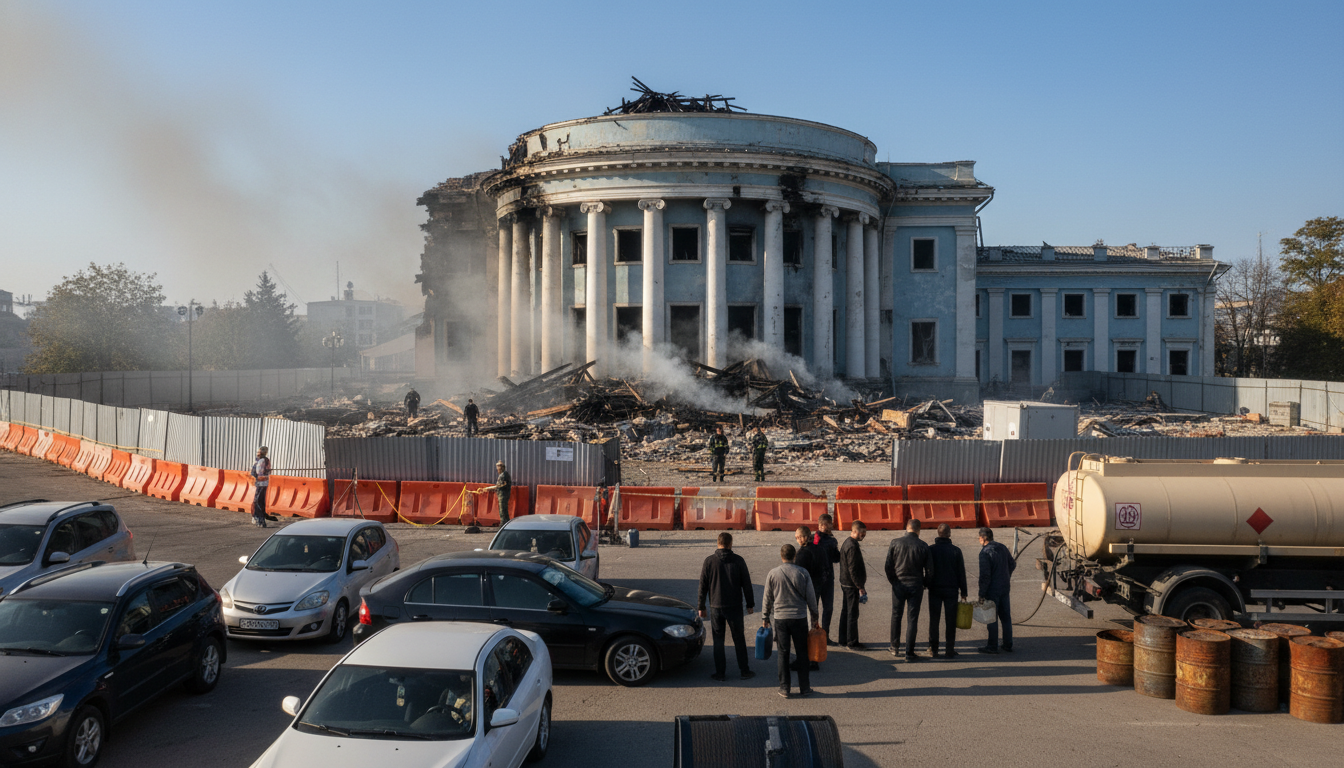
Sevastopol drone strike damages Panorama museum roof, halts night trains and deepens Crimea fuel crisis
Sevastopol drone strike triggers roof fire at the Panorama museum, forces cuts to nighttime rail services and fuels shortages across Crimea amid a wider Ukrainian drone campaign.
The Sevastopol drone strike early on Wednesday set alight the roof of the Panorama “Defense of Sevastopol 1854-1855” museum, Russian-installed authorities said, as emergency crews moved to contain the blaze. The attack came amid an intensified series of drone strikes across the Black Sea peninsula and deeper into Russian territory, prompting transport disruptions and strict fuel rationing.
Sevastopol Panorama museum hit
Mikhail Razvozhayev, the Russian-installed governor of Sevastopol, said the unmanned aerial vehicle struck the building housing the Panorama paintings, igniting a fire on the roof. He described the structure as a symbol of the city’s endurance and vowed retribution, while emergency services from Russia’s Emergency Ministry and the Sevastopol Rescue Service reported the fire was extinguished after deployment.
The Panorama commemorates the city’s defense in the mid-19th century Crimean War and sustained heavy bombing during World War II, Razvozhayev noted in his social-media remarks. Officials have not released a full inventory of cultural losses pending a detailed on-site assessment by conservation and emergency teams.
Rail services suspended after locomotive attack
Crimea’s governor Sergei Aksyonov confirmed that a separate drone strike struck passenger train number 68, on the Moscow–Simferopol route, hitting the locomotive and killing the assistant driver while wounding the driver. Authorities halted eight passenger services on the line, evacuated travellers by bus to Simferopol and Sevastopol, and later announced cuts to nighttime schedules across the peninsula.
The suspension of night services was framed as a safety measure after the attack, with officials citing the risk to rail crews and passengers during reduced visibility. Transport authorities said they would keep services under review and coordinate alternative arrangements for affected travellers.
Fuel shortages and rationing across Crimea
Local reports indicate the strike campaign has exacerbated an emerging fuel crisis in Crimea, where authorities have suspended unrestricted commercial sale of gasoline to civilians. Fuel supplies are now tightly rationed, reportedly reserved for emergency services or disbursed via controlled state-issued vouchers to essential users.
The shortages were reported as the holiday season began, intensifying public concern about mobility and commercial activity on the peninsula. Regional officials gave no firm timetable for a return to normal sales, saying distribution would be prioritised for critical infrastructure and response teams.
Wider drone campaign reaches deep into Russia
Russian Defence Ministry statements said air-defence systems intercepted 326 Ukrainian drones over Russian territory overnight, with several flights reportedly heading toward Moscow. Authorities and regional observers reported strikes and fires in multiple industrial and oil-producing zones, including Novokuibyshevsk in the Samara region, where the Kuibyshevsk oil refinery was reported to be burning.
Regional governors said civil defence measures were activated in the Samara hub, urging residents to seek shelter, while an open-source intelligence channel reported damage to facilities belonging to major energy companies. Additional incidents involved falling debris igniting a fuel tank fire in the Rostov region and blazes at industrial sites in the Vladimir region.
Air raid alerts and industrial impacts across regions
Rare air raid alerts were issued in several remote Russian oil-producing regions, including Khanty-Mansiysk, Perm and Tyumen, and in Ural industrial centres such as Chelyabinsk and Sverdlovsk. Local authorities in affected regions reported fires at energy and manufacturing sites and called up emergency services to limit damage and casualties.
Energy-sector officials and regional administrations said they were assessing impacts on refining and storage capacity, and monitoring potential disruptions to national fuel logistics. The scale of the reported attacks prompted heightened security measures at strategic facilities and continued aerial defence operations.
Official responses and diplomatic fallout
The incidents followed a proposal by Ukrainian President Volodymyr Zelenskyy for face-to-face talks with Russian President Vladimir Putin, which the Kremlin rejected last week. Moscow characterised the rail attack as undermining prospects for a peaceful resolution, and senior officials publicly condemned the strikes on cultural and civilian infrastructure.
Russian regional leaders and defence spokespeople framed the operations as unlawful aggression, while Kyiv has not issued immediate confirmation of responsibility for the specific strikes reported by Russian authorities. The developments are likely to add pressure to diplomatic channels and complicate efforts to resume formal dialogue.
Emergency teams continue on-site work to stabilise damaged cultural and transport infrastructure, and regional authorities say security measures will remain elevated while investigations proceed. The broader pattern of drone activity has prompted closer scrutiny of protective measures at rail, energy and cultural sites across the affected regions.
