
More than 100 Stanford Graduates Walk Out During Sundar Pichai Commencement Speech in Project Nimbus Protest
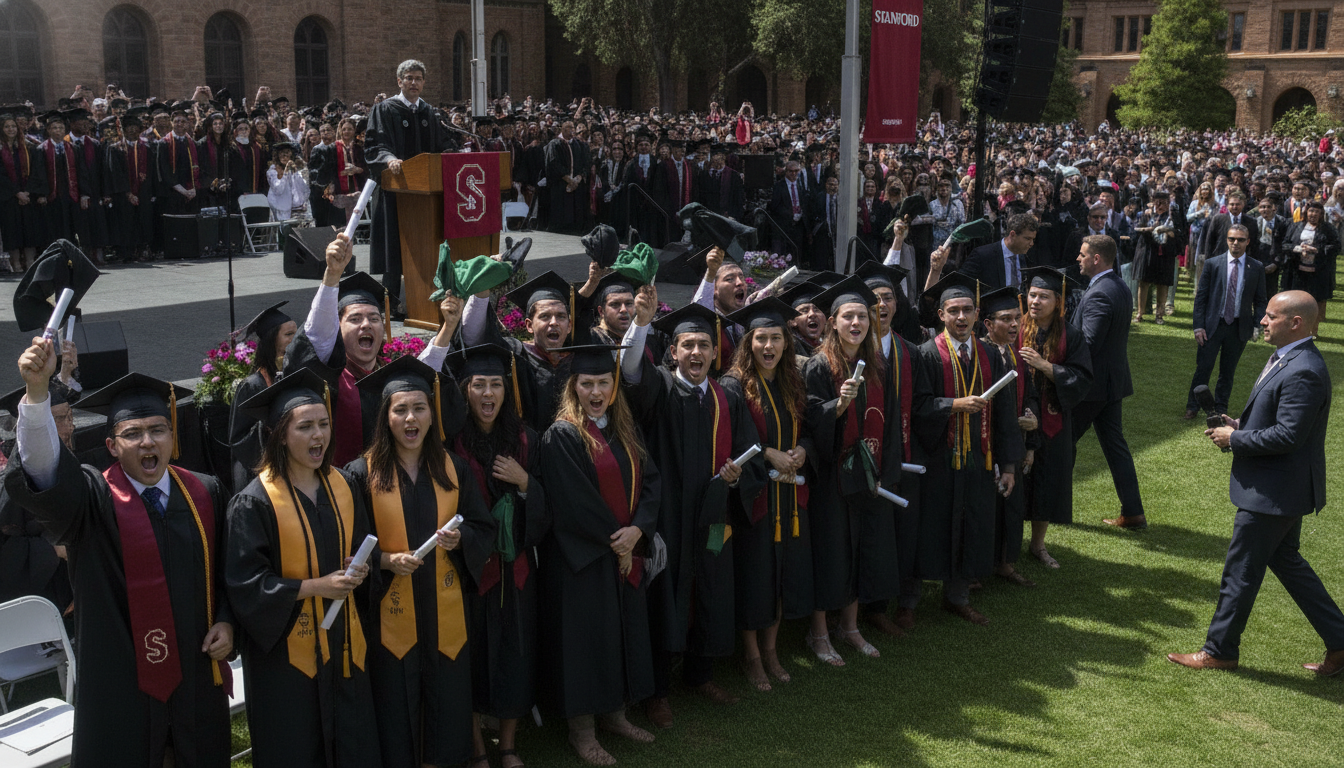
Over 100 Stanford graduates staged a walkout during Google CEO Sundar Pichai’s commencement address on June 15, 2026, chanting “Free Palestine” in a protest focused on Project Nimbus, Google’s cloud contract with the Israeli government.
Opening paragraph summarizing the event.
More than 100 members of Stanford University’s graduating class walked out of the university’s June 15 commencement ceremony as Google CEO Sundar Pichai delivered the keynote address. The demonstrators repeatedly chanted “Free Palestine” and cited Project Nimbus — the multi-year cloud services contract between Google and Israeli authorities — as the central grievance motivating the action. Event organizers said the walkout lasted several minutes before most participants left the ceremony area.
Details of the Walkout
Witnesses reported that the protest began near the start of Pichai’s remarks, with students rising from their seats and exiting in groups. The chanting grew louder as the procession moved past the university’s main stage, drawing attention from attendees and media on site. Organizers and several student leaders described the action as planned and coordinated to coincide with the high-profile speech.
Security personnel monitored the movement but did not immediately intervene, according to attendees on the ground. Some guests attempted to engage with protestors while others remained seated as the crowd passed. University officials later said they were reviewing footage and accounts to prepare an official statement.
Chants and Messages at the Ceremony
Protesters’ chants of “Free Palestine” were audible across the commencement area and punctuated Pichai’s address at multiple points. Several demonstrators carried signs and wore symbolic colors and emblems to express solidarity with Palestinians amid wider campus debates about academic and corporate responsibility. The participants framed the walkout as a moral stance against perceived complicity in the conflict through technology services.
Students who left the ceremony issued social-media statements reiterating demands for transparency and accountability related to Project Nimbus. A number of alumni and staff present expressed support for the graduates’ right to peaceful protest, while others said the timing at a graduation event was inappropriate.
Project Nimbus and the Grounds for Protest
Project Nimbus has been at the center of controversy since its inception, drawing criticism from student activists and some faculty who argue that large technology contracts with governments warrant closer ethical scrutiny. Protesters at the commencement said the agreement, which provides cloud services to Israeli institutions, raises concerns about the use of advanced computing resources in ways they consider harmful to civilian populations.
Critics emphasized that their objection was to the contract’s implications rather than to individual employees, and they urged both Google and academic institutions to adopt stricter human-rights assessments for high-value partnerships. University debate over the issue has periodically reappeared on campus in recent years, contributing to the wider context for the June 15 action.
University Response and Campus Management
Stanford officials acknowledged the demonstration and said they are coordinating an internal review of the incident, including how the protest unfolded during a major university event. A spokesperson indicated the university seeks to protect freedom of expression while ensuring safety and order at ceremonial gatherings. Plans for further engagement with student groups were reportedly being discussed.
Event staff and campus security were tasked with balancing attendees’ rights to protest against the university’s obligations to graduates and their families. Administrators also noted that peaceful demonstration remains a protected activity, but reiterated expectations that protests not disrupt access or emergency procedures.
Google and Sundar Pichai’s Reaction
Sundar Pichai continued his address amid the disruption, and company representatives said Google respects peaceful protest even as it defends its business decisions. In prior statements about Project Nimbus, Google has described its role as a provider of cloud infrastructure and reiterates compliance with applicable laws and internal policies. Company sources at the ceremony emphasized a commitment to dialogue with concerned stakeholders.
Google also reiterated that public critique is part of a functioning democratic discourse and said it would not comment on individual protesters. The company’s engagements with academic partners, including participation in commencement events, remain a subject of scrutiny when corporate decisions become focal points of campus activism.
Campus Climate and Broader Implications
The walkout at Stanford underscores a broader trend in which university commencements and public appearances by corporate leaders have become venues for political expression. Activists said the action aimed to elevate attention to Project Nimbus and to pressure both corporations and educational institutions to reassess how technology contracts intersect with human-rights considerations. Observers noted similar demonstrations at other institutions in recent years, reflecting ongoing tensions between academic communities and industry partners.
Policy experts say such moments can prompt renewed discussion about vendor due diligence, ethical procurement practices and the role of universities in vetting partnerships. For now, Stanford faces immediate questions about next steps for campus dialogue and whether formal processes will be established to address student concerns related to international contracts and research collaborations.
Concluding paragraph without a title.
The June 15 demonstration at Stanford added a high-profile moment to the long-running debate over Project Nimbus, leaving university leaders, Google representatives and graduating students to navigate the aftermath as calls for further transparency and engagement continue.
