
UK Court of Appeal Upholds Ban on Palestine Action as Terrorist Organisation
UK Court of Appeal rules the government lawfully proscribed Palestine Action as a terrorist group; supporters say they will appeal to the Supreme Court.
The Court of Appeal in London found on Monday that the British government acted within the law when it designated Palestine Action as a proscribed terrorist organisation, a ruling that endorses the use of terrorism legislation against the pro-Palestinian activist network. Palestine Action, which carried out direct actions against sites linked to Israeli defence contractors, was placed under the ban after authorities said some of its activities met the legal test for “serious damage to property” carried out for an ideological purpose.
The decision represents a significant legal endorsement for Prime Minister Keir Starmer’s administration, but it is unlikely to close the matter; the group’s former leaders and supporters have signalled they will pursue further appeals. The designation immediately activated statutory offences that criminalise membership, support, or encouragement of a proscribed organisation and has generated intense debate across legal and civil liberties circles.
Court of Appeal ruling and legal reasoning
In its written judgment, the Court of Appeal concluded that the proscription decision fell within the boundaries of ministerial power and domestic counterterrorism law. Judges considered whether the group’s acts of property damage and targeted disruption could be classified under the statutory definition of terrorism and found that a proportion of those acts satisfied the threshold.
The court overturned an earlier ruling that had found the designation disproportionately interfered with free-expression rights, and instead accepted the Home Secretary’s assessment that the group’s deliberate damage to infrastructure was undertaken to advance a political objective. The judgment sets a higher bar for future legal challenges to similar proscription decisions.
Government reaction and political context
The ruling was welcomed by government officials as a validation of the decision to use terrorism legislation where property damage is exploited to further an ideological cause. Ministers argued the move was necessary to deter disorder and protect critical infrastructure and defence-related facilities.
Opposition voices and several civil liberties organisations, however, criticised the use of counterterrorism powers in this context, arguing that the proscription risks curbing legitimate protest and political dissent. The clash has placed pressure on lawmakers to clarify the boundaries between protest, criminality and terrorism in statute and practice.
Actions that prompted the ban
Palestine Action’s campaign targeted sites linked to Elbit Systems and other companies believed to supply equipment to Israel, carrying out sit-ins, break-ins and acts of vandalism at private and military-linked facilities. One high-profile incident involved activists entering Britain’s largest RAF base, Brize Norton in Oxfordshire, where they damaged two aircraft, according to official accounts.
Although the group did not advocate violence against people, authorities argued the deliberate and repeated damage to property—combined with a stated political objective—brought the campaign within the terrorism definition applying to “serious damage to property” done for ideological ends.
Impact on supporters and policing outcomes
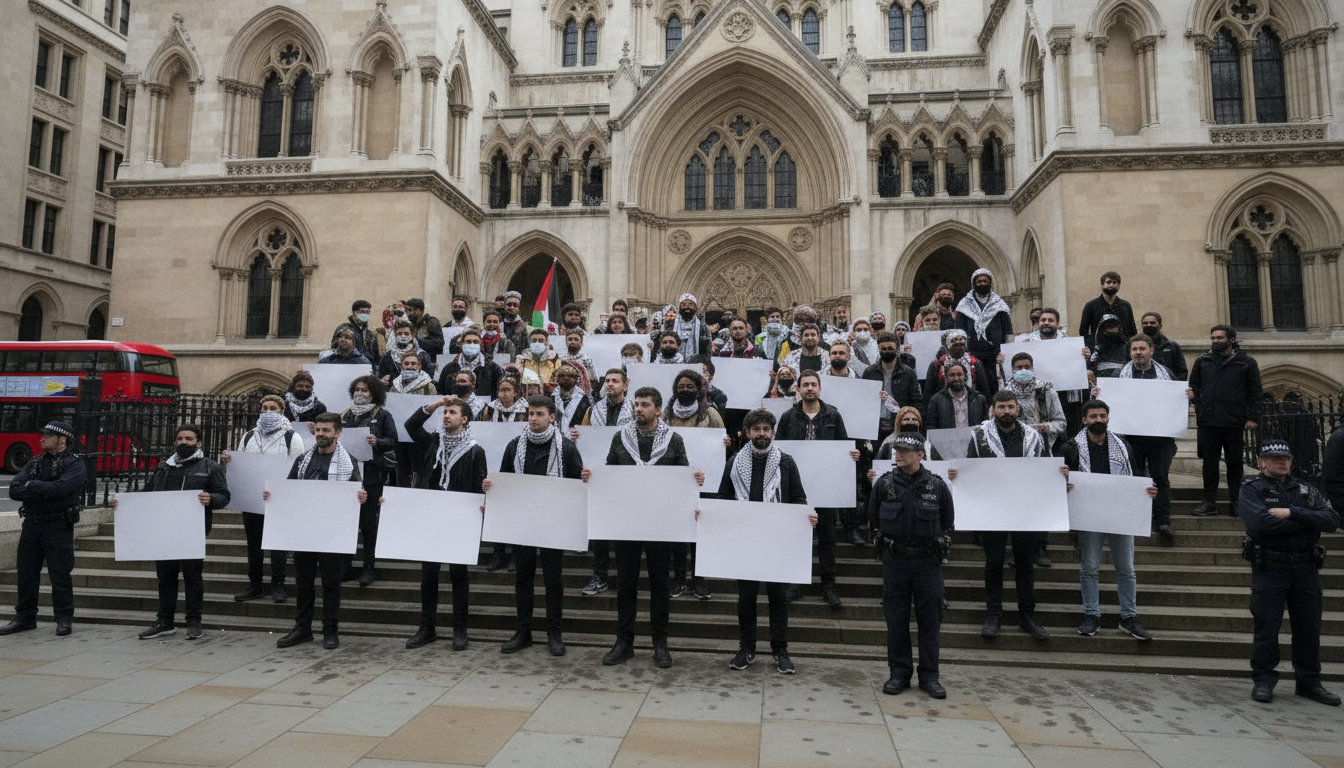
The proscription automatically criminalised expressions of support for Palestine Action, and police activity increased markedly after the ban took effect. Authorities have reported arrests of people holding placards or making statements of support, with more than two thousand detentions linked to expressions referencing the group, according to public reporting cited during the legal challenges.
Civil liberties groups say those arrests demonstrate the chilling effect of designations that conflate political protest with terrorism, and they warn of long-term consequences for peaceful campaigning. Government officials counter that enforcement targets specific criminal conduct linked to the proscribed entity rather than lawful protest.
Intelligence assessment and evidential basis
A security assessment prepared under the auspices of the domestic intelligence apparatus, led by MI5, informed the government’s decision-making. That review reportedly found only a small number of Palestine Action’s recorded actions met the statutory terrorism threshold, but the Home Office concluded the group’s broader pattern of conduct nevertheless justified proscription.
Legal commentators note the tension between intelligence-driven assessments and judicial review: while security agencies can provide classified evaluations of threat and tactics, courts are required to test whether the legal criteria for designation were met. The Court of Appeal’s judgment indicates judicial deference to the government’s interpretation of those assessments in this instance.
Next steps and the prospect of a Supreme Court appeal
Palestine Action’s co-founder has publicly vowed to take the case to the Supreme Court, indicating the legal battle is likely to continue. If the Supreme Court grants permission to appeal, the nation’s highest court would be asked to resolve contested questions about the proper scope of terrorism proscription and the protection of political expression.
A Supreme Court challenge would also examine proportionality and rights-based arguments raised by human rights advocates, and could prompt Parliament to reconsider legislative language governing the intersection of property damage and terrorism. Until then, the Court of Appeal ruling will govern the immediate legal landscape and enforcement practice.
The decision marks a notable moment in the UK’s approach to protest and counterterrorism law, leaving unresolved tensions between state security imperatives and the safeguarding of dissenting political activity.
