
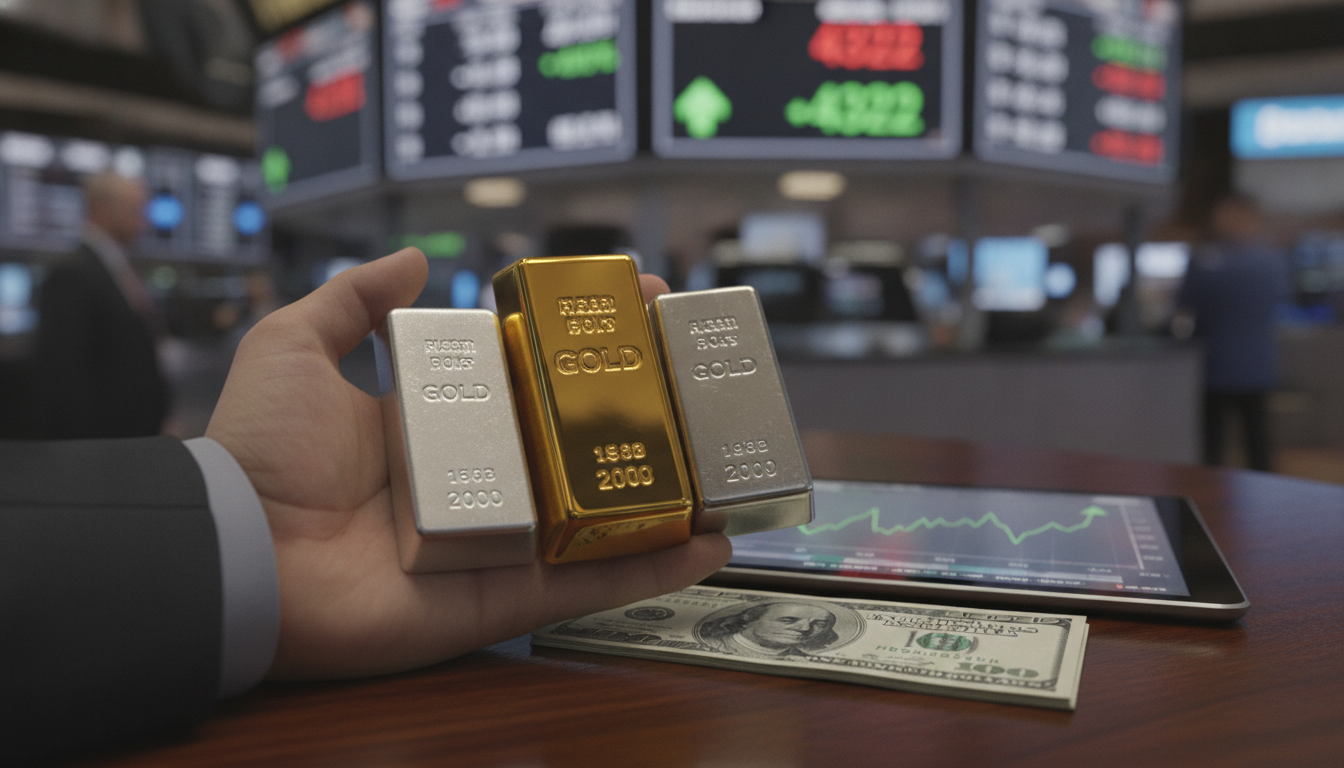
Gold prices rebound 1.5% to $4,322.41 an ounce after a sharp pullback
Gold prices climbed 1.5% to $4,322.41/oz as markets recovered from a 1.7% slide, while silver, platinum and palladium also posted gains that eased recent losses.
Gold prices rose sharply on renewed buying interest after a sharp sell-off the previous session, with spot bullion up 1.5% to $4,322.41 per ounce.
U.S. gold futures for August delivery advanced 0.9% to $4,343.10 an ounce, reflecting improved risk appetite and short-covering in bullion markets.
Market snapshot and price moves
Spot gold’s rebound followed a 1.7% decline in the prior session, leaving the metal modestly higher on the day.
Other precious metals climbed alongside gold, with spot silver up 2.2% to $69.51 an ounce, platinum rising 1.8% to $1,767.53, and palladium gaining 2.0% to $1,338.67.
Volatility after a steep daily drop
The latest moves underscore the heightened volatility that has gripped metal markets this week, as sellers and buyers react quickly to shifts in sentiment.
Large percentage swings in both directions have prompted active rebalancing by funds and speculative traders, contributing to intraday price whipsaws.
Drivers behind the rebound
Traders cited a mix of factors that supported the rebound in gold prices, including short-covering, a softer risk tone in equities, and renewed safe-haven flows.
Movements in the U.S. dollar and Treasury yields also played a role, with easing upward pressure on yields making non-yielding bullion relatively more attractive to investors.
Regional demand and implications for UAE investors
The recovery in gold prices is likely to attract attention from buyers in the Gulf, where physical demand and jewellery purchases remain important components of the market.
UAE investors who track bullion for portfolio diversification or wealth preservation will be monitoring local premiums and gram prices as international moves filter into regional markets.
What traders will watch next
Market participants will be watching key macroeconomic signals, central bank commentary and any shifts in geopolitical tensions for clues on the near-term direction of gold prices.
Economic data that affects interest-rate expectations — notably U.S. inflation and jobs reports — could quickly alter the outlook for bullion and other precious metals.
Trading flows and sector reactions
The bounce prompted increased trading volumes as momentum traders covered shorts and some institutional accounts added exposure to bullion ETFs and physical holdings.
Precious metals miners and related financial products typically respond to these price reversals, with profit-taking and repositioning visible across the sector.
Gold’s recovery on the day reduced the immediate technical oversold pressure from the previous decline, but analysts caution that the market remains sensitive to headline risks.
Investors are advised to remain attentive to liquidity conditions and to consider both physical and paper-market dynamics when assessing exposure to gold and other precious metals.
