
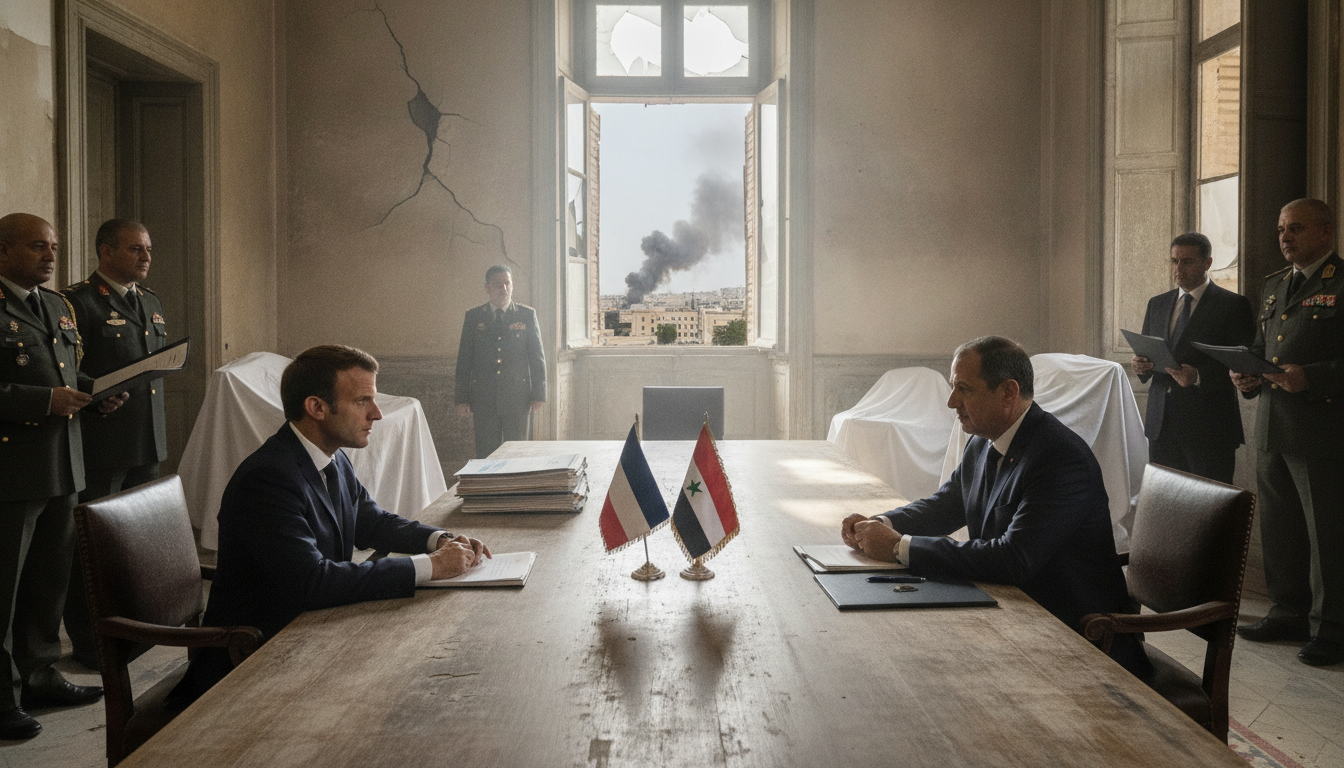
Macron visit to Damascus underscores France’s return as Syria seeks reconstruction partners
Macron’s visit to Damascus signals France’s return to diplomatic ties with Syria, pledging reconstruction aid, returning seized assets and signing pacts.
Historic visit and diplomatic reset
French President Emmanuel Macron made a landmark Macron visit to Damascus this week, becoming the first Western leader to travel to Syria since the overthrow of the Assad regime 18 months ago. The trip combined high-level meetings, economic outreach and symbolic gestures aimed at reintegrating Syria into regional diplomacy. Macron remained in the capital overnight, toured the Old City and continued his programme even after explosives were discovered near his hotel.
The president framed the visit as an opportunity to open practical avenues for reconstruction and financial recovery. He told Syrian officials that France was prepared to assist with banking-sector rehabilitation and broader economic revival as Damascus seeks foreign partners. A delegation of French investors and business representatives accompanied the president to explore projects and cooperation opportunities.
Explosions near presidential hotel highlight security risks
Small explosive devices detonated close to the hotel where Macron was staying, underscoring the fragile security environment in Damascus even after the end of large-scale hostilities. Authorities say the devices were outside the designated security perimeter and that the president was not present at the moment they went off. Syrian state media and Macron’s office both confirmed he was unharmed and that scheduled meetings would proceed.
Syrian officials reported that one device had been placed in a trash can opposite the hotel and another in a parked vehicle, with additional suspicious objects detected nearby. Security forces were conducting an expanded search to identify those responsible, and several people were reported injured, including a deputy tourism minister and members of law enforcement.
Economic agreements and investor outreach signed in Damascus
Macron’s delegation signed a series of bilateral agreements covering investment, banking, infrastructure, transport and health care. Syrian and French officials described the accords as initial frameworks to channel private investment and technical assistance into priority reconstruction sectors. Maritime and aviation partnerships were highlighted as strategic steps to re-establish Syria’s role in regional trade routes.
French business representatives met Syrian counterparts to scout specific projects, particularly in port rehabilitation and transport logistics that would link Mediterranean facilities to regional supply chains. Both governments agreed to appoint ambassadors, restoring a full diplomatic channel that officials said will facilitate commercial and consular cooperation.
France to return seized assets from Assad-era exile
As part of the engagement, France agreed to hand over more than $50 million in assets that were seized from members of the ousted Assad family and their associates. Syrian officials said the funds — linked to the estate of Rifaat al-Assad, who died this year after years in exile — will be transferred to support reconstruction priorities. French and Syrian statements described the move as a concrete step in normalising relations and repairing financial links severed during years of sanctions and isolation.
Paris framed the restitution as consistent with legal processes and its broader aim of supporting recovery through traceable assets and targeted investments. The announcement came alongside calls from Syrian leaders for rapid inflows of capital to stabilise public services and revive the battered economy.
New Syrian leadership seeks international partners
President Ahmed al-Sharaa, who succeeded the Assad government after the 2024 overthrow, has embarked on an intensive diplomatic campaign to rebuild ties and attract foreign investment. Al-Sharaa described Macron’s visit as a milestone that opens Syria’s doors to “equal partnership,” positioning the country as a transit and trade hub between East and West. He outlined reconstruction priorities driven by local authorities and emphasised the need for secure, long-term partnerships.
Officials in Damascus pointed to recent shifts in regional trade dynamics — including disruptions in traditional routes — as factors that increase the strategic value of Syrian ports on the Mediterranean. Iraqi and some Gulf consignments have reportedly been routed through Syrian facilities, a trend Syrian authorities hope to expand as part of their recovery strategy.
Persistent insurgent threat clouds reconstruction outlook
Despite diplomatic progress, Syria faces ongoing security challenges from armed groups that continue to carry out attacks across the country. The Islamic State and other militant networks maintain capabilities to strike urban centres and symbolic targets, and the recent cafe bombing that killed civilians earlier this week illustrated the continuing human toll. No group has publicly claimed responsibility for the recent blasts near the presidential hotel.
Security officials say counterterrorism operations remain a priority even as reconstruction planning advances, and analysts warn that investor confidence will depend on measurable gains in public safety. Syrian authorities have pledged intensified efforts to secure transport corridors and urban areas, but the pace and depth of those efforts will be closely watched by foreign partners.
Macron’s visit combined diplomatic symbolism with concrete offers of economic support, while also exposing the security and political complexities that will shape Syria’s path forward. The agreements signed and assets returned mark the start of a cautious re-engagement that Brussels and regional capitals will observe for signs that reconstruction can proceed in a stable and transparent manner.
