
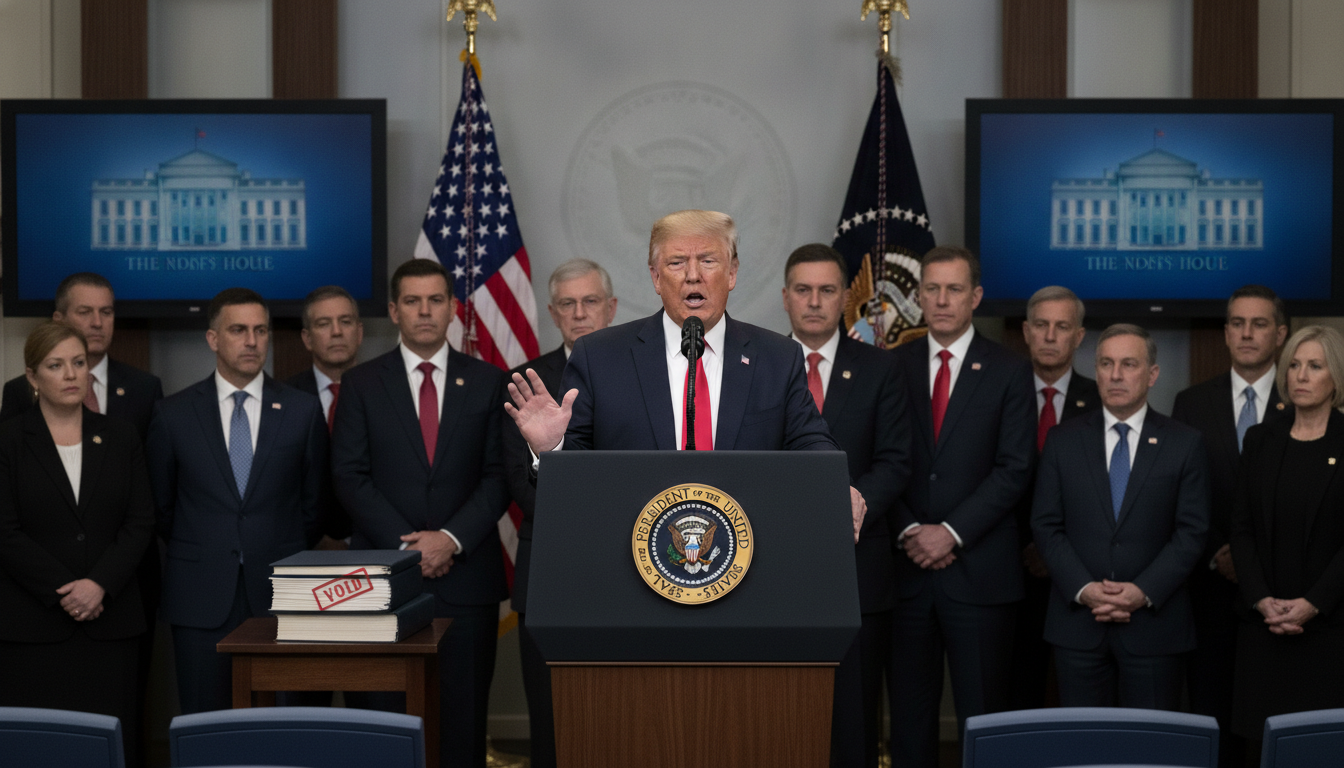
Trump says Iran memorandum ended as he rejects further engagement ahead of NATO summit
Trump says Iran memorandum ended — President Donald Trump declared the memorandum of understanding with Iran “ended” and said he did not want to engage with Iranian officials, remarks delivered in Ankara ahead of a NATO summit. The comments reiterated his vow to prevent Iran from acquiring nuclear weapons and followed strong accusations about Iran’s conduct.
Context of the Ankara remarks
President Trump made the statement in Ankara while arriving for talks and ahead of the NATO leaders’ meeting scheduled in the Turkish capital. He described the U.S. approach toward Tehran as overextended and said the memorandum of understanding designed to reduce hostilities had “ended.” The timing and location underline the comments’ diplomatic significance as NATO leaders prepared to discuss regional security.
Text of the president’s comments
Trump said, “I don’t want to deal with the Iranians; they’re sick,” and added that the United States had wasted time trying to reach agreements with Iran. He warned the world would not allow Iran to develop a nuclear weapon and accused Tehran of responsibility for the deaths of thousands. The president framed his remarks as a reaffirmation of longstanding U.S. policy against nuclear proliferation and as justification for a harder line.
Nuclear proliferation and security concerns
The administration’s reiterated pledge to block Iran from obtaining nuclear weapons was central to the statements. Trump characterized Iran as a destabilizing actor whose nuclear ambitions must be contained, echoing decades of U.S. policy priorities. Analysts say such declarations are likely to shape Washington’s posture on sanctions, inspections and alliances in coming months.
Diplomatic fallout and regional impact
Regional capitals in the Gulf and beyond will watch the comments closely, given their potential effect on security calculations and diplomatic channels. Gulf states that view Iran as a strategic rival may welcome a tougher U.S. stance, while others may warn against escalatory rhetoric that could increase tensions. Diplomats and security officials are expected to assess whether the announcement signals formal policy shifts or is primarily rhetorical ahead of multilateral talks.
Implications for NATO discussions in Ankara
Trump’s remarks arrived as NATO leaders gathered to address alliance priorities, including deterrence, collective security and partnerships in volatile regions. U.S. statements on Iran could influence deliberations over intelligence-sharing, maritime security and defence cooperation with partners bordering the Middle East. NATO officials typically seek unity on strategic challenges; divergent bilateral stances among members could complicate consensus.
Domestic political and strategic considerations
The president’s language also feeds into domestic debates over foreign policy strategy and grand strategy toward Iran. Supporters of a tougher line argue such clarity strengthens leverage, while opponents caution that closing diplomatic avenues risks unintended escalation. Policymakers in Washington will weigh these competing views as any operational or legal steps are considered.
International reactions and next steps
Foreign ministries and international organisations are likely to issue responses in the hours and days following the Ankara remarks. Allies may call for dialogue and restraint even as they acknowledge concerns about Iran’s regional behaviour and nuclear activities. Observers will monitor whether the U.S. follows the rhetoric with concrete policy measures such as sanctions, military posturing or renewed diplomatic initiatives.
The president’s declaration that the memorandum with Iran “ended” and his assertion that he does not want to deal with Iranian officials mark a clear rhetorical turn at a moment of high-level diplomacy in Ankara. How governments and institutions interpret and respond to that turn will shape the diplomatic environment in the weeks ahead.
