
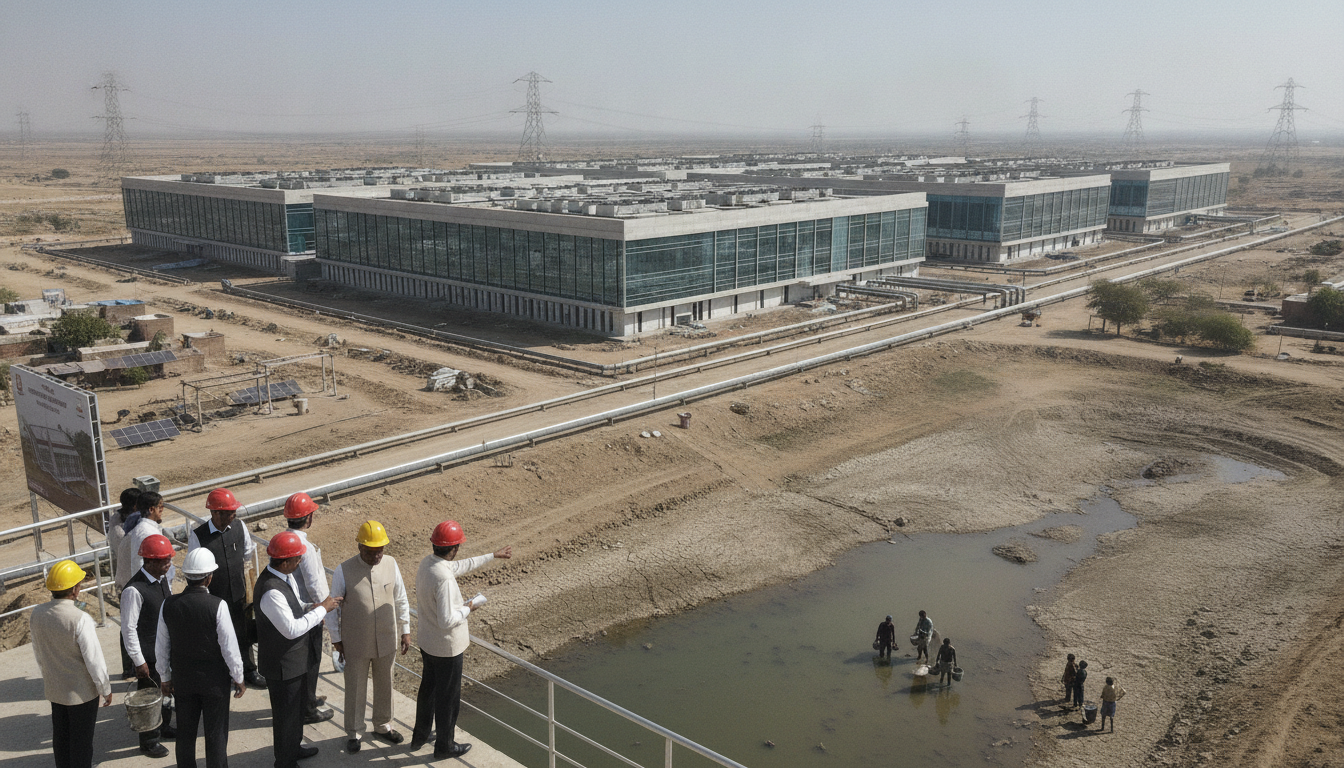
India’s AI data centers spur local anxiety as Google campus plans raise resource concerns
Planned Google campus underscores India’s race to host AI data centers, raising local fears over strain on energy and water resources and environmental impacts.
India’s accelerating push to host AI data centers has taken a new turn with plans for a large Google campus that local residents say could deepen pressure on already strained energy and water systems. The proposed development, part of a broader effort to attract hyperscale computing to the region, has prompted unease among communities, environmental groups and some officials who worry about long-term resource impacts.
Google campus plan and project scope
Company filings and public statements describe the site as a major investment intended to support cloud computing, artificial intelligence development and local employment. Google says the campus would include data halls, office space and supporting infrastructure designed for advanced AI workloads.
Local authorities and company representatives have argued the project will bring jobs, digital infrastructure and supply-chain growth to the area. Yet the scale of power and water demands associated with commercial AI data centers has amplified scrutiny from residents and planners.
Strain on energy grids and electricity demand
AI data centers require continuous, high-density power to run compute servers and cooling systems, experts say, and the new campus would add a significant load to regional electricity networks. Grid operators have warned that sudden increases in demand can exacerbate outages and force costly upgrades to transmission and distribution systems.
Officials have indicated plans to source a portion of the campus’s electricity from renewables and grid contracts, but analysts caution that intermittent generation must be paired with firm power or storage to meet 24/7 data center needs. The conversation over how much new capacity will be built — and who will pay for it — remains unresolved.
Water use and local supplies under scrutiny
Beyond electricity, data center cooling can be water intensive depending on design choices, and local groundwater and municipal supplies are already under pressure in several parts of India. Farmers and residents have expressed concern that large industrial withdrawals could lower water tables, affect irrigation and limit potable supplies during dry seasons.
Company statements have referenced advanced cooling technologies and water-recycling systems, yet community leaders say they need clear, enforceable commitments and independent monitoring. The absence of transparent baseline measurements for local water resources has become a focal point for activists and trade groups.
India’s race for AI infrastructure and incentives
The Google campus fits within a wider national effort to position India as a major hub for AI infrastructure, as governments and private firms compete globally to host the compute capacity underpinning generative AI. Central and state governments have offered tax incentives, land allotments and streamlined approvals to attract hyperscalers.
Proponents argue that hosting AI data centers will spur technological development, cloud adoption and high-skill employment. Critics counter that incentives must be balanced with safeguards for communities and that long-term local benefits should be quantified before approvals are finalized.
Community reactions and environmental advocacy
Residents near the proposed site have staged meetings, written petitions and sought meetings with local officials to voice concerns about noise, traffic, groundwater and air quality. Farmers in surrounding areas have warned that any additional stress on water could threaten cropping cycles and livelihoods.
Environmental groups have called for rigorous environmental impact assessments, public disclosure of projected resource use and contingency plans for drought conditions. They also urge the inclusion of independent auditors to verify company-led mitigation measures.
Government and corporate responses to resource questions
Local and regional governments say they are reviewing the project through existing permitting channels and environmental regulations. Officials have committed to assess grid impacts and water allocation requests before granting final clearances.
Google and other firms pursuing similar developments emphasize commitments to energy efficiency, circular water use and investments in renewable energy procurement. Nevertheless, officials acknowledge that policy frameworks governing industrial-scale AI deployments are evolving and may require updates to address specific resource and community concerns.
Timeline and potential conditions for approval
Permitting processes, environmental assessments and grid studies could take months to complete, and any major infrastructure upgrades would require additional lead time. Some analysts expect that approvals may include binding conditions on water use, renewable energy sourcing and local hiring quotas.
Observers say the outcome will set precedents for how other proposed AI data centers are evaluated across India, influencing where future campuses locate and how projects approach resource management and community engagement.
The emergence of large-scale AI data centers in India marks a pivotal moment in the country’s technological and economic trajectory, but it also raises immediate questions about sustainability and local equity. Resolving those tensions will require clearer data, enforceable commitments from companies, and sustained engagement between residents, regulators and the tech firms racing to build the infrastructure for next-generation artificial intelligence.
