
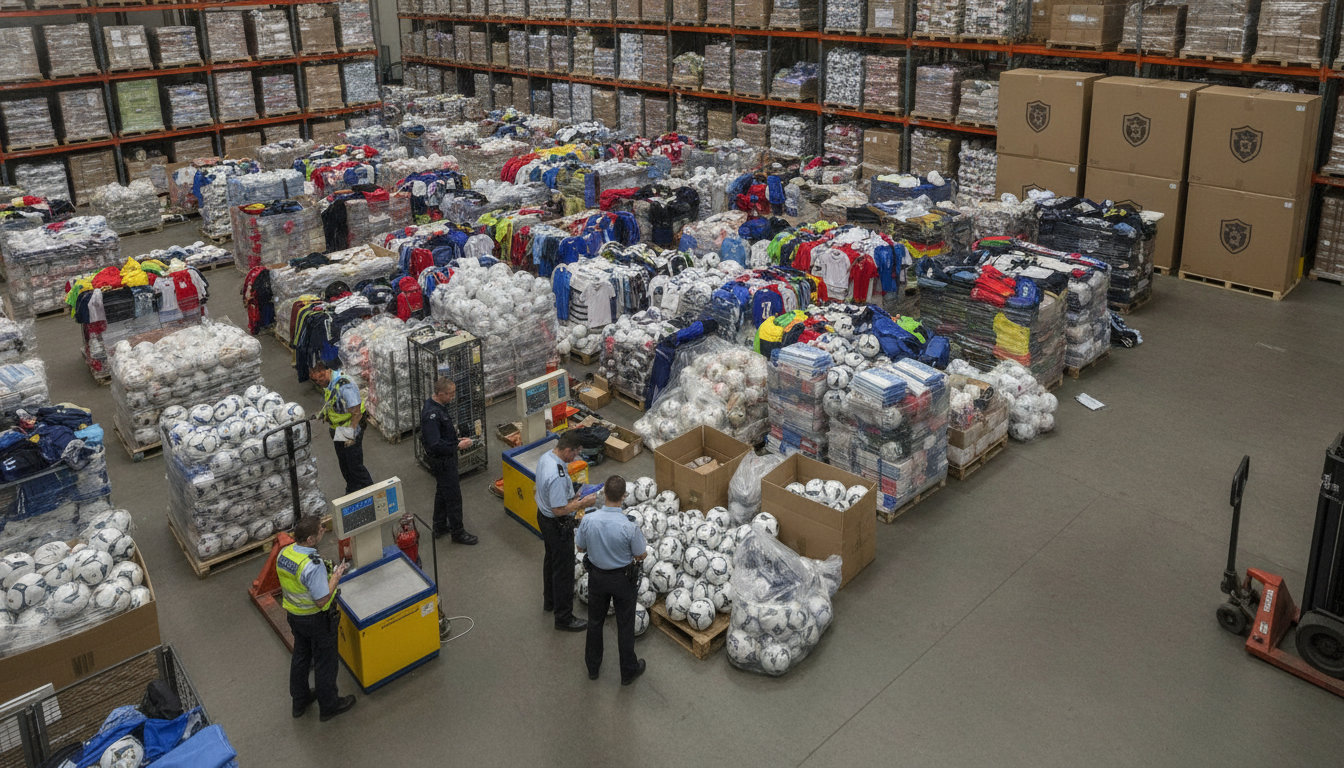
Edinburgh Trading Standards Seize 58,000 Counterfeit Sportswear Items Destined for World Cup Markets
Edinburgh authorities seized 58,000 counterfeit sportswear items worth more than $7 million slated for sale during the World Cup, disrupting a large-scale fake merchandise operation. The seizure targeted shirts and equipment bearing club and national team insignia, highlighting risks to consumers and intellectual property owners.
Mass seizure disrupts planned World Cup sales
Local Trading Standards officers intercepted a major consignment in Edinburgh before it reached informal market channels. The haul included tens of thousands of shirts and assorted sports merchandise intended to meet surging demand tied to the World Cup.
Investigators say the shipment was packaged and labeled for rapid distribution to fans seeking cheaper alternatives to official products. Authorities described the operation as one of the largest anti-counterfeit actions in the city in recent years.
Scale and estimated market value
Officials report approximately 58,000 individual items were confiscated, with an estimated resale value exceeding $7 million if sold through unofficial networks. The figure reflects the potential economic impact of counterfeit sportswear during peak demand periods.
Beyond headline numbers, the seizure underscores the profitability of illicit goods tied to major sporting events. Regulators warned that the apparent scale suggests sophisticated supply chains feeding local street markets and online sellers.
Intended distribution channels and consumer risks
The shipment was prepared for sale through non-official vendors and unregulated online listings targeting match-going supporters. Investigators emphasized that counterfeit sportswear often circulates at roadside stalls, pop-up markets, and across social platforms that do not verify authenticity.
Consumers who purchase fake merchandise face risks including poor quality materials, inaccurate sizing, and lack of safety standards for textiles. Authorities also cautioned that counterfeit goods may not carry warranties or after-sales support and can undermine legitimate retailers.
Enforcement actions and legal implications
Trading Standards personnel acted under regulatory powers to seize goods infringing intellectual property rights and breaching consumer protection rules. The intervention is part of ongoing efforts to protect trademarks and stem the flow of illicit merchandise ahead of major sporting events.
Potential legal consequences for those involved range from confiscation and fines to prosecution where evidence supports deliberate commercial-scale fraud. Authorities signalled they will pursue intelligence to trace the shipment’s origin and distribution network.
Impact on brands and event stakeholders
Major sports brands and governing bodies routinely monitor markets for counterfeit items, asserting that fake products harm both revenue and brand reputation. The seizure in Edinburgh is likely to be shared among stakeholders as a reminder of heightened enforcement around global tournaments.
Event organisers and rights holders have an interest in ensuring fans access genuine products that meet quality and licensing standards. The presence of large shipments of counterfeit sportswear also complicates efforts to guarantee licensed merchandise availability for legitimate sellers.
Consumer guidance ahead of future tournaments
Officials urged fans to buy merchandise only from authorised retailers, club shops, and verified online stores to ensure authenticity and quality. Consumers are advised to check labels, packaging, and seller credentials, and to be wary of prices that appear significantly lower than standard retail.
Trading Standards recommended reporting suspicious sellers or markets to local authorities to help disrupt illegal distribution. Public awareness campaigns are expected to continue as part of broader measures to protect buyers and rights holders.
The Edinburgh operation highlights the economic incentives behind counterfeit sportswear tied to high-profile competitions and the role of enforcement in safeguarding markets and consumers.
