
Nuristan floods leave at least 23 dead and more than 100 missing as monsoon batters region
Nuristan floods devastated eastern Afghanistan on July 21, 2026, killing at least 23 people and leaving over 100 unaccounted for as rescue teams race against further flash floods.
Nuristan floods kill at least 23, over 100 missing
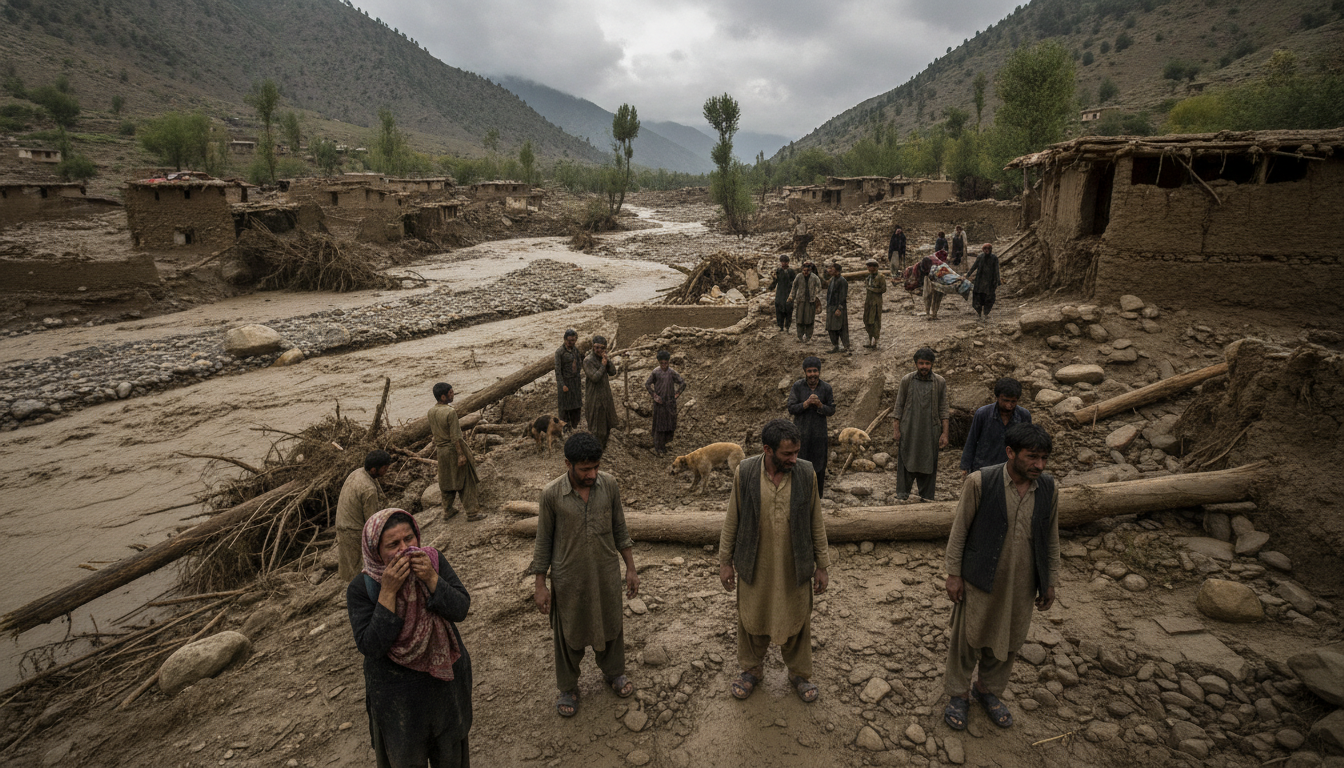
Rescue crews searched the rubble in Nuristan province after sudden flash floods swept down mountainsides on July 21, 2026, flattening homes and businesses in the provincial capital, Parun. Officials reported at least 23 confirmed deaths and said more than 100 people remained missing as teams worked amid unstable conditions.
Footage from Parun showed buildings reduced to mud and rubble and residents sifting through debris for signs of survivors. Local authorities said the scale of destruction was heightened by the speed and force of the water, which left entire sections of remote settlements unrecognisable.
Search and rescue operations face renewed flood risk
Teams from provincial emergency services and local volunteers carried out house-to-house searches while heavy equipment tried to clear access routes to cut-off areas. Officials warned that new flash floods could arrive with more rain forecast, complicating rescue and recovery efforts.
Access to remote valleys remained a major challenge because many roads were washed out and public services are limited in the mountainous province. Humanitarian workers said the mud-brick construction common in the area offered little resistance to sudden torrents, increasing the likelihood of building collapses.
Meteorology department issues warnings for 10 provinces
Afghanistan’s Ministry of Transport and Civil Aviation meteorology department issued forecasts for heavy rain, thunderstorms, strong winds with sand, and flash floods across 10 of the country’s 34 provinces. The warning underscored the threat of further incidents as the monsoon season intensifies.
Authorities urged residents in vulnerable districts to move to higher ground where possible and to avoid crossing swollen rivers or streams. Emergency centres were activated in several provincial hubs to coordinate relief and to gather data on the missing and displaced.
Monsoon-related deaths rise across South Asia
The disaster in Nuristan is part of a wider monsoon crisis affecting South Asia, where seasonal rains have spawned floods, landslides and deadly storms. Reports from neighbouring countries show mounting casualties: at least 25 people were reported killed across northern and northeastern India, while Nepal has recorded dozens of fatalities since mid-June.
Climate experts and aid organisations say this year’s monsoon has been unusually severe in several areas, producing intense downpours and rapid onset floods that overwhelm local defences. The pattern of repeated, high-impact events has strained regional humanitarian capacity and raised concerns about preparedness for the coming weeks.
Structural weakness and climate factors heighten vulnerability
Afghanistan’s capacity to withstand flash floods remains limited after decades of conflict, persistent deforestation and underinvestment in resilient infrastructure. Many remote communities in Nuristan and similar provinces live in mud-brick homes that collapse under the force of floodwaters and landslides.
Officials noted that previous extreme-weather episodes have already exacted heavy human and economic costs. In the spring of 2024, more than 300 people died in flash floods, and earlier in 2026 widespread flooding and landslides killed at least 110 people in several parts of the country, highlighting a pattern of recurring loss.
Humanitarian needs and immediate relief priorities
Responders have prioritised search-and-rescue, emergency medical care, temporary shelter and the restoration of basic services such as water and road access. Local authorities and international agencies coordinating relief appealed for rapid delivery of tarpaulins, blankets and medical supplies to affected families.
Displacement is likely to increase as damaged homes are deemed unsafe or inaccessible, and cold nights in high-altitude districts raise the urgency for shelter and heating materials. Aid workers cautioned that without swift assistance, displaced populations face secondary health risks from exposure, contaminated water and limited sanitation.
Afghan officials stressed the importance of early warning systems and community preparedness to reduce future casualties, while humanitarian organisations called for sustained funding and logistical support to reach isolated settlements. The coming days will be critical as forecasters watch for additional storms and teams work to account for the missing and stabilise the most severely affected areas.
