
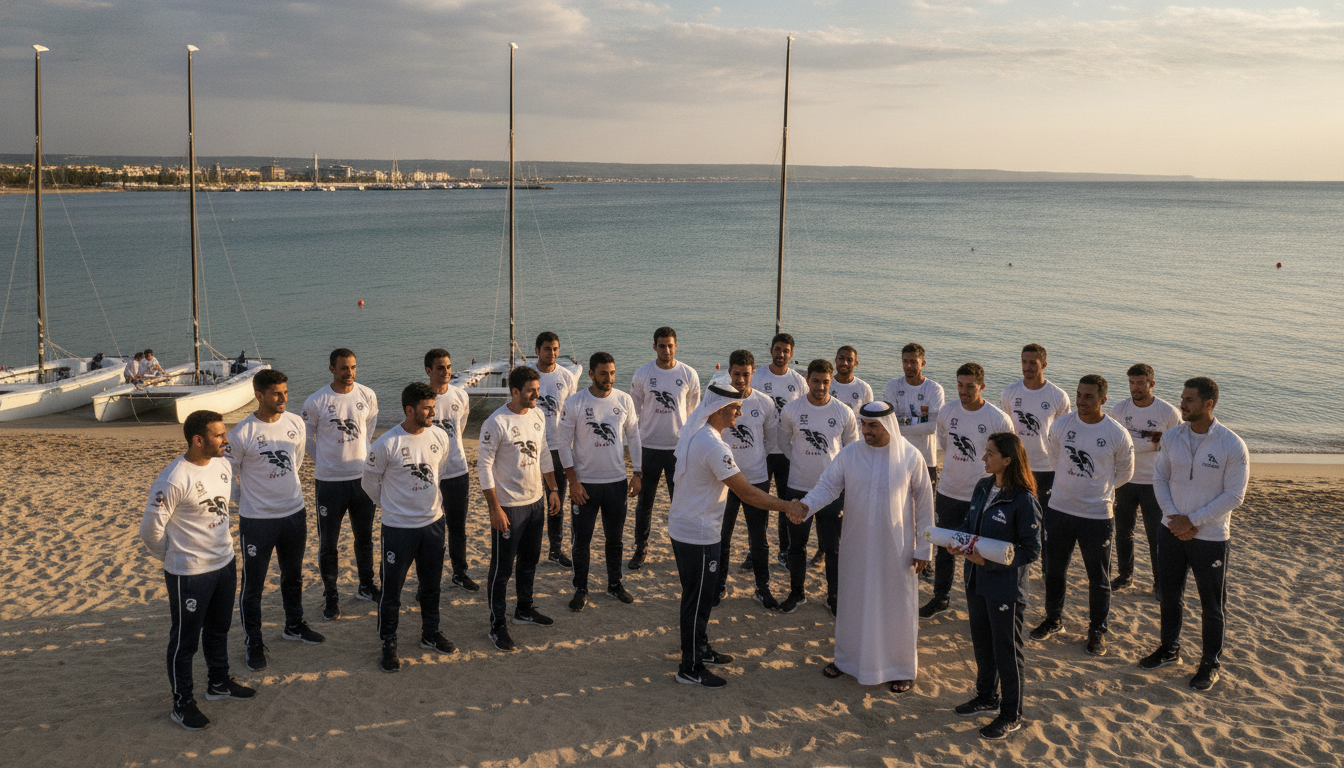
Abu Dhabi Sailing Team Heads to Sarafovo Cup in Bulgaria
Abu Dhabi sailing team competes at the Sarafovo Cup in Bulgaria from August 13–16 as ILCA 4 sailors join joint training and test races to boost readiness and exposure.
The Abu Dhabi sailing team has travelled to Bulgaria to take part in the Sarafovo Cup, a four-day regatta running from August 13 to 16 that features an estimated 50 ILCA 4 competitors from Bulgarian and Turkish clubs. The delegation aims to combine high-intensity training with competitive test races to sharpen sailors’ technical skills and race management ahead of the next regional calendar. The programme is part of a broader development push by the Abu Dhabi Sailing Academy to expose youth sailors to different sailing schools and tougher sea conditions.
Arrival and Event Context
The team arrived in the Black Sea coastal area to begin on-water sessions and familiarisation with local conditions before the official races start. Organisers expect roughly fifty ILCA 4 skippers to contest the fleet, offering dense competition and varied tactical scenarios for visiting crews. The Sarafovo Cup provides a mix of coastal race courses and open-water legs that will test sailors’ handling in shifting winds and choppy seas.
Training Schedule and Joint Sessions
The Abu Dhabi sailors will engage in intensive training blocks each day, combining boat handling drills, starts practice and short simulated races with host-club athletes. Coaches have scheduled joint sessions with Bulgarian and Turkish sailors to promote tactical exchanges and increase exposure to different sailing techniques. These combined practices are designed to accelerate learning through direct competition and shared coaching feedback.
Competition Format and Test Races
Race management at the Sarafovo Cup will include a series of preliminary test races before the formal championship races, allowing teams to calibrate equipment and strategies. The ILCA 4 fleet will contest multiple short-course races that reward strong starts and rapid mark roundings, while weather windows may open opportunities for longer coastal workouts. Competitors will be scored across a sequence of races to determine podium positions, with discard rules in place as outlined by the event committee.
Coaching Team and Mission Leadership
The Abu Dhabi mission is led by Ahmed Al Marzouqi, who serves as head of the delegation and will oversee logistical and competitive planning on site. Patrick Lotomski is the squad’s principal coach and will run the day-to-day on-water programmes together with local technical staff. Khalifa Al Suwaidi, director of the Abu Dhabi Marine Sports Academy, described the participation and accompanying camp as part of the academy’s strategy to develop young sailors and expose them to a variety of sailing schools.
Sailor Line-up in ILCA 4
The ILCA 4 contingent from Abu Dhabi includes Saif Al Zaabi, Abdulrahman Al Bahri, Rashid Al Dhaheri, Sultan Ibrahim, Jassim Mohammed Jassim and Simon Hristov, each selected for their recent performances and potential for growth. The selection balances sailors at different stages of development to maximise race learning and peer mentoring during the camp. Coaches will monitor individual progress across technical, tactical and physical markers during the event to inform future selection and training plans.
Performance Objectives and Next Targets
The immediate objective is to raise the sailors’ readiness and tactical acumen by exposing them to competitive pressure and variable sailing conditions. Academy leadership views the Sarafovo Cup as a performance benchmark that will inform training adjustments ahead of regional qualifiers and future international assignments. Longer term, the delegation aims to convert the accrued experience into measurable improvements in race results and athlete resilience.
The Abu Dhabi sailing team’s participation at the Sarafovo Cup underscores a structured approach to athlete development that pairs international competition with targeted coaching interventions. Results from the regatta will be used to refine programmes and prepare the cohort for upcoming championships in the region.
