
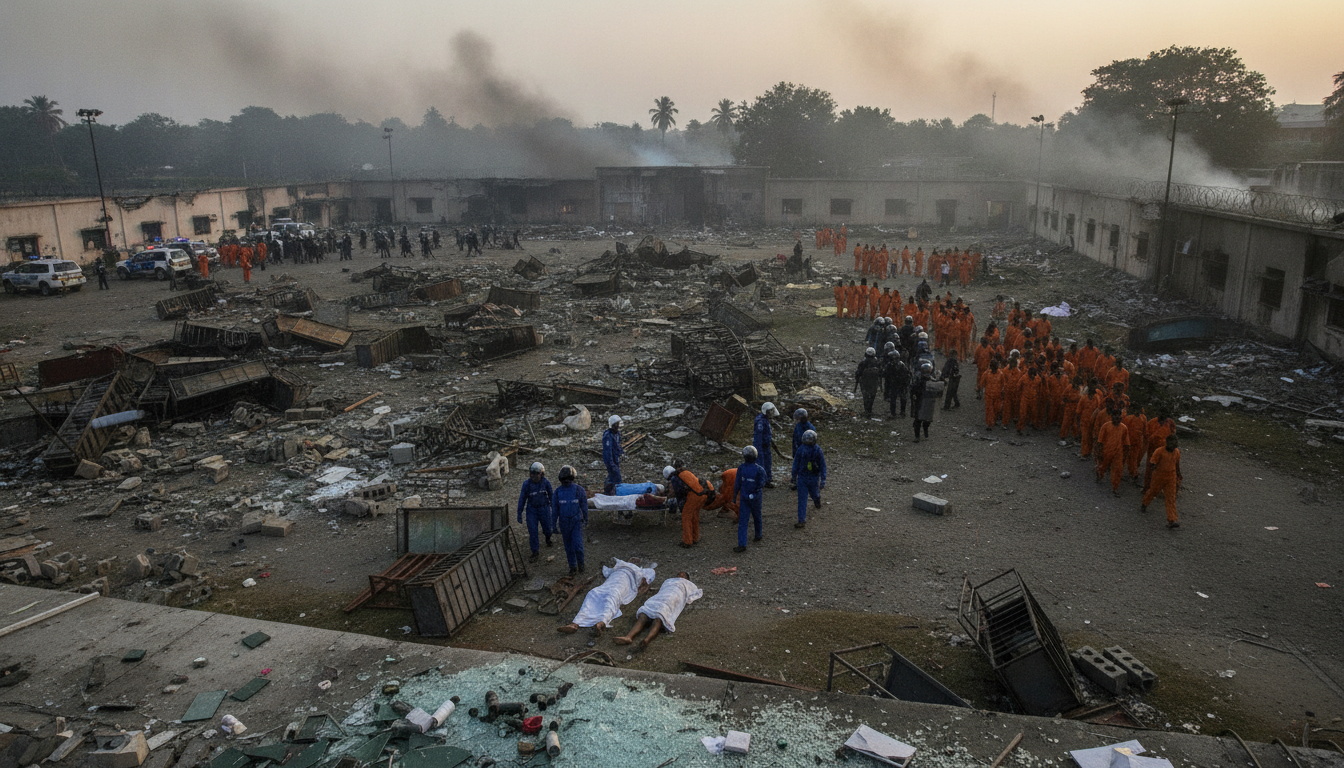
Sri Lanka prison riots leave three dead and dozens hurt as authorities probe gang, narcotics links
Three killed and 23 injured in Sri Lanka prison riots across Colombo, Kuruwita and Negombo as authorities probe gang and narcotics links amid jail overcrowding
A series of violent disturbances at three separate facilities across Sri Lanka on August 7, 2026, left three inmates dead and 23 others hospitalised, officials said, in what authorities described as linked Sri Lanka prison riots driven by criminal networks and rival gangs. The disturbances began late on Thursday at the New Magazine Prison in Colombo and continued into Friday with outbreaks at Kuruwita and an open prison in Negombo. Security forces were deployed to restore order as ministers told parliament they suspect organised planning behind the unrest.
Deadly clashes at three prisons
At New Magazine Prison in Colombo, authorities reported one inmate was killed after a group of around 40 prisoners forced their way out of cells late on Thursday. The incident sparked a rapid response by prison guards and riot police to contain the breakout and return inmates to their wards.
A second separate confrontation at Kuruwita prison, roughly 80 kilometres from the capital, resulted in two further inmate fatalities early on Friday. Meanwhile, officers said they used tear gas at an open prison in Negombo to disperse protesting inmates and bring that situation under control.
Authorities point to narcotics networks and gang rivalries
Public Security Minister Ananda Wijepala told parliament the violence appeared linked to narcotics dealers and rival criminal gangs operating inside the prison system. Officials said they were investigating whether the three disturbances were coordinated and described the possibility of deliberate sabotage.
Minister Wijepala cautioned that further conclusions would await the outcome of a comprehensive inquiry, while law enforcement sources signalled that organised illicit trade and factional disputes were the primary lines of inquiry. Investigators are also reviewing communications and movements within and between the affected facilities.
Police and special forces bring riots under control
Police, special forces and riot squads were dispatched to the three prisons and worked through the night to restore order and prevent further escalation. Officers focused on securing rooftops and open areas where inmates had gathered, escorting those individuals back into wards and isolating ringleaders.
Authorities said the combined security response succeeded in stabilising the facilities but that several inmates sustained injuries during clashes and subsequent containment operations. Officials emphasised the need for heightened vigilance as they assess whether similar flashpoints might emerge elsewhere in the prison estate.
Injuries, hospitals and rooftop stand-offs
A total of 23 inmates were treated for a range of injuries and taken to nearby hospitals, authorities reported, though officials did not immediately disclose the full extent of their wounds. Medical staff at local hospitals were put on alert as ambulances transported the injured from the three sites.
Riot police described episodes in which prisoners climbed onto roofs or gathered in open courtyards, prompting targeted interventions to prevent further violence. Use of non-lethal measures such as tear gas and baton charges was reported in Negombo, while containment at the other facilities relied on coordinated manpower and perimeter control.
Overcrowding fuels unrest, rights group warns
Human rights advocates and prison reform campaigners highlighted chronic overcrowding as a major contributing factor to repeated unrest. Justice Minister Harshana Nanayakkara has previously told parliament that Sri Lanka’s prison population exceeds 39,000 against an official capacity of roughly 10,000, placing immense strain on staff and infrastructure.
Senaka Perera, president of the Committee for Rights of Prisoners, warned that prisoners “have been patient for so long,” arguing that detention conditions and mounting pre-trial populations have heightened tensions. Recent changes tightening bail conditions have resulted in an influx of suspects, many held on alleged narcotics offences.
Government moves to clear case backlog and reform courts
Officials said steps are being considered to reduce the pre-trial population and ease pressure on detention centres, including proposals to extend senior judges’ tenure by two years to accelerate casework. The government has framed the measure as part of a broader effort to tackle a backlog of over one million court cases and shorten detention times for suspects awaiting trial.
Lawmakers and justice officials indicated that legislative and administrative changes would be pursued alongside security responses, with the stated aim of addressing both immediate safety concerns and the systemic causes of recurrent prison disturbances. Any constitutional amendment or judicial reform will require careful parliamentary debate and legal scrutiny.
As investigations proceed, authorities have pledged a thorough inquiry into whether the recent Sri Lanka prison riots were isolated flare-ups or part of a coordinated campaign by criminal networks. The government said it will release further details as findings are confirmed and legal steps are taken to hold those responsible to account.
