
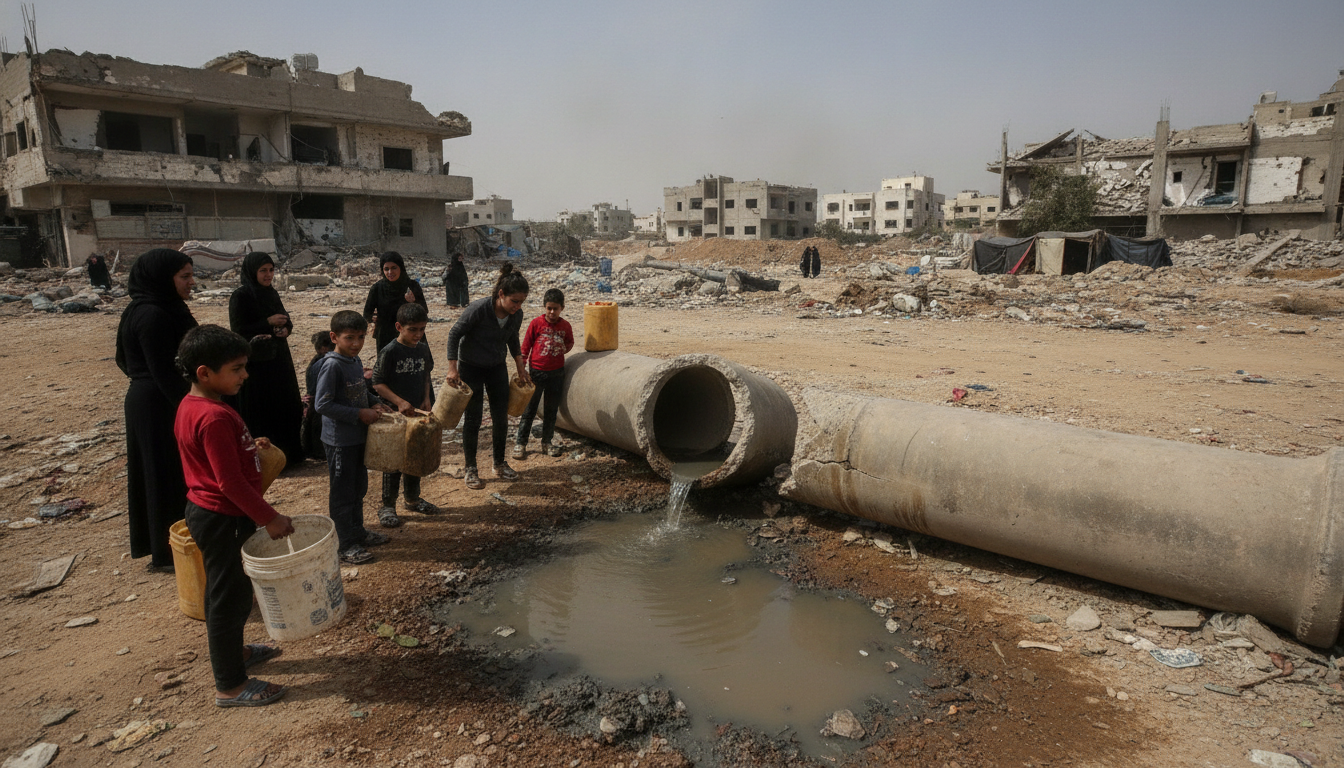
Gaza water infrastructure collapse leaves families without safe drinking water
Damaged Gaza water infrastructure leaves families without safe drinking water. Contaminated wells, broken pumps and limited treatment raise disease risks.
Widespread destruction to distribution networks
Gaza’s water infrastructure has been severely damaged across large parts of the territory, leaving municipal networks fragmented and pipelines unusable for many communities. Families report long interruptions to supply as sections of buried mains and household connections sit exposed or collapsed beneath rubble. Engineers say repairing distribution lines will require sustained access to materials, safe working areas and reliable fuel to power equipment and trucks.
Contaminated wells and growing health concerns
Contaminated groundwater and wells are multiplying public health risks as sanitation systems fail and sewage enters water sources. Health officials warn that untreated water increases the likelihood of diarrhoeal and waterborne diseases, particularly among children and the elderly. Without consistent chlorination and monitoring, communities face a heightened threat of outbreaks that could overwhelm constrained medical facilities.
Pumping stations and treatment plants offline
Several pumping stations and at least some treatment facilities remain partially or fully inoperative after damage to electrical systems, control rooms and intake structures. Where plants are still standing, intermittent power and shortages of chemicals mean treatment processes cannot run to full capacity. Technicians describe a cycle in which pumps are run sporadically to fill tanks, then shut down when electricity or fuel is unavailable, undermining efforts to provide a steady, safe supply.
Household coping strategies under strain
Households are resorting to buying water from private vendors, queuing for tanker deliveries, and storing uncertain supplies in rooftop tanks that may not be regularly cleaned. Those with the few functioning wells rely on long queues and expensive informal markets, placing disproportionate burden on poorer families. Local residents also report sharing water for basic needs and foregoing hygiene practices that are essential to prevent disease, creating secondary public-health challenges.
Barriers to large-scale repairs
Repair teams face multiple obstacles including limited access to construction materials, damage to roadways, and inconsistent fuel supplies needed for heavy machinery and generators. Security constraints and bureaucratic hurdles further delay the import and transport of pipes, pumps and treatment chemicals to repair yards and plant sites. Engineers and aid coordinators say short-term fixes are possible but sustainable reconstruction will require coordinated deliveries of parts, cleared work areas and predictable financing.
Humanitarian response: water trucking and interim measures
Humanitarian agencies have scaled up emergency water trucking and distribution of purification tablets and safe-storage containers to reduce immediate risks. These measures provide temporary relief but are costly and logistically complex, with trucks often unable to service some neighborhoods. International donors and local organisations continue to call for expanded support to maintain emergency supplies while repair plans are implemented.
Funding, rebuilding and long-term resilience needs
Experts stress that rebuilding Gaza water infrastructure will demand multi-year plans that include modernisation, redundancy and improved safeguards to prevent contamination after shocks. Funding pledges for emergency work and longer-term reconstruction must be accompanied by technical assessments and locally led repair teams to ensure systems can be operated and maintained. Stakeholders say investments in decentralised treatment, protected wells and resilient pumping solutions could reduce future risks and shorten recovery times.
Damage to Gaza water infrastructure has left thousands of families dependent on uncertain and often unsafe sources for drinking and hygiene, increasing public-health pressures across the territory. Immediate humanitarian action paired with a coordinated reconstruction programme will be essential to restore reliable, safe water services and to protect communities from preventable disease.
