
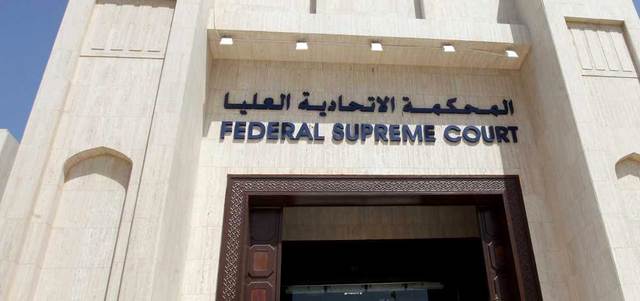
The Federal Supreme Court confirmed that educating children is included in the general maintenance that a father is obligated to pay towards his child, explaining that “the child’s education is the prerogative of the guardian, and one of his affairs, as he is the one responsible for caring for and preserving his child, including choosing the type of study and the school he will join. The custodian may not choose a specific school, or a private school, without the father’s express approval.”
In a recent ruling, the court refused to oblige Mutlaq to pay his daughter’s tuition fees at a private university, after her foster mother enrolled her there, without asking his permission or obtaining prior approval from him.
It pointed out that the case papers did not contain any evidence of the defendant’s (the father’s) explicit consent to enroll his daughter in the private university, and the court said that he was not obligated to pay his daughter’s tuition fees that the plaintiff had paid, as long as the possibility of her education at the public university without fees existed.
In detail, a custodial mother of two daughters filed a lawsuit against her ex-husband, demanding that he be obligated to pay the university fees for one of them, as well as an increase in alimony, the nursery fee, and a housing allowance.
The court of first instance ruled for the plaintiff to oblige her ex-husband to pay the value of university fees, increase alimony for the two girls, to become 4,000 dirhams per month equally between them, increase the housing allowance to 40,000 dirhams annually, a furniture allowance of 20,000 dirhams once, and 1,500 dirhams to buy school supplies for the two girls.
The Court of Appeal ruled to amend the ruling by canceling the required increase in housing rent, while maintaining the agreed-upon rent of 35 thousand dirhams, reducing the furniture allowance to 10 thousand dirhams, and upholding the ruling otherwise.
The ruling was not accepted by the defendant, so he appealed it before the Federal Supreme Court, stating that he had submitted documents proving the increase in his financial burdens, and evidence of his marriage to another woman, as well as the pregnancy of his wife who gave birth to another child for him, and the failure to increase his income, which forced him to obtain a loan to settle his debts. Which is deducted from his monthly salary.
He also challenged the validity of the ruling issued regarding his obligation to pay his daughter’s university fees, as he explained that the plaintiff decided in her sole opinion to enroll her in a private university, to continue her education, despite the existence of a free public university, which is flawed in the ruling and requires it to be overturned.
The Federal Supreme Court upheld the defendant’s appeal regarding the error of the ruling in its ruling requiring him to pay university fees, as the case papers were devoid of evidence of his agreement to enroll his daughter in a private university. In this case, he is not required to pay the fees paid by the plaintiff as long as the possibility of her education at the public university without fees is available, adding that the appeal ruling contradicted this view, and ruled to uphold the ruling of the first instance ruling, obliging the defendant to pay the girl’s university tuition fees, as he would have He misapplied the law.
Follow our latest local and sports news and the latest political and economic developments via Google news
