
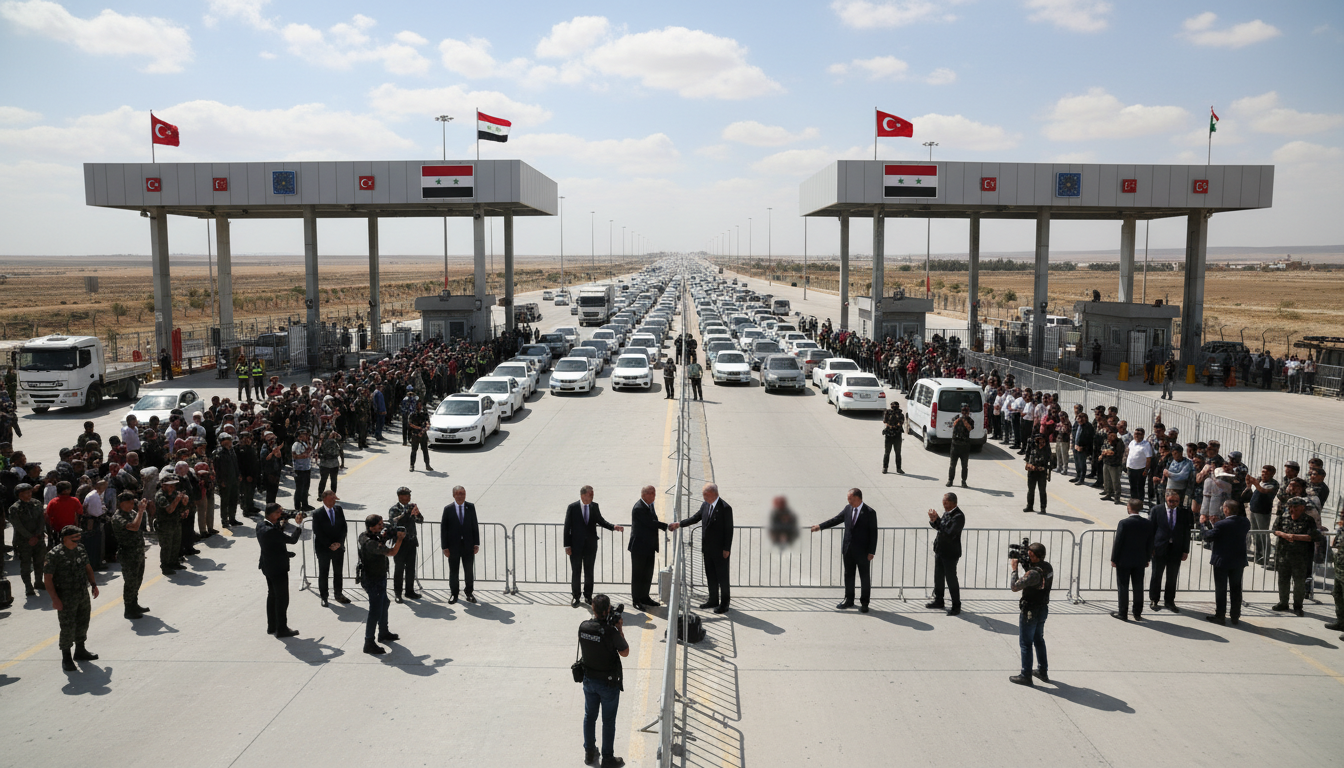
Akçakale border crossing to reopen on May 12, 2026, ending 12-year closure
Turkey will reopen the Akçakale border crossing with Syria on May 12, 2026, ending a 12-year closure and restoring civilian passage, trade and commerce.
The Akçakale border crossing will be reopened after local officials announced the decision on Monday, May 11, 2026, signalling a significant step in the gradual normalization of cross-border movement. The reopening permits civilian travel in addition to previously allowed commercial and official crossings, according to a statement from the Şanlıurfa governor’s office.
Official announcement and dates
The Şanlıurfa governor’s office said in a public statement on Monday, May 11, 2026, that entry and exit procedures using passports will resume at the Akçakale crossing from Tuesday, May 12, 2026.
Officials framed the decision as contingent on the restoration of normal life and security conditions in the border area, and they indicated that the move follows assessments by security and administrative authorities. The statement also confirmed that the reopening applies to civilian movement as well as continued commercial activity.
History of the closure and earlier partial openings
The Akçakale crossing, located opposite Tal Abyad (Tel Abyad) on the Syrian side, has been closed to civilians since 2014 when Turkey shut the border amid security shifts following the defeat of Islamic State and the rise of local Kurdish-led forces.
There was a partial reopening in 2019 that allowed trade and limited official transit after Turkish military operations altered control of nearby areas. The latest decision marks the first time in more than a decade that full civilian passage will be permitted at the crossing.
Trade restoration and local economic effects
Local traders and transport operators have long sought a full reopening of the Akçakale crossing to revive cross-border commerce and reduce logistical costs.
Reinstating civilian access is expected to increase foot traffic, small-scale trade, and cross-border market activity, easing some pressure on local supply chains that have rerouted goods since the closure.
Customs and trade officials will need to coordinate procedures, tariffs, and inspections to manage the anticipated uptick in movement, and local chambers of commerce have said they will monitor implementation to ensure the benefits reach border communities.
Humanitarian and civilian mobility implications
Reopening the Akçakale crossing to civilians will allow families separated by conflict and closure to reunite more easily, and it may improve access for people seeking medical, educational, or administrative services across the border.
Humanitarian organisations and local authorities will likely coordinate to handle vulnerable populations and to facilitate predictable, lawful transit while maintaining security screening.
The governor’s office cited the “return of normal life to the region” as a justification for resuming passport-based entry and exit, reflecting a broader emphasis on stabilisation measures in frontier districts.
Regional diplomacy and border normalisation trend
The reopening is part of a wider pattern of steps toward recalibrating relations between Syria and its neighbours, including moves to restore diplomatic and economic ties.
By reopening Akçakale, Ankara signals pragmatic engagement with cross-border management while balancing security considerations and regional diplomatic shifts.
Analysts say reopening border crossings can serve as confidence-building measures that encourage further cooperation on trade, migration, and security between states and local administrations along lengthy frontiers.
Operational scope and remaining crossings
With Akçakale set to open to civilians, six of the 12 land crossings between Turkey and Syria are now operational in some capacity, according to the governor’s statement.
Authorities will need to finalize practical measures such as staffing, customs processing hours, and transportation links on both sides to ensure smooth operations and to prevent bottlenecks at the renewed crossing.
Border management agencies have been instructed to implement passport controls and facilitate regulated movement, while security forces will continue assessments to reduce risks associated with illicit trafficking and other transnational threats.
The reopening of the Akçakale border crossing on May 12, 2026 represents a tangible change for communities on both sides of the frontier and a step toward restoring regular civilian life and trade across a historically sensitive stretch of the Turkey–Syria border.
