
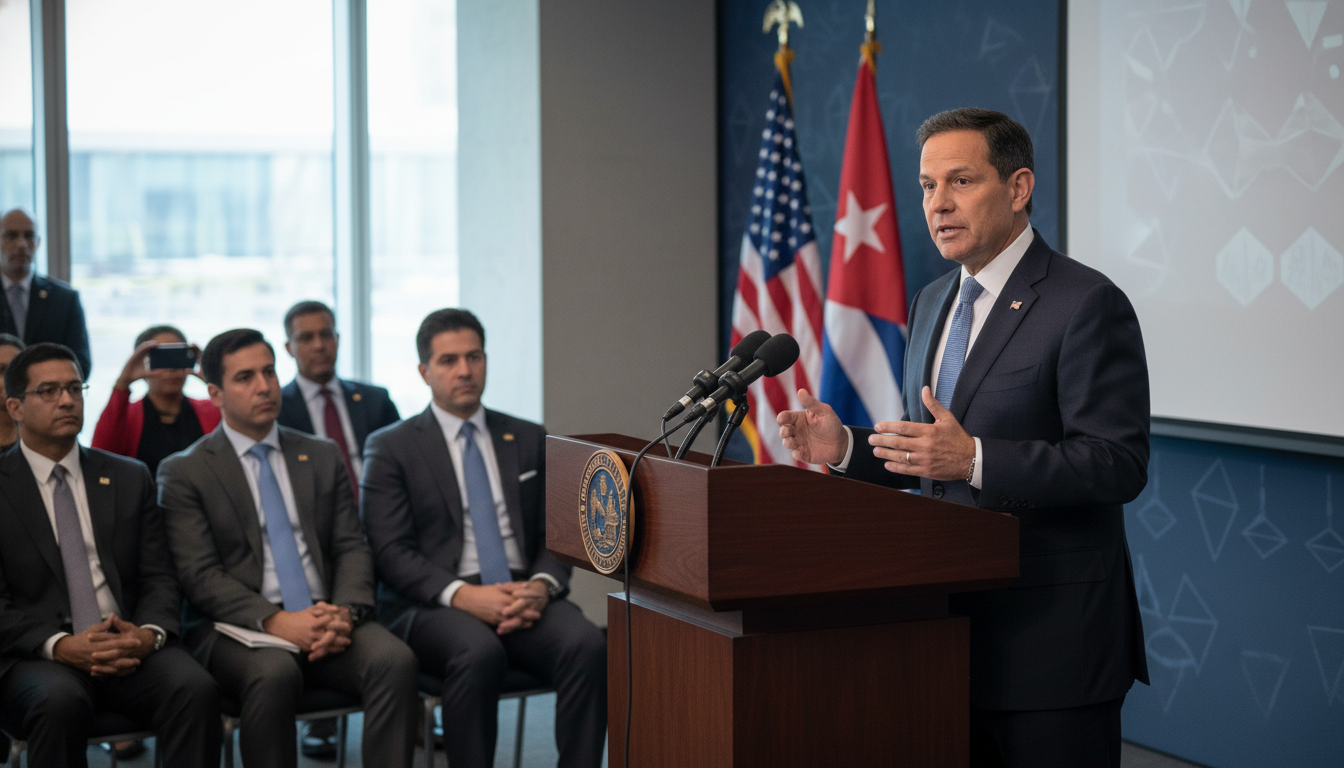
Rubio: Negotiations with Cuba Unlikely as Washington Steps Up Pressure
Marco Rubio says negotiations with Cuba are unlikely as Washington increases pressure; the US prefers talks but stands ready if Havana changes its stance.
The likelihood of reaching a negotiated agreement with Cuba is low at present, U.S. Senator Marco Rubio said Thursday, signaling continued strain in bilateral ties. Rubio, speaking to reporters, reiterated that while the United States favors diplomacy, current conditions on the island make a negotiated settlement improbable. He added that Washington remains prepared to engage should Havana alter its position. In the meantime, Rubio said, the U.S. will continue measures it deems necessary to press its objectives.
Rubio: Negotiations with Cuba Unlikely
Rubio told journalists that a negotiated settlement remains Washington’s preference but acknowledged the slim prospects for talks given the current Cuban leadership. He framed the situation as one where the U.S. is ready to negotiate “if they change their mind,” while stressing that patience for engagement is limited by policy objectives. The remarks reflect a continued tough line from senior U.S. officials toward Havana.
Rubio’s comments were concise and pointed, underlining a stance that balances rhetorical openness to diplomacy with persistent pressure. By emphasizing readiness to talk only under changed conditions, he signaled that concessions or preconditions would likely be necessary for formal negotiations to resume.
U.S. Preference for a Negotiated Settlement
Officials in Washington frequently present negotiation as the preferred route for resolving disputes, and Rubio reaffirmed that posture in his remarks. He emphasized that diplomatic solutions are normally the first option for U.S. policy, provided counterparties demonstrate a willingness to meet basic expectations.
At the same time, Rubio’s statement made clear that preference alone is not enough to guarantee talks. The senator’s comments suggested that policy choices will continue to be driven by assessments of Havana’s actions and the perceived feasibility of securing meaningful commitments through negotiation.
Washington’s Pressure Campaign on Havana
Rubio’s remarks came amid an intensification of what he described as a pressure campaign targeting Cuba, a theme echoed by other U.S. officials in recent months. While he did not enumerate specific measures during the briefing, his reference to sustained pressure captures a broader U.S. approach of combining diplomatic, economic, and political levers to influence outcomes.
Observers note that such campaigns are designed to compel behavioral changes without immediate recourse to direct engagement. Rubio’s statement signals that the administration — and lawmakers aligned with that view — are prepared to maintain or escalate pressure until they see signs that negotiations could yield tangible results.
What Would Need to Change for Talks to Start
Rubio indicated the principal condition for reopening talks is a change in Havana’s stance, without specifying exact benchmarks. Analysts infer that such a change could entail policy shifts, concessions on human rights, or new assurances on regional security, though Rubio stopped short of listing concrete demands.
The emphasis on a change of mind points to a diplomatic calculus in which reciprocity and verifiable steps would be prerequisites for formal dialogue. That approach leaves room for negotiation while setting clear expectations that talks are contingent on prior or parallel demonstrations of good faith.
Regional and Diplomatic Implications
Rubio’s comments will be closely watched across the Caribbean and among international partners who monitor U.S.-Cuba relations for regional stability implications. A sustained U.S. pressure campaign paired with conditional readiness to negotiate could influence how neighboring governments position themselves and engage with both Washington and Havana.
For diplomats and regional stakeholders, the near-term outlook is one of continued uncertainty. The balance between pressure and the possibility of talks creates a diplomatic environment where third parties may be asked to play mediating or monitoring roles if discussions eventually resume.
Rubio’s public assessment underscores a continuity in Washington’s posture toward Cuba: an expressed preference for negotiation tempered by a readiness to apply pressure until conditions for meaningful dialogue exist. The coming weeks and months will likely reveal whether Havana signals a willingness to change course and open the door to substantive negotiations.
