
Japan earthquake: 6.8 tremor in southwest sparks urgent rescue operations
Rescue crews raced to find survivors after a 6.8-magnitude Japan earthquake struck southwestern prefectures on July 29, 2026, toppling buildings and disrupting transport. Authorities warned of widespread damage while search efforts continued amid fears of aftershocks.
Rescue Teams Mobilise Across Southwest Prefectures
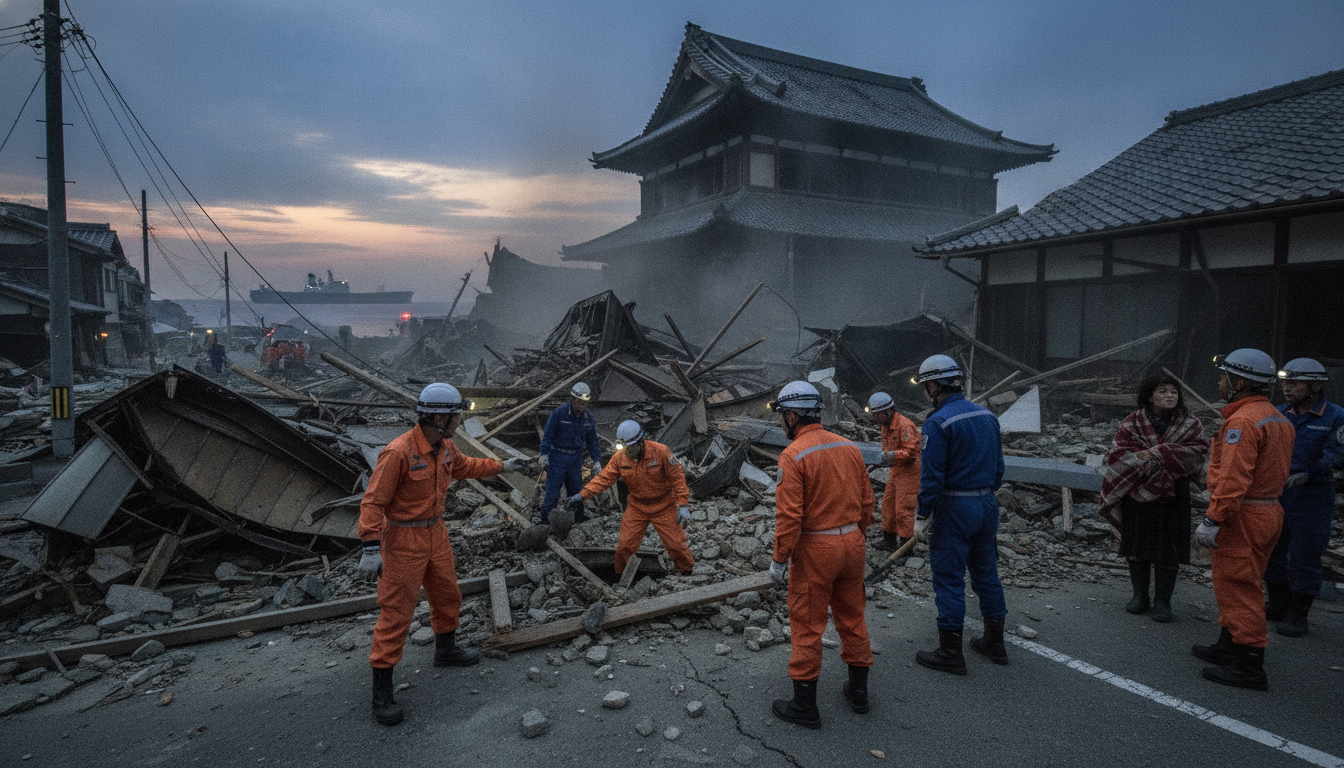
Rescue squads in orange uniforms and heavy equipment were deployed within hours to the hardest-hit areas after the Japan earthquake jolted communities on July 29, 2026. Teams from municipal fire departments, Self-Defense Force units and volunteer groups coordinated to reach collapsed homes and unstable structures.
Command centres established near damaged neighbourhoods reported crews conducting door-to-door checks and using search dogs and listening devices at rubble sites. Officials said the focus remained on locating survivors while prioritizing the safety of rescue personnel amid continuing tremors.
Search and Recovery at Collapsed Sites
Scenes at several residential districts showed piles of concrete and timber where houses once stood, with responders carefully cutting through debris to reach possible survivors. Photographs from the affected towns captured workers standing on toppled roofs and sifting through wreckage, underscoring the scale of the task.
Local emergency managers emphasised that the window to find trapped people narrows with time, and called for additional equipment and specialist teams when needed. Residents were urged to report missing family members to designated reception centres to streamline search and reunification efforts.
Infrastructure and Transportation Disruptions
The quake caused immediate disruption to road and rail services across the region, with authorities suspending several train lines and inspecting bridges and tunnels for damage. Utility companies reported outages in pockets of affected areas as crews worked to restore power and gas services safely.
Airports and ports in the broader southwest region were monitoring runways and terminals for structural impacts, and officials advised travellers to check with carriers before attempting to travel. Emergency repairs and inspections were prioritised to prevent secondary incidents such as fires or hazardous spills.
Emergency Shelters and Local Humanitarian Response
Municipalities opened evacuation centres to accommodate those whose homes were damaged or who fled aftershocks, providing food, water and medical assistance. Local governments set up hotlines and information points to help residents access shelter and support services.
Voluntary organisations and community groups mobilised to deliver blankets, bottled water and hygiene supplies to displaced families. Health teams were put on standby to treat injuries and to check on vulnerable populations, including the elderly and people with chronic conditions.
Seismologists Warn of Aftershock Risk
Seismologists monitoring the event said aftershocks of varying intensity were likely in the hours and days following the main 6.8-magnitude Japan earthquake. Experts advised people to stay away from damaged buildings and to follow guidance from local authorities regarding evacuation and building inspections.
Researchers noted that the region lies within a seismically active zone and that earthquake sequences can produce strong secondary shocks, increasing the chance of further structural collapses. Authorities recommended that residents prepare emergency kits and establish family communication plans in case of repeated tremors.
Government Coordination and Public Alerts
National and prefectural authorities activated emergency response protocols and convened crisis-management meetings to coordinate rescue, relief and infrastructure restoration. Public safety agencies issued alerts through mobile networks and local media to keep communities informed about road closures, shelter locations and safety measures.
Officials stressed the importance of heeding official announcements and avoiding unnecessary travel into affected zones to allow rescue teams to operate. Financial and logistical support measures were being organised to assist recovery efforts and to help families begin initial repairs.
Relief and recovery operations continued into the evening as search crews worked methodically through damaged neighbourhoods, while emergency services maintained a visible presence to assist residents and restore essential services. The full extent of damage was still being assessed, and authorities urged calm, cooperation and vigilance as the situation evolved.
