
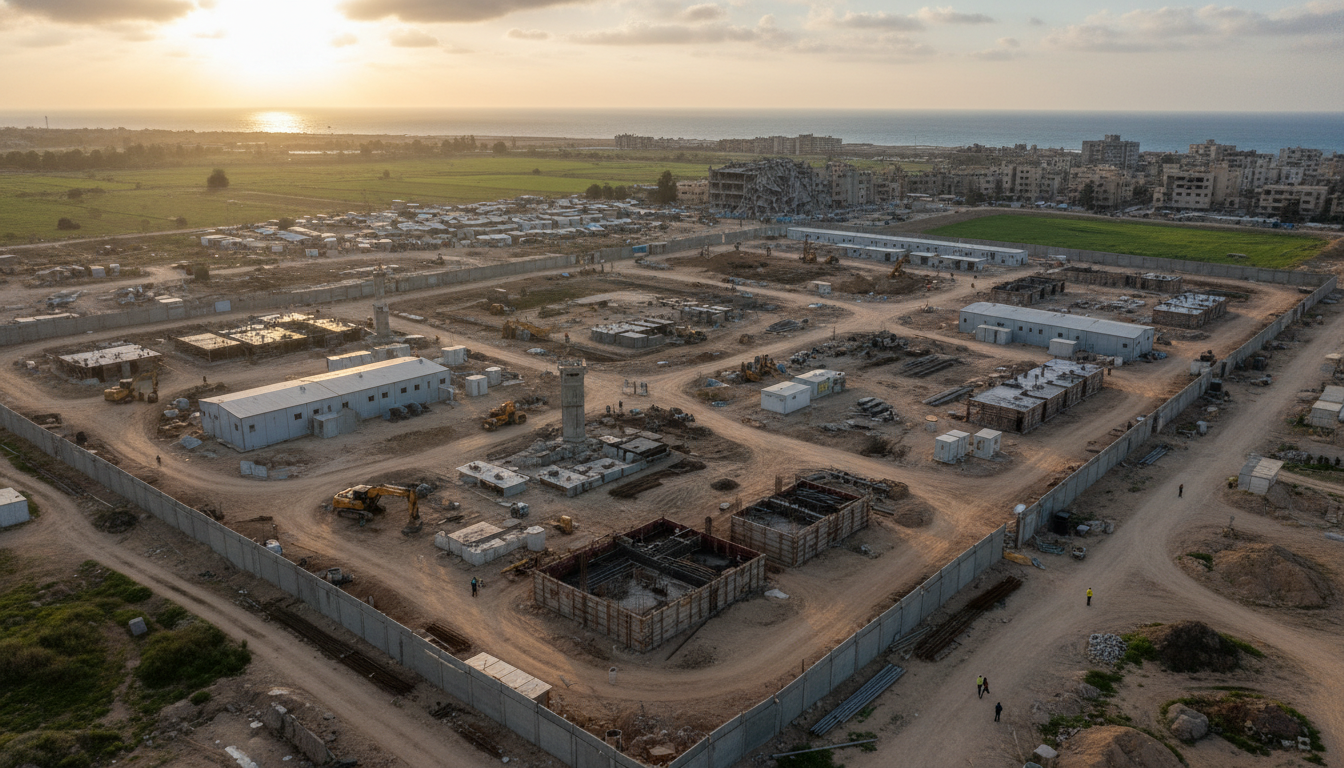
Israeli military bases in Gaza expand as US-backed Rafah reconstruction stalls
Satellite images show Israeli military bases in Gaza expanding while US-backed ‘New Rafah’ rebuild stalls, raising alarms over permanent control and concern.
Satellite imagery reveals growing military footprint
Satellite imagery examined by independent analysts shows Israeli military bases in Gaza expanding across multiple governorates, with notable activity in Rafah, Khan Younis and Gaza City.
The images, captured between late February and mid-March 2026, indicate extensive clearing, new road links and fortified outposts that analysts say resemble permanent installations.
These developments are occurring even as rubble removal and civilian rebuilding in several areas appear to have slowed or stopped.
US-backed ‘New Rafah’ reconstruction failing to materialize
Plans promoted by US officials to rebuild Rafah as a centerpiece of post-conflict Gaza have yet to break ground, according to investigators and aid agencies.
The flagship vision, framed as a comprehensive reconstruction effort, has been criticized internally by humanitarian groups for lacking demonstrable impact on living conditions inside Gaza.
Officials behind the plan have proposed large-scale funding and new governance mechanisms, but satellite evidence shows limited or no civilian construction where redevelopment was promised.
Evidence of permanent fortifications and new outposts
Imagery analysts identified construction of dirt berms, trenches and paved access roads linking fortified sites that now include watchtowers and communications infrastructure.
Outposts on strategic high ground, including hilltops east of Gaza City and positions near Khan Younis, display signs of sustained engineering work rather than temporary battlefield positions.
Researchers point to new roads and settlement-like layouts that suggest an intent to maintain long-term military presence inside large parts of the Gaza Strip.
Border demarcation shifting on the ground
What was described in ceasefire talks as a temporary “yellow line” appears to be transforming into a more fixed frontier in key areas, analysts say.
Imagery from early March shows a dirt berm constructed along and beyond that line in northern localities, and investigators reported concrete markers moved deeper into areas designated for Palestinian residence.
Senior Israeli military and political figures have publicly discussed redefining control lines, and the physical works on the ground now risk hardening those declarations into de facto borders.
Human toll and reported breaches during ceasefire period
Despite ceasefire arrangements that began in October, health authorities in Gaza report continuing casualties and injuries linked to intermittent violence and incursions.
Local health ministry figures cited by observers place the death toll since October 2023 in the tens of thousands, while independent studies have suggested even higher counts from direct violence in earlier phases of the conflict.
Analyses of incident patterns show frequent operations that have targeted areas slated for civilian habitation, complicating efforts to restore normal life or begin reconstruction.
Monitoring and humanitarian constraints intensify
Restrictions on commercial satellite imagery have compounded monitoring challenges, with providers announcing limits on conflict-zone data after requests from states.
The reduction in available imagery has hindered independent verification of works on the ground and limited the ability of media and rights groups to track changes in near real time.
At the same time, international aid organisations have criticized the current reconstruction proposals for lacking transparency and for tying access to security screening mechanisms that could restrict basic services.
The unfolding pattern — expanding Israeli military bases in Gaza alongside stalled US-backed reconstruction plans — has raised concerns among humanitarian organisations and rights observers about the future governance and movement of Gaza’s population.
International donors and agencies face increasing pressure to clarify how reconstruction funds would be spent, who would control access, and how to ensure that civilian needs are prioritised over military or territorial objectives.
As satellite monitoring becomes more restricted, independent verification of physical changes in Gaza will depend increasingly on on-the-ground reporting and the cooperation of regional and international actors.
