
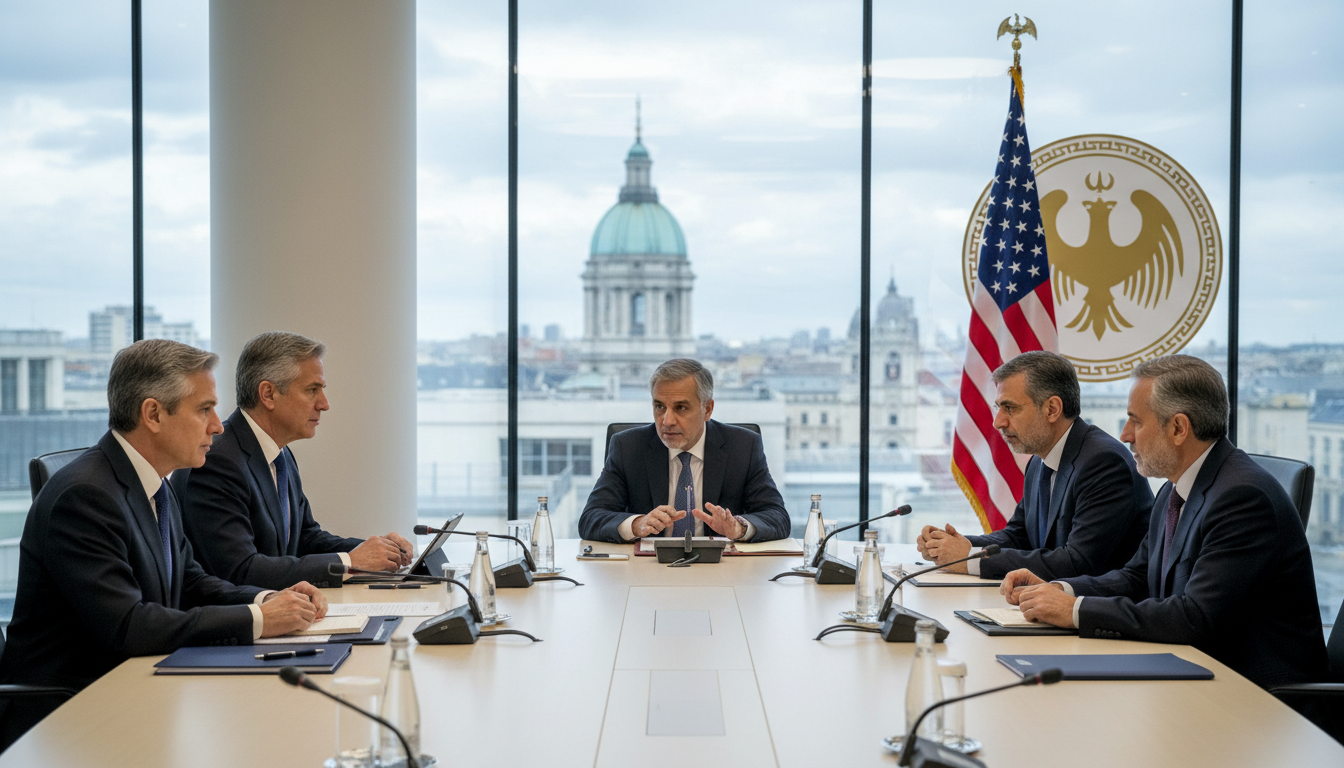
Iran-US talks at risk as uranium enrichment and recognition disputes deepen
Analysts say Iran-US talks face critical hurdles as uranium enrichment and Tehran’s refusal to normalise ties and recognise Israel raise regional risks.
Political scientist Mohsen Milani and former White House official Elisa Ewers told host Steve Clemons that the current Iran-US talks are confronting sharp obstacles that could scupper progress unless substantive concessions are agreed.
They identified uranium enrichment limits and Tehran’s stance on normalising relations — including the question of recognising Israel — as the two most intractable issues standing in the way of a durable accord.
Both experts warned that a weak interim arrangement or vague language on verification could postpone resolution only to produce renewed instability in the coming years.
Experts Sound Alarm on Potential Collapse of Iran–US Talks
Milani argued that Iran will not be permitted to re-enter the international economy in a lasting way unless it takes clear steps toward normalising ties with Washington and accepts Israel as a legitimate actor in the region.
Ewers emphasised that US negotiators face domestic and allied political constraints that limit the bargaining space for any compromise on recognition or security guarantees.
The convergence of hardline domestic politics in Tehran and political sensitivities in Washington, she said, narrows the practical options available at the negotiating table.
Uranium Enrichment Emerges as Decisive Dispute
Both analysts stressed that uranium enrichment remains the technical core of the negotiations and the principal measure of whether any agreement will be verifiable and durable.
Milani warned that without stringent limits, monitoring and irreversible rollback steps, enrichment could restore Iran’s capacity to pursue a rapid breakout scenario within a relatively short window.
Ewers highlighted the need for robust International Atomic Energy Agency (IAEA) access, cascade dismantlement or conversion plans, and clear sequencing tied to phased sanctions relief.
Normalization with Washington and Recognition of Israel Highlighted
The debate over normalisation and recognition is not confined to legal formulations; it carries deep symbolic and strategic weight for regional actors.
Milani framed the issue as a prerequisite for long-term stability, asserting that the absence of some form of accommodation with the US and Israel would leave Tehran politically isolated and the region vulnerable.
Ewers said negotiators must balance signalling progress to domestic constituencies with crafting guarantees that reassure Israel and Gulf partners about their security.
Interim Frameworks Versus Comprehensive Treaty Debate
A major point of contention is whether negotiators will accept an interim framework that delays resolution of the toughest questions or insist on a comprehensive treaty from the outset.
Milani cautioned that a stopgap deal that skirts technical verification could store up problems, leading to renewed escalation “in two or three years” if key obligations are not cemented.
Ewers argued that while phased approaches can be useful, they require airtight timelines, third‑party verification, and explicit penalties for non‑compliance to prevent backsliding.
Regional Security and Gulf States’ Strategic Calculations
Gulf states, including the UAE, are watching the talks closely because any agreement will reshape deterrence dynamics, proxy competition, and arms procurement calculations across the Middle East.
Diplomatic officials and analysts in the Gulf have repeatedly said their security concerns must be addressed through parallel confidence‑building measures and defence cooperation with Western partners.
Both Milani and Ewers noted that failure to secure clear safeguards for Gulf partners could prompt a regional recalibration that accelerates an arms buildup or more aggressive proxy activity.
Diplomatic Pathways, Verification and International Backstops
Possible pathways discussed by the experts include a phased rollback of enrichment activity tied to verifiable IAEA monitoring, sanctions relief schedules governed by external guarantors, and the involvement of European and regional mediators.
Ewers underscored the importance of multilateral buy‑in, suggesting that effective enforcement will depend on a coalition of states prepared to sustain economic and diplomatic pressure if commitments are violated.
Milani added that without such backstops, any agreement risks being both short‑lived and insufficient to allay the security fears of neighbours and allies.
As talks continue, observers say negotiators must reconcile technical safeguards with politically palatable outcomes in both Tehran and Washington to avert a dangerous cycle of escalation.
The window for striking an agreement that satisfies verification requirements and regional security concerns is limited, and the consequences of a weak or temporary settlement could be felt across the Gulf.
As of April 19, 2026, the stakes remain high: diplomats and regional capitals will be watching whether negotiators can translate technical fixes into political commitments that endure.
