
North Korea’s Choe Hyeon Destroyer Fires Cruise and Anti‑Ship Missiles in Tested Shift Toward Naval Nuclear Deterrent
North Korea’s Choe Hyeon destroyer conducted live-fire drills this month, launching cruise and anti-ship missiles as Pyongyang signals a move toward a more flexible naval nuclear deterrent.
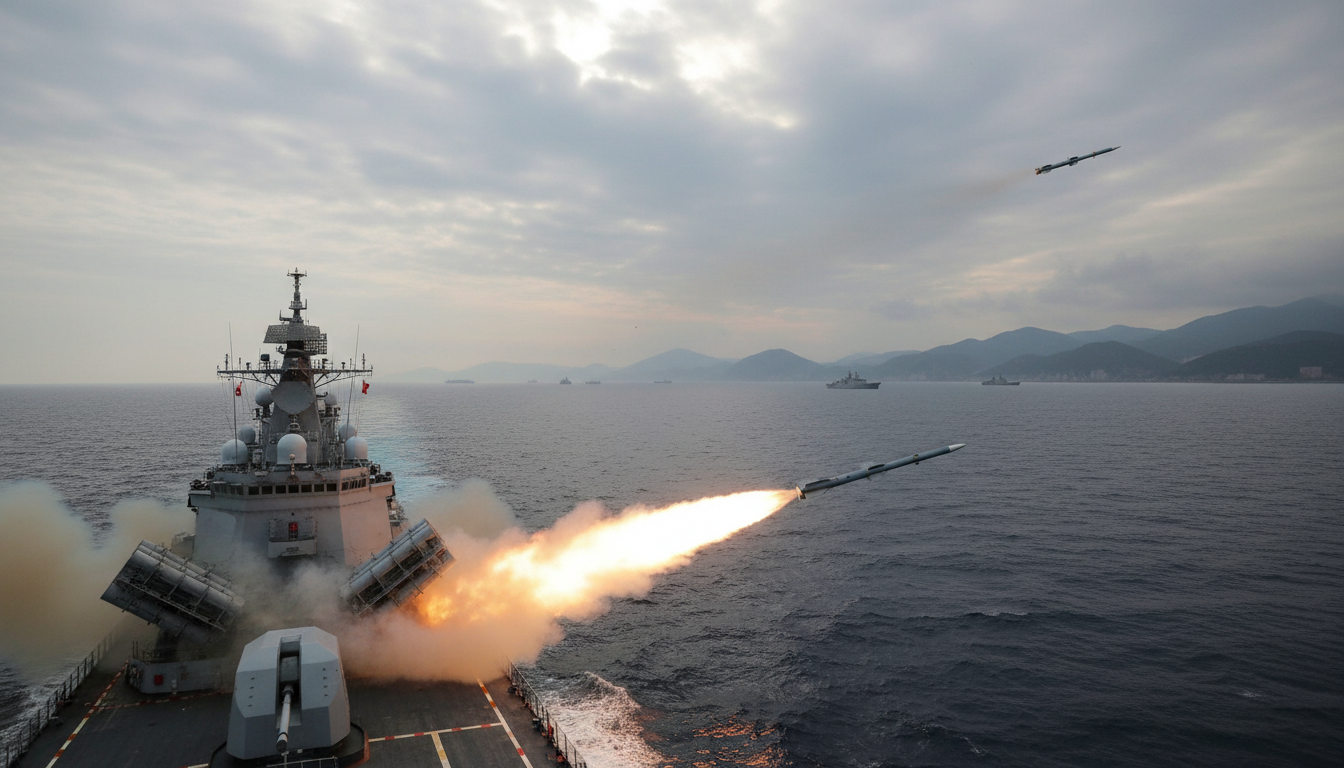
North Korea’s state media reported that the new 5,000‑ton Choe Hyeon destroyer fired two strategic cruise missiles and three anti‑ship missiles in an exercise off the country’s west coast.
The launches, overseen by leader Kim Jong Un from a portside vantage, tested the ship’s integrated weapons, navigation and electronic warfare capabilities.
State news agency KCNA described the weapons as “strategic,” and officials framed the operation as part of efforts to strengthen the country’s naval deterrent posture.
Operational Missile Tests from Choe Hyeon
The drills included long‑range cruise missile flights that reportedly lasted more than two hours along preplanned trajectories.
Anti‑ship missiles were described as flying for approximately half an hour before impacting targets the regime called “highly accurate.”
North Korean authorities said the exercise evaluated the destroyer’s command‑and‑control and the crew’s operational readiness.
Design and Firepower of the Warship
Open‑source analysis estimates the Choe Hyeon is roughly 144 metres long and configured as a multirole destroyer.
Observers say the vessel carries some 74 missile cells, including around 44 vertical launch cells for surface‑to‑air missiles and 30 larger cells suited to cruise or land‑attack weapons.
Reported fit includes a 127mm main gun, close‑in defensive systems, an aviation deck for helicopters and drones, and onboard electronic warfare suites.
Evidence of External Assistance
Analysts have highlighted design parallels between the Choe Hyeon and modern Russian frigate designs, prompting suggestions of foreign technical help.
Commentary in international media has argued that constructing such a complex surface warship quickly would likely require outside assistance in platforms, systems integration or sensors.
North Korean statements and the ship’s apparent Russian‑style air‑defence system have further fuelled speculation about technology transfers and closer maritime cooperation.
Submarine Program Constraints and Strategic Gaps
Despite the new destroyer, North Korea’s submarine force remains technically immature for assured sea‑based second‑strike operations.
Older Romeo‑class boats in inventory face noise, endurance and command‑and‑control limitations that analysts say make them vulnerable to anti‑submarine warfare.
Experts caution that a credible nuclear submarine capability—if pursued—would demand years of reactor, stealth and sustainment advances that are not yet evident.
Nuclear Command Structure and Distributed Options
Legal and doctrinal changes in recent years emphasize centralised authority over strategic weapons while authorising contingency measures if central command is threatened.
U.S. and allied assessments have suggested Pyongyang may be moving toward a hybrid command model that keeps ultimate political control centrally held but grants limited, pre‑planned authorities for faster regional response.
In practice, sea‑launched cruise missiles on a surface platform like the Choe Hyeon could be used under tightly defined conditions to hold regional targets at risk without ceding full strategic launch authority.
Regional Escalation Risks and Alliance Implications
The operational deployment of a missile‑armed destroyer increases the ambiguity of Pyongyang’s posture and complicates crisis decision‑making for neighbours.
A surface ship capable of carrying both conventional and potentially nuclear‑capable cruise missiles raises the prospect of faster, more visible signaling — and a corresponding rise in escalation risk during confrontations.
The development also carries diplomatic weight, reflecting deeper military ties that could alter regional balance calculations and prompt reassessments by South Korea, Japan and U.S. forces in the region.
The Choe Hyeon represents a strategic effort by Pyongyang to diversify its deterrent options at sea while acknowledging persistent technical limits in its submarine fleet.
As analysts continue to scrutinise the ship’s capabilities and provenance, the destroyer’s deployments are likely to remain a focus of regional security assessments and a source of heightened diplomatic and military vigilance.
