
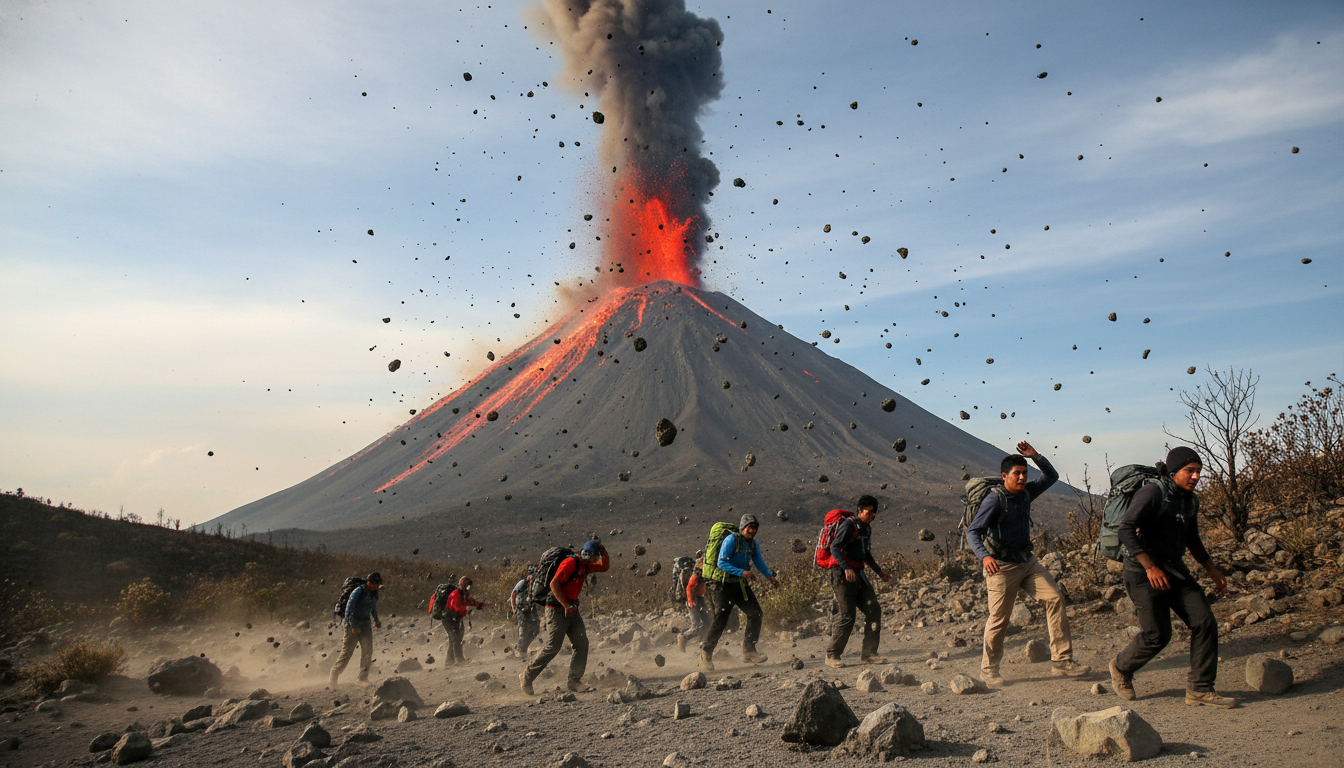
Santiaguito Volcano eruption in Guatemala forces hikers to flee as rocks and ash rain down
Santiaguito Volcano eruption in Guatemala on 21 April 2026 forced hikers to flee as rocks and ash fell; authorities warned visitors and increased monitoring.
Guatemala’s Santiaguito Volcano erupted on 21 April 2026, sending incandescent rocks and ash across popular hiking routes and forcing a group of visitors to abandon their trek, officials said. The sudden Santiaguito Volcano eruption produced ballistic fragments that fell near trails and prompted an immediate response from park authorities. No fatalities were reported at the time of the initial assessments, though emergency crews continued to check for injured hikers.
Hikers Fled After Sudden Eruption
A group of hikers encountered the eruption while on a routine excursion near the active dome complex of Santiaguito, according to local park officials. Witnesses described a rapid sequence of explosions that hurled volcanic bombs and coarse tephra onto surrounding slopes, prompting a hasty retreat. Rescue teams reached trailheads quickly and began accounting for visitors and guiding them to safer ground.
Rocks and Ash Fell onto Trails
The eruption showered nearby trails with rocks and ash, reducing visibility and covering vegetation used as markers by hikers. Park authorities advised that ballistic fragments—large, fast-moving rock pieces—posed the greatest immediate danger, capable of causing serious injury on the path. Ashfall also created slippery conditions and coated gear, complicating movement for those evacuating the area.
Volcano’s Recent Activity and Risk Profile
Santiaguito is one of the world’s most active volcanic complexes, marked by frequent explosive events and periodic pyroclastic flows in recent years. Scientists monitoring the site characterize the volcano as having near-daily activity that can escalate without long warning, particularly when the lava dome undergoes structural collapse. The current episode is consistent with the volcano’s pattern of intermittent explosions that produce both ash plumes and ballistic ejecta.
Authorities Mobilised Emergency Measures
Following the eruption, civil protection agencies and local park authorities closed sections of the national park and established exclusion zones around the summit and the most heavily impacted trails. Emergency teams focused first on search-and-rescue checks and then on decontamination and medical assessment for those exposed to ash and rock fragments. Officials urged the public to respect roadblocks and avoid return to the area until authorities confirm it is safe.
Guidance for Tourists and Local Communities
Tour operators and community leaders were advised to suspend guided hikes and to warn residents near downwind sectors about ash hazards and possible respiratory impacts. Medical units recommended that anyone with respiratory conditions, children, and older adults limit exposure and seek shelter indoors if ashfall occurs. Visitors planning future trips were told to consult official advisories and to carry protective equipment such as masks and goggles when hiking in volcanic regions.
Scientists Increase Monitoring of Santiaguito
Volcanologists from national agencies and international partners said they were intensifying surveillance of Santiaguito’s seismic activity, gas emissions, and surface deformation after the 21 April event. Increased seismicity and changes in gas output can precede dome collapse or larger explosions, and teams are now deploying additional instruments to improve short-term forecasts. Researchers emphasized that continuous monitoring is critical to issuing timely warnings to protect hikers and nearby communities.
The eruption underscores the unpredictable nature of active dome-building volcanoes and the importance of adhering to official safety guidance when visiting volcanic areas. Authorities said they will release further updates as monitoring data are analysed and as teams complete field inspections of trails and infrastructure.
