
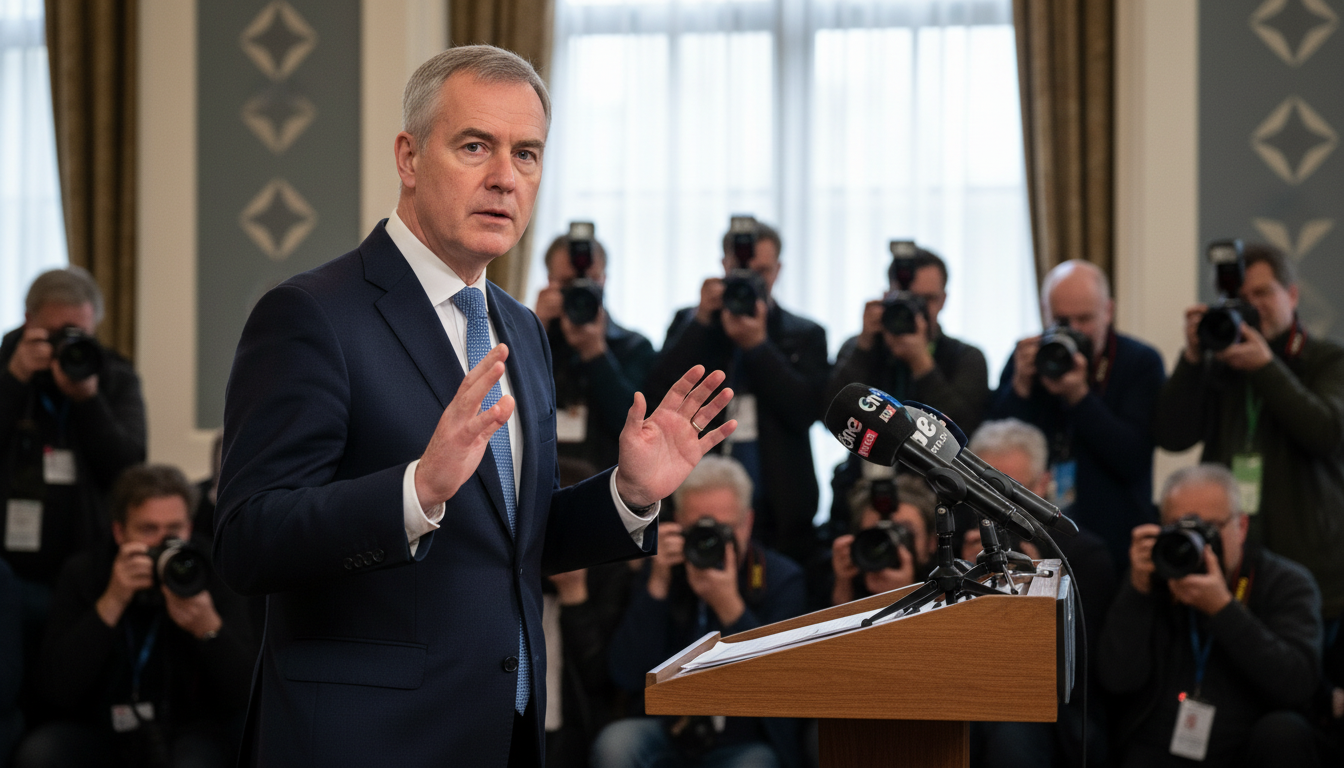
Olly Robbins insists he did not withhold Mandelson security vetting concerns from Downing Street
Olly Robbins told MPs he did not improperly withhold Mandelson security vetting concerns, denying he misled PM Keir Starmer as the controversy fuels political pressure.
Prime Minister Keir Starmer’s decision to appoint Peter Mandelson as ambassador to Washington has deepened into a major political crisis after senior civil servant Olly Robbins told the House of Commons that he did not disclose all details of the Mandelson security vetting to ministers. Robbins, who was dismissed by Mr. Starmer last week, said he kept sensitive material confidential to protect the integrity of the developed vetting process. His testimony challenged Mr. Starmer’s assertion that he should have been told about recommendations to deny clearance, and has further inflamed debate about who knew what and when.
Robbins rejects claim he misled the prime minister
In a measured appearance before the Foreign Affairs Committee, Robbins denied acting improperly by not briefing the prime minister on the vetting team’s concerns. He argued that releasing the substance of those concerns would have damaged public confidence in a system designed to protect state secrets and guard against vulnerability to blackmail. Robbins said his team at the Foreign Office faced “constant pressure” to expedite clearances but maintained that the vetting process was handled professionally.
Robbins told lawmakers that the vetting officials described Mr. Mandelson as a “borderline case” and were “leaning against” recommending developed vetting clearance rather than issuing an outright denial. He said the Foreign Office ultimately granted the clearance after concluding identified risks could be mitigated. Robbins insisted that the only definitive information ministers needed to know, and were given, was that the clearance had been granted.
Pressure from No.10 to speed the appointment
Robbins described repeated contacts from No.10 Downing Street pushing for a swift outcome once Mr. Starmer announced the appointment. He said the prime minister’s office had sent formal letters urging the Foreign Office to “get on with it quickly” and that obtaining the post for Mr. Mandelson was treated as a matter of urgency. According to Robbins, Mr. Starmer had publicly announced the nomination, sought royal and US approval and allowed Mandelson access to some Foreign Office resources before the vetting was complete.
The civil servant portrayed an atmosphere in which delaying a clearance or presenting a last-minute refusal would have posed a “very, very difficult problem” for ministers. Yet Robbins stressed that such operational pressure did not change his view on the need for confidentiality around vetting deliberations.
What the vetting team reportedly concluded
While the Foreign Office has declined to disclose specific findings, Robbins told MPs that the concerns identified by vetting officials were not related to Mandelson’s links to Jeffrey Epstein. He said the vetting team’s position amounted to caution rather than a categorical recommendation to deny clearance. Robbins confirmed that, after considering mitigation measures, the department proceeded to issue the developed vetting that enabled Mandelson to become ambassador.
The testimony highlighted the narrow but consequential judgment calls that security vetting can involve. Robbins argued that exposing the detailed reasoning of vetting staff would undermine the principle that the clearance system protects both national security and the individuals involved.
Political fallout and declining public confidence
The affair has badly dented Prime Minister Starmer’s standing with voters and colleagues, with polls and party insiders indicating a slump in Labour’s popularity. Starmer removed Mandelson from the Washington post in September after revelations about the former EU commissioner’s close relationship with the convicted sex offender Jeffrey Epstein. Police inquiries continue into allegations that Mandelson may have passed confidential information to Epstein in 2009.
Opposition parties and some Labour members have seized on the episode as evidence of poor judgment at the top of government. Critics say the lack of transparency around the vetting process and the subsequent leaks have compounded public distrust and will weigh on Labour in upcoming local elections.
Calls for inquiry and investigation of the leaks
Robbins urged a formal investigation into media leaks that revealed aspects of the vetting team’s recommendation, calling the disclosures a “grievous breach of national security.” He stressed that publication of sensitive deliberations could create future risks by signalling how and why candidates might be vulnerable to coercion. Several MPs pressed Robbins on whether, at any later point, he should have informed ministers as the prime minister was publicly asserting that no issues had been raised.
The prime minister’s office has said Robbins “made an error of judgment” while also describing him as a professional of integrity. Ministers and former colleagues have offered differing views on whether operational confidentiality should have trumped political accountability in this instance.
Parliamentary and party reactions to Robbins’s testimony
Conservative leader Kemi Badenoch described Robbins’s testimony as “devastating to Keir Starmer,” while other MPs demanded further clarity on who was told what within government. Foreign Secretary Yvette Cooper told the Commons she was troubled that she and other senior ministers had not been informed of vetting concerns. Allies of the prime minister argued Robbins should have shared the vetting team’s doubts with ministers, saying doing so would have allowed ministers to make a fully informed decision about the appointment.
As debate continues in Parliament, both opposition and government figures are warning that the matter remains politically volatile. Calls for greater transparency around senior diplomatic appointments and the security vetting system are likely to persist until inquiries conclude and recommendations are made.
The Mandelson vetting controversy has exposed tensions between safeguarding classified processes and the expectation of ministerial oversight, and it will continue to dominate political headlines as lawmakers push for answers and accountability.
