
US strikes Iranian radar sites after CENTCOM downs four one-way attack drones
US strikes Iranian radar sites: CENTCOM released footage after U.S. forces shot down four one-way attack drones and intercepted missiles over Kuwait and Bahrain.
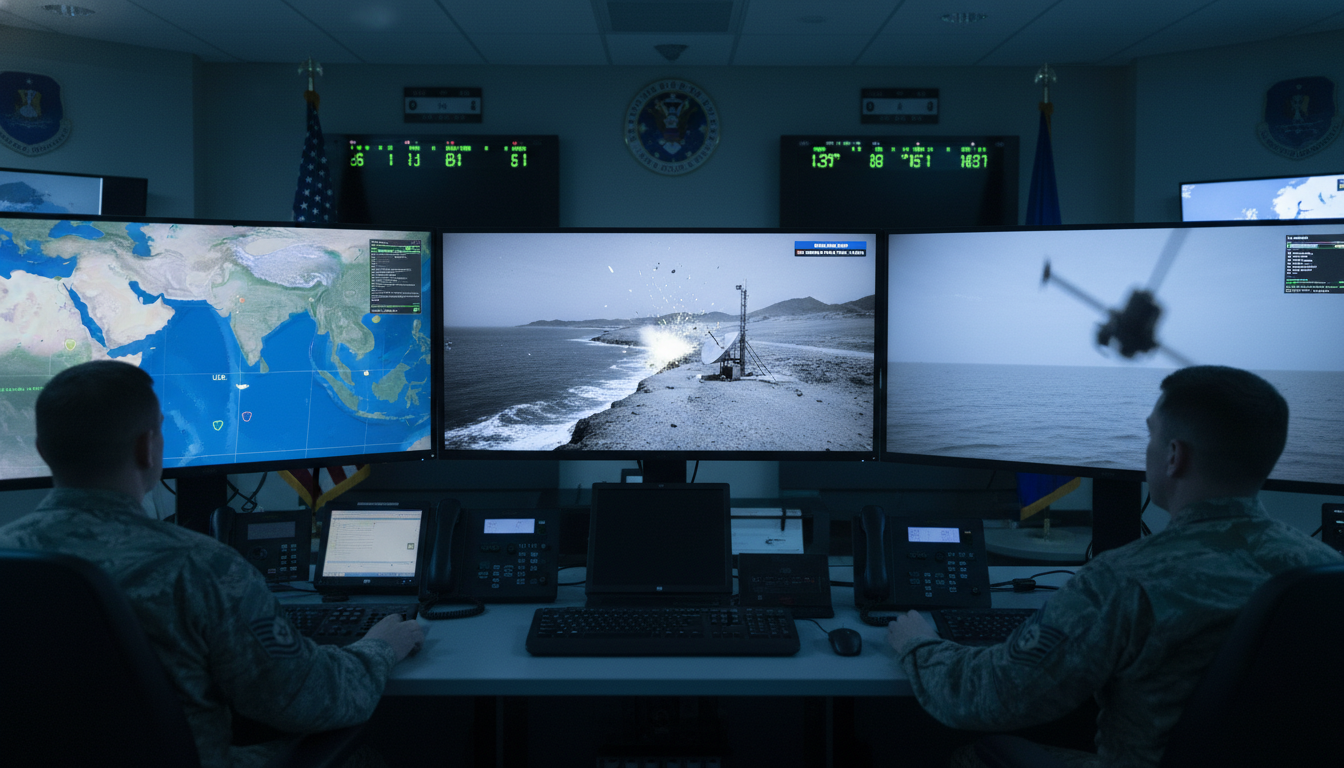
The United States released footage showing strikes on Iranian coastal radar installations after U.S. Central Command said its forces neutralized a group of one-way attack drones that were headed toward the Strait of Hormuz. CENTCOM framed the strikes as defensive actions to protect maritime traffic and regional forces amid an exchange of missiles and drones that triggered air defenses in Gulf states. (centcom.mil)
CENTCOM says four one-way attack drones downed
CENTCOM said its forces shot down four Iranian one-way attack drones that posed an imminent threat to ships transiting the Strait of Hormuz. The command said aircraft and ship-based systems engaged the unmanned systems after they were detected approaching key shipping lanes. (centcom.mil)
CENTCOM described the engagements as part of a broader defensive operation intended to prevent disruption to commercial and military maritime traffic. Officials said the strikes that followed were limited and targeted, aimed at degrading Iran’s immediate ability to conduct similar attacks.
Interceptions reported over Kuwait and Bahrain
U.S. and regional air defenses intercepted ballistic missiles and drones that Tehran launched toward Kuwaiti and Bahraini territory in the same series of events. CENTCOM and independent news agencies reported that multiple missiles were intercepted or failed to reach their targets during early-morning exchanges. (apnews.com)
Kuwait’s military and Bahrain’s security forces both activated air defenses after explosions and warning sirens were reported in the early hours, with local authorities confirming interceptions and emergency responses. Videos circulating on social platforms showed smoke and emergency activity near strategic installations, though civilian casualty reports have been limited and remain being verified.
Targets named as Goruk and Qeshm Island
U.S. statements identified the coastal surveillance radar sites targeted in the retaliatory strikes as facilities near Goruk on Iran’s southern mainland and on Qeshm Island in the Strait of Hormuz. CENTCOM said the locations supported surveillance and remote-control operations tied to the one-way attack drones. (centcom.mil)
Military officials described the strikes as intended to disrupt command-and-control points and sensors used to coordinate drone and missile activities, rather than to degrade broader civilian infrastructure. Analysts note that Qeshm’s proximity to major shipping lanes gives Iran strategic leverage over maritime monitoring and drone deployment in the southern Gulf.
Regional military and civilian impacts
The exchange elevated tensions across the Gulf after weeks of sporadic attacks and reprisals, including prior incidents that damaged civilian infrastructure in the region. Airspace and port authorities in affected countries temporarily restricted operations, and commercial shipping rerouted vessels to avoid congested or contested waters. (gmanetwork.com)
Local governments and international shipping firms have urged caution but stopped short of broad evacuations, citing ongoing intercept capabilities by coalition and national forces. Humanitarian and logistical agencies warned that even brief disruptions in the Strait of Hormuz can have outsized effects on global energy and trade flows.
Claims and counterclaims from Tehran and allies
Iran’s state-aligned outlets and the Islamic Revolutionary Guard Corps issued statements asserting they had targeted U.S. bases and interests in retaliation, while disputing aspects of the U.S. narrative. Tehran has routinely characterized strikes and drone deployments as responses to U.S. actions and regional maritime operations. (iranintl.com)
Independent verification remains challenging amid competing official accounts and restricted access to strike sites. Regional partners and Western capitals called for restraint even as they reviewed classified and open-source footage released by military commands to corroborate events.
What comes next for Gulf security
Analysts say the latest exchanges could prompt increased patrols and higher readiness levels among Gulf security forces, with possible short-term impacts on commercial shipping insurance and routing. Diplomatic backchannels are expected to intensify as states seek to prevent further escalation while safeguarding trade corridors that are vital to the global economy. (centcom.mil)
Military officials indicated the strikes and subsequent interceptions were limited in scope, but cautioned that the situation remains fluid and subject to rapid change depending on further actions by state or non-state actors.
The events underscore persistent vulnerabilities in Gulf maritime security and the challenges of deterring state-sponsored drone and missile campaigns without triggering wider conflict.
