
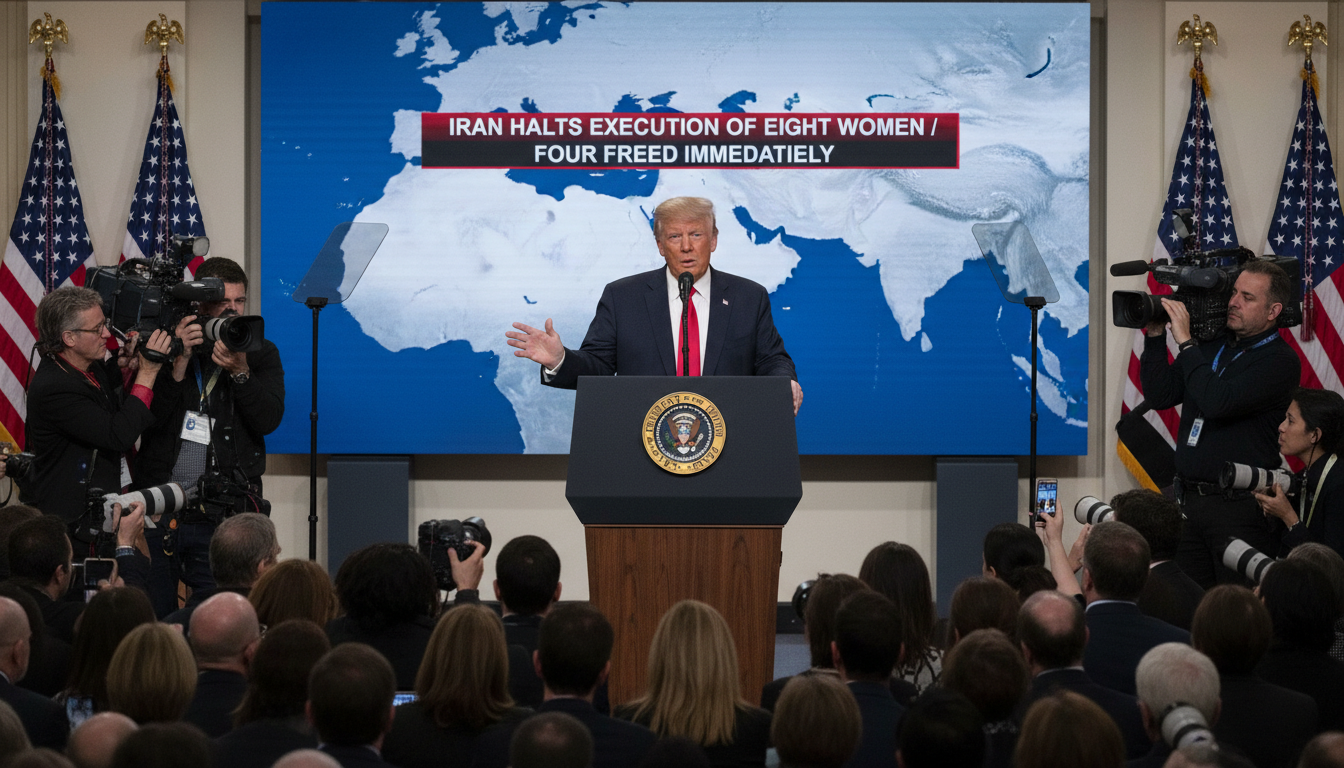
Iran Halts Execution of Eight Women, Trump Says
Donald Trump says Iran agreed not to execute eight women; four will be released immediately and four jailed for one month, he posted on Truth Social platform.
The United States president said on Truth Social that Iran had accepted his request to suspend the planned executions of eight women and to release half of them at once. Trump wrote that four of the women would be freed immediately and the remaining four would be detained for one month instead of being executed. The claim, posted by Trump on his social platform, framed the development as a direct intervention by the United States.
Trump’s announcement on Truth Social
Trump’s post was terse and declarative, saying Iran “agreed” to spare the women from execution. He presented the move as a personal diplomatic outcome and described immediate releases alongside short-term detention for others. The president did not provide documentary proof of the arrangement in the post.
Details on releases and detention
According to Trump’s statement, four women will be released straightaway while four others will be held in custody for 30 days. He gave no names, locations, or legal details about the charges that led to the death sentences. The message offered no timetable for travel or consular access for any of the women who may be foreign nationals.
Status of independent verification from Tehran
There was no independent confirmation of the president’s account available at the time of the report, and Trump’s post did not cite Iranian officials or state media. Iranian authorities typically announce high-profile judicial decisions through state channels; no parallel statement from Tehran was included in Trump’s message. Journalists and rights monitors will likely seek confirmation from Iranian government sources, court records and families of the accused.
Human rights context and international concern
The potential executions of women in Iran have long drawn condemnation from human rights groups and foreign governments, which argue that capital punishment in politically charged or security cases often raises due-process concerns. International organisations and advocacy groups repeatedly call for transparent trials and access to legal counsel for those facing the death penalty. If the executions were halted, rights advocates would still press for full legal reviews and independent oversight.
Diplomatic implications for US‑Iran relations
If confirmed, the reported intervention would represent a rare direct claim by the US president of influence over a judicial outcome in Iran, a country with which Washington has had strained relations for decades. The announcement suggests an ad hoc diplomatic exchange rather than a formal negotiation carried out through established channels. Such claims can complicate diplomatic backchannels, especially if Tehran does not acknowledge the reported agreement publicly.
Legal background and typical procedures in Iran
In Iran, death sentences are issued after trials that may involve security, drug, or violent-crime charges; sentences can be subject to appeal and to review by Iran’s higher courts. International observers frequently question the fairness of trials in cases tied to national security or political activity. Any stay of execution would normally be recorded in court documents or announced by judicial authorities.
Regional and global reactions to reported reprieve
News of an alleged reprieve is likely to prompt responses from rights organisations, foreign ministries and possibly allied governments that monitor capital punishment. Western governments and advocacy groups routinely use diplomatic pressure and public statements to urge clemency in high-profile cases. How other states and organisations respond will depend in part on the speed and clarity of confirmation from Iranian sources.
The situation remains fluid, with the core claim originating in a presidential post and awaiting verification from Iranian judicial or government channels. Observers will be watching for formal statements or documents that confirm releases, the detention terms, or any legal processes that follow.
