
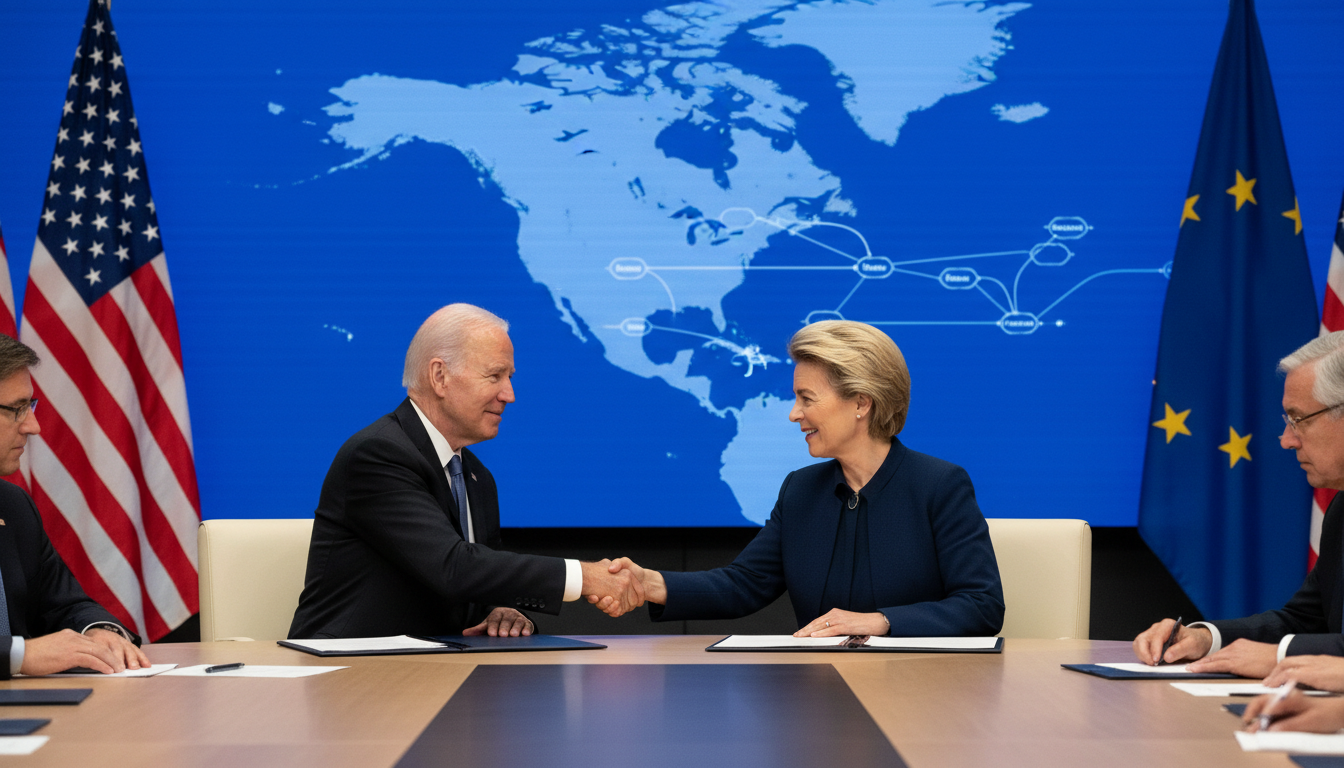
EU-US critical minerals partnership launched in Washington to secure supply chains
EU and US sign a strategic critical minerals partnership in Washington, launching a joint plan to secure supply chains, standards and long-term procurement.
The European Commission and the U.S. administration this week signed an EU-US critical minerals partnership in Washington, unveiling a memorandum of understanding and a coordinated action plan aimed at strengthening resilience across global supply chains for critical minerals. The agreement, announced by European Commission official Maroš Šefčovič alongside senior U.S. representatives, sets out cooperation from exploration and extraction to processing, recycling and investment support. The move is presented as a strategic effort to safeguard supplies essential for clean energy, semiconductors, battery production and advanced defence technologies.
Scope of the memorandum and signatories
The memorandum establishes a long-term framework for bilateral cooperation on critical minerals and covers the full value chain from survey and mining to refining and material recovery. It commits both sides to coordinated measures that promote secure, sustainable and transparent supply lines while encouraging private sector engagement and public investment. Officials described the deal as the basis for deeper technical cooperation, targeted funding initiatives and joint surveys to identify new resources and processing capacity.
Value-chain measures from extraction to recycling
Under the partnership, the EU and U.S. will synchronize efforts across exploration, extraction, processing, refining and end-of-life recovery, including recycling and material reclamation. The agreement emphasises developing domestic and partner-country capacity for environmentally responsible mining and chemical processing, while promoting circular economy practices to reduce dependency on primary raw materials. Both parties signalled an intention to mobilise funding and incentives for projects that expand refining capability and close recycling loops for batteries and electronic components.
Joint action plan: pricing, procurement and market tools
The accompanying joint action plan directs officials to evaluate a package of commercial and policy instruments designed to stabilise markets and ensure reliable supply during disruptions. Proposed tools include studies on minimum price floors at borders, the creation of markets aligned with technical and sustainability standards, targeted financial support to bridge price gaps, and long-term purchasing agreements to secure critical supplies. The plan also contemplates voluntary public procurement arrangements that would signal demand and reduce risk for investors in upstream capacity.
Standards, investment and rapid-response mechanisms
A central pillar of the partnership is the harmonisation of operational and environmental standards for mining, processing and recycling, intended to lower trade frictions and raise sustainability benchmarks. The EU and U.S. will promote joint research programmes, shared technical standards and mutual recognition of certifications to accelerate technology transfer and regulatory alignment. The plan further outlines the development of strategic stockpiling strategies and rapid-response mechanisms to mitigate temporary shocks to global supply chains.
International outreach and previous commitments
Officials said the bilateral framework is complementary to wider multilateral efforts and could evolve into a broader international initiative with like-minded partners in the future. The EU-US move builds on commitments made in a ministerial meeting on critical minerals held in Washington on 4 February 2026 and follows a prior joint statement between the two sides dated 21 August 2025 to expand cooperation in this sector. Both parties confirmed they will continue coordination in fora such as the G7 and specialised platforms addressing resource engagement and supply-chain resilience.
Implications for industry and geopolitics
Analysts say the partnership is a strategic response to concentrated supply chains and geopolitical risks, aiming to diversify sources and reduce exposure to single points of failure in mineral supply. For industries tied to the green transition—electric vehicles, renewable energy generation, and semiconductor manufacturing—the agreement could unlock predictable supply flows and attract investment into refining and recycling capacity in allied markets. At the same time, officials acknowledge that building alternative capacity will require sustained public incentives and private capital, and that implementation may reshape trade patterns and investment decisions over the coming years.
The EU-US critical minerals partnership sets a roadmap for coordinated policy action and private-public engagement, but its impact will depend on the pace of investment, regulatory alignment and the creation of viable commercial markets. Both sides have committed to regular reviews and to exploring multilateral expansion, with near-term workstreams focused on standard-setting, procurement frameworks and pilot projects to demonstrate scalable value-chain solutions. The agreement marks a significant step toward reducing supply vulnerabilities for technologies central to economic competitiveness and national security.
