
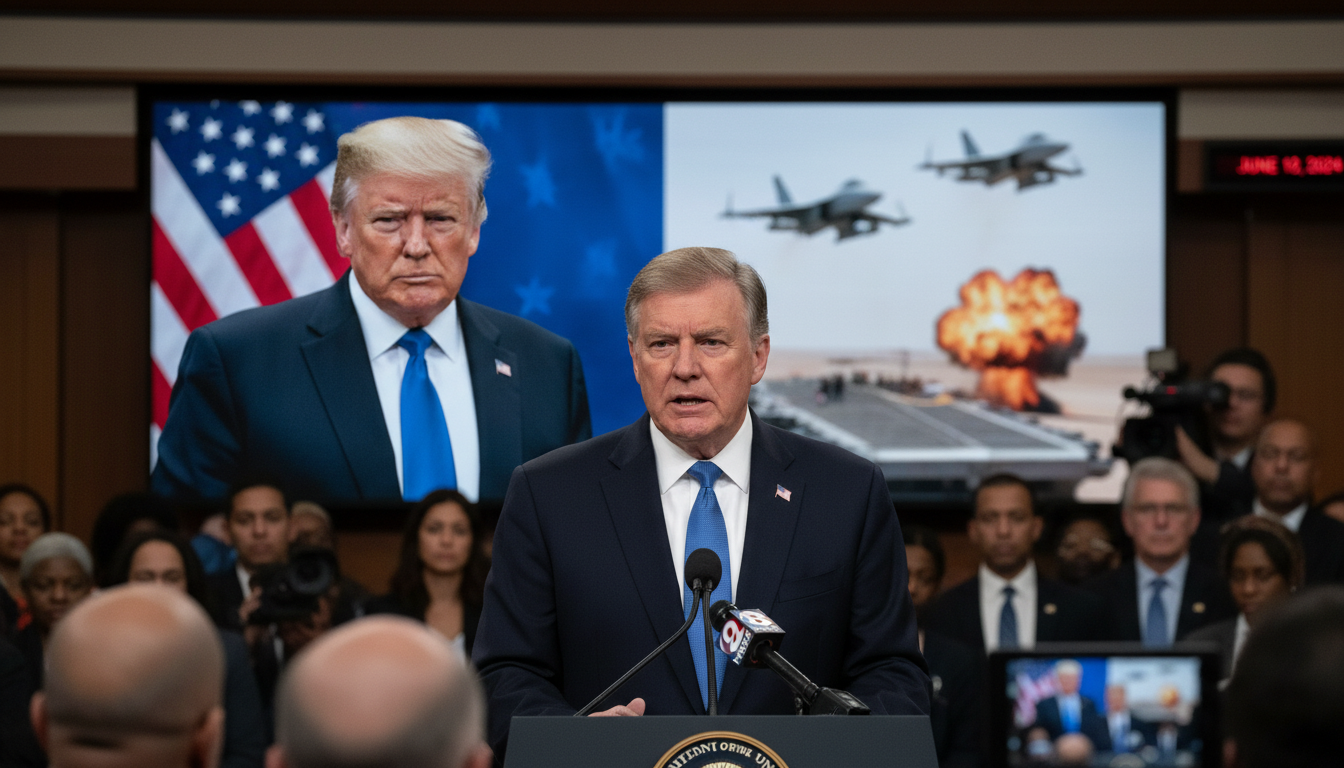
Sen. Roger Wicker urges end to Iran negotiations and calls for renewed military strikes
U.S. Senate Armed Services Committee chair Roger Wicker on X urged President Trump to stop talks with Iran and resume strikes to dismantle Tehran’s military and nuclear capabilities.
Wicker’s public post on X
Senator Roger Wicker issued a forceful message on the social platform X calling for an immediate end to negotiations with Iran and a return to military pressure. (iranintl.com)
In the post Wicker wrote that “the time for negotiating with the Iranian regime is over,” and warned that Tehran could not be trusted to honor any agreement. (iranintl.com)
He framed military action as the only reliable path to lasting stability in the region, a stance that sharply escalates rhetoric from a senior Republican senator. (iranintl.com)
Direct appeal to the White House
Wicker went beyond criticism of diplomacy and directly urged President Donald Trump to order the U.S. military to “finish destroying” Iran’s conventional military assets. (iranintl.com)
His post asked the president to direct commanders to eliminate any remaining elements of Iran’s nuclear program, language that signals support for decisive kinetic measures rather than continued talks. (iranintl.com)
The appeal places a high-profile congressional figure firmly on record advocating for a military-first approach at a moment when diplomatic channels are still active. (iranintl.com)
Authority and influence in Washington
As chairman of the Senate Armed Services Committee, Roger Wicker oversees legislative oversight of U.S. defense policy and plays a central role in shaping the annual defense bill and military oversight. (wicker.senate.gov)
Wicker’s position gives his comments additional weight inside Capitol Hill and at the Pentagon, where committee hearings and the NDAA process influence budgets and military posture. (armed-services.senate.gov)
His public intervention aligns committee leadership with hawkish calls that could complicate executive diplomacy if lawmakers push for statutory or budgetary measures to constrain negotiations. (armed-services.senate.gov)
Regional and diplomatic risks
Analysts warn that public calls by senior U.S. lawmakers for resumed strikes risk undermining fragile ceasefires and mediation efforts in the Gulf, raising the prospect of renewed escalation. (criticalthreats.org)
The wider diplomatic context includes recent Pakistan-brokered contacts and a temporary halt in large-scale kinetic activity, steps U.S. officials and outside mediators have said were aimed at buying time for talks. (criticalthreats.org)
Wicker’s statement could erode negotiating leverage by hardening positions on both sides and prompting regional partners to recalibrate security planning around a higher probability of further strikes. (criticalthreats.org)
Political and legal dynamics in Congress
Wicker’s appeal arrives amid intense debate in Congress over the proper balance between executive authority and legislative oversight in authorising major military actions. (armed-services.senate.gov)
Some lawmakers may cite his comments to press for expedited briefings, additional appropriations for regional operations, or legislative constraints on diplomatic engagement with Tehran. (armed-services.senate.gov)
At the same time, other members of Congress and legal experts have historically warned that unilateral military steps without clear authorisation risk legal and political pushback at home and abroad. (criticalthreats.org)
Security community reaction and next steps
Military and foreign policy experts cautioned that while degrading an adversary’s capabilities is a familiar component of deterrence, completing that task by force carries unpredictable costs and complex operational requirements. (criticalthreats.org)
Pentagon officials typically avoid public commentary on prospective orders, but committee chair statements often trigger classified briefings or oversight hearings as lawmakers seek assurances about plans and legal authorities. (armed-services.senate.gov)
How the White House and congressional leaders respond to Wicker’s call will shape the immediate policy debate and could determine whether diplomacy is allowed space to proceed or is eclipsed by military planning. (armed-services.senate.gov)
The senator’s remarks mark a clear public turn by a senior arms-policy official toward a military-first posture, injecting pressure into an already fraught mix of talks, ceasefires and regional security calculations.
