
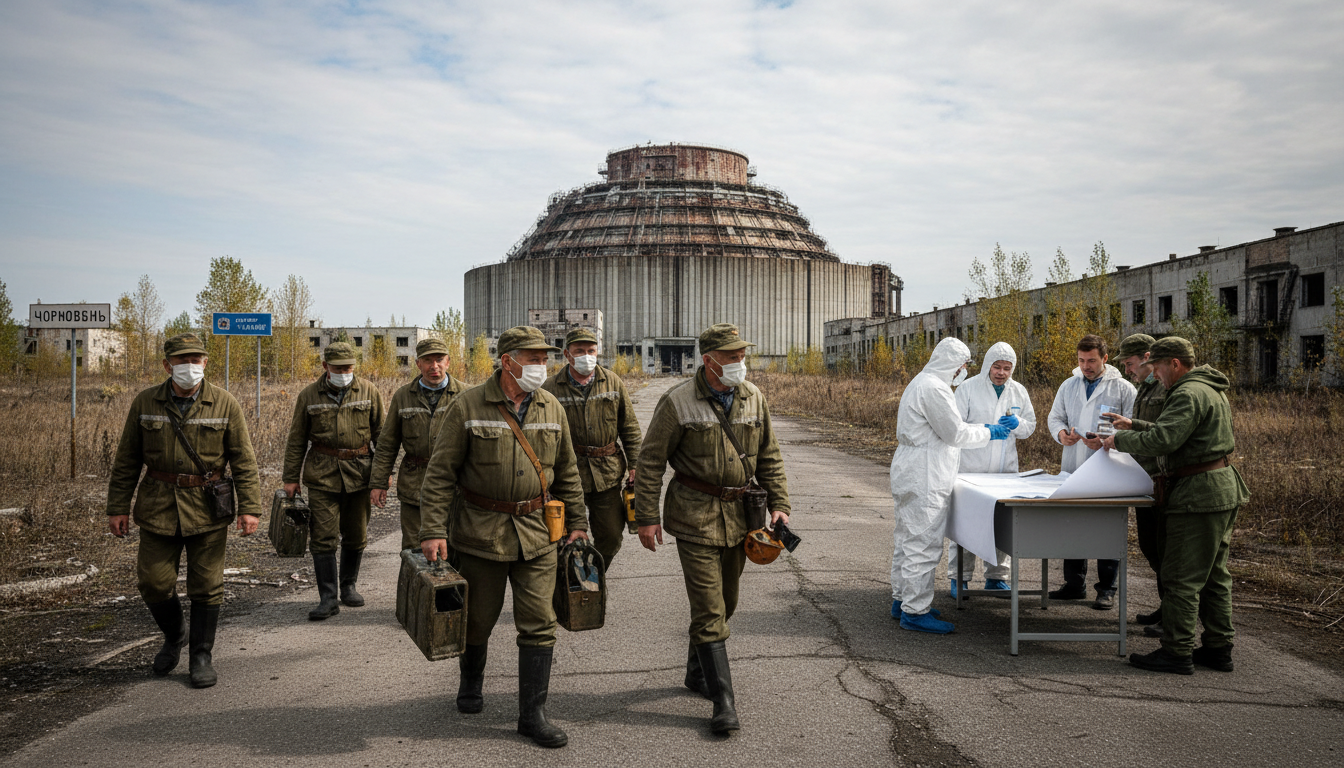
Chernobyl 40th anniversary: Ukrainian liquidators return to mark lasting human and environmental toll
Chernobyl 40th anniversary: Liquidators returned to the plant on April 26, 2026, recounting the 1986 blast and its enduring human and environmental toll.
Ukraine marked the 40th anniversary of the Chernobyl disaster on April 26, 2026, as survivors of the Soviet-era cleanup returned to the exclusion zone and renewed debates over long-term health and ecological impacts resurfaced. The visiting former workers, known as liquidators, recalled tasks carried out under extreme conditions after the reactor four explosion on April 26, 1986, and urged continued attention to veterans’ welfare. The anniversary revived questions about institutional responsibility, compensation and environmental monitoring across affected territories.
Anniversary return by Poltava liquidators
A group of liquidators from Ukraine’s Poltava region were granted a one-day visit to the Chernobyl site, traveling into the exclusion zone more than three decades after they worked there. They wore hastily issued uniforms and improvised protective gear during the original operations, and on Sunday they spoke of duty, loss and the psychological burden that has followed them. Their return was described by organizers as both a commemoration of those who died and a plea for greater recognition of the ongoing consequences faced by survivors.
How the 1986 explosion unfolded
In the early hours of April 26, 1986, a safety test at reactor four at the Chernobyl plant triggered a catastrophic blast that destroyed the reactor building and sent a radioactive plume into the atmosphere. Nuclear fuel burned for more than 10 days while crews used helicopters to drop thousands of tonnes of sand, clay and lead in a desperate attempt to smother the core and halt further emissions. Subsequent technical reviews identified design defects and procedural violations that contributed to the accident, a conclusion that shaped international safety reforms for decades.
Scale of contamination and emergency response
Radiation from the Chernobyl release contaminated large areas of Ukraine, Belarus and the Russian Federation before drifting across Europe, prompting mass evacuations and long-term exclusion zones. Over roughly four years, authorities mobilized an estimated 600,000 liquidators — soldiers, firefighters, engineers, miners and medical staff — to contain the disaster, decontaminate sites and bury contaminated equipment. Their duties included washing exposed structures, sealing the reactor, clearing forests and managing radioactive debris, often with limited information about exposure risks.
Lives of the liquidators and ongoing debates
Many liquidators deployed with little understanding of the dangers they faced, and survivors have long campaigned for medical care, pensions and official recognition of radiation-linked illnesses. Families and advocacy groups say some former workers still struggle with health problems that they attribute to their service at Chernobyl, while researchers advise careful, evidence-based tracking of long-term outcomes. The anniversary has reignited public debate over compensation programs, state responsibility and the adequacy of ongoing health monitoring for those involved in the cleanup.
Pripyat and the exclusion zone today
The nearby city of Pripyat, once home to roughly 48,000 people, remains a decaying ghost town within a multi-thousand-square-kilometre exclusion zone in northern Ukraine and adjoining Belarus. The zone had been a site for controlled tourism before 2022, but visits were suspended following Russia’s invasion; the absence of regular oversight has allowed nature to reclaim parts of the landscape. Endangered species such as Przewalski’s horses and other wildlife have been observed roaming among abandoned buildings and overgrown streets, a visible sign of ecological change in a constrained, human-free environment.
International assessment and legacy of safety reforms
International bodies and nuclear safety agencies have used lessons from Chernobyl to strengthen reactor design standards, emergency preparedness and cross-border information sharing. The International Atomic Energy Agency and other organizations have repeatedly pointed to the accident as a watershed moment that exposed weaknesses in reactor technology and operational culture. Still, experts say the physical and social legacies persist, requiring sustained monitoring, research and transparent communication with affected populations.
Survivors’ testimony on the 40th anniversary underscored both personal loss and the collective responsibility to remember the disaster’s human costs. As Ukraine and the broader international community mark the milestone, attention to veteran care, environmental surveillance and historical accountability remains central to the ongoing conversation about Chernobyl’s place in modern nuclear history.
