
First public trial in Syria opens in Damascus with Atif Najib charged
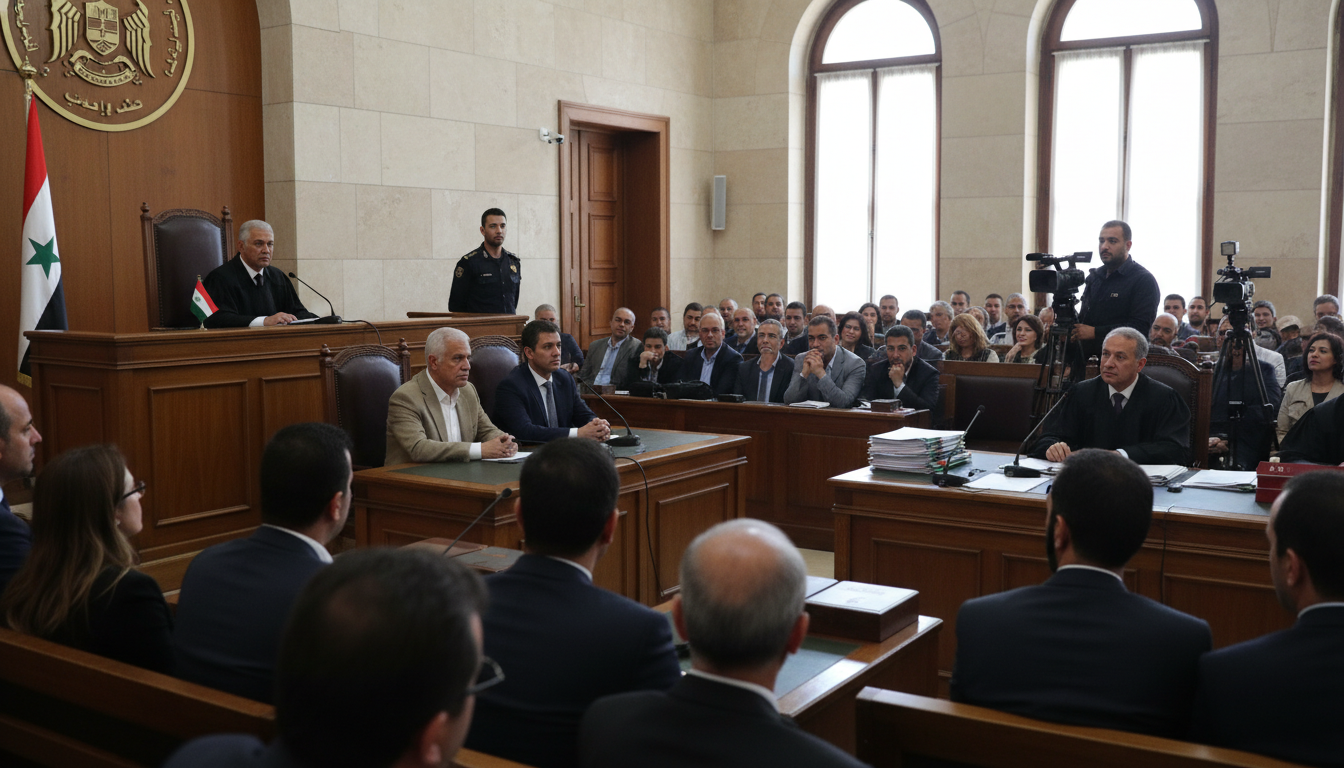
Syria’s first public trial opened in Damascus on April 26, 2026, when Atif Najib faced accusations of crimes against the Syrian people amid tight security at the Palace of Justice. The proceeding, described by state media as a historic session, marks the start of public judicial action against former regime figures. Attendance included the attorney general, relatives of victims, and both regional and international legal observers.
Courtroom Opens in Damascus
The trial convened at the Palace of Justice in central Damascus and was presided over by a judge from the Fourth Criminal Court. Authorities confirmed that the session began under stringent security and judicial measures intended to ensure order and safety for attendees. State media reported that Attorney General Hassan al-Turba was present for the opening, underscoring the formal and high-profile nature of the proceedings. Officials framed the hearing as a first in a sequence of cases against members of the former government apparatus.
Defendant and Charges Detailed
Atif Najib stood before the court charged with offenses described broadly as crimes against the Syrian people. Prosecutors outlined allegations connected to actions taken during the period of unrest, though details presented in the opening session were limited. The charge sheet was introduced as part of the initial procedural phase, with judicial authorities indicating that further evidence and testimony would be heard in subsequent hearings. Legal teams have been given time to review the files and prepare their defenses.
Security and Courtroom Procedures
Access to the court was tightly controlled, with security personnel managing entry to the Fourth Criminal Court chamber. Officials restricted the courtroom to a defined list of participants, including accredited journalists and legal representatives, to preserve the integrity of the session. Courtroom procedures followed formal criminal protocol, and the presiding judge set preliminary procedural timetables. Observers noted an emphasis on maintaining an orderly process, with rules enforced on evidence presentation and witness handling.
Victims’ Families Present
Relatives of victims were present in the courtroom, according to reports, reflecting calls by civil society groups for public accountability. Several attendees faced the hearing with visible emotion as the charges were read, underscoring the personal dimensions of the case. Organizers allowed a limited number of family members into the public gallery, with support services and careful monitoring provided. The participation of victims’ families signals an effort by authorities to demonstrate responsiveness to their demands for justice.
Regional and International Legal Presence
A contingent of Arab and international lawyers attended the opening session, alongside media representatives from the region and abroad. Their presence highlights the cross-border attention the trial is attracting and points to broader legal interest in how such cases will be handled. International legal observers noted the significance of public hearings for transparency, while emphasizing the importance of due process and the right to a fair defense. Journalists in the courtroom were allowed to report within the constraints set by the court administration.
Next Steps in the Judicial Process
The court announced that further hearings and evidentiary submissions will be scheduled as the case progresses through the Fourth Criminal Court. Prosecutors are expected to call witnesses and present documentary material in upcoming sessions, with defense counsel given the opportunity to challenge evidence. Observers and legal analysts will be monitoring subsequent dates closely to assess procedural fairness and adherence to international judicial standards. The judicial timetable was described as provisional pending logistical arrangements for witness testimony and legal filings.
The opening of this trial represents a notable moment in Syria’s judicial landscape, drawing national attention and international scrutiny. As the case moves forward, courts will face questions over evidence standards, witness protection, and the ability to conduct comprehensive proceedings in a highly charged political environment. The coming weeks are likely to determine whether the trial will set procedural precedents for other cases involving former regime officials and how the judicial system addresses long-standing demands for accountability.
Concluding the first session, court officials reiterated commitments to follow established legal procedures while balancing security concerns and the rights of all parties. The trial of Atif Najib will continue with scheduled hearings to examine evidence and testimony, and authorities have signaled that the process will be open to monitored public and legal oversight within the parameters set by the court.
